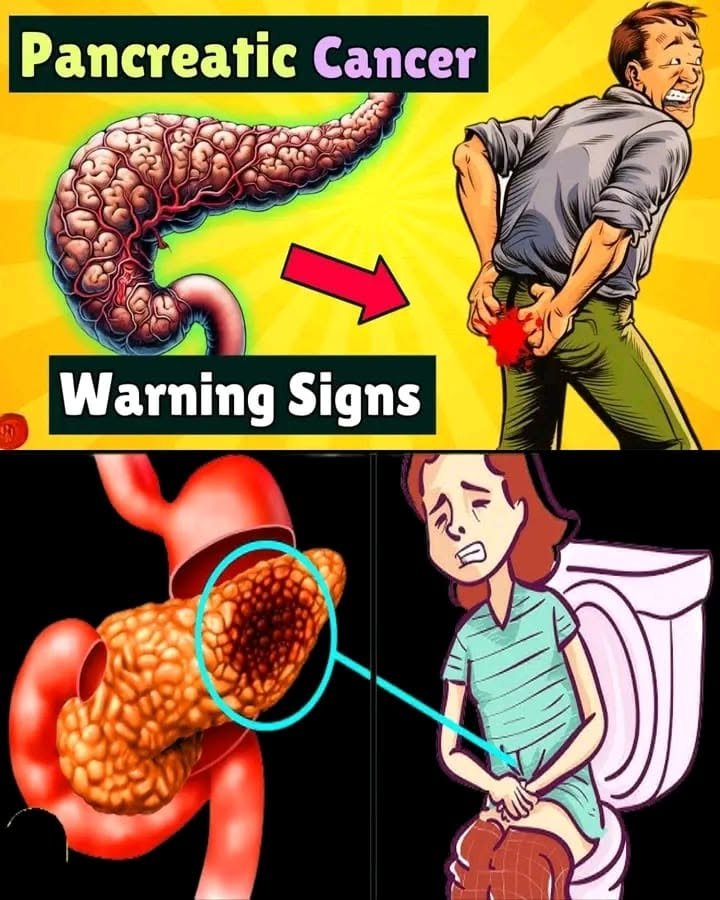
Pancreatic cancer is notoriously difficult to detect in its early stages because the pancreas is deeply embedded behind other abdominal organs, and early tumors rarely press against structures that cause immediate, sharp pain. As a result, the body often communicates trouble through subtle, seemingly unrelated shifts that build up gradually over weeks or months.
Recognizing these fifteen lesser-known or “silent” warning signs can help bridge the gap for earlier medical evaluation:
1. Painless Jaundice (Yellowing of Skin and Eyes)
-
What Happens: The whites of your eyes and your skin take on a yellowish tint, often accompanied by dark, tea-colored urine and unusually pale, clay-colored stools.
-
Why It Happens: If a tumor develops in the head of the pancreas, it can block the common bile duct, preventing bile from draining into the small intestine and causing bilirubin to back up into the bloodstream. Unlike gallstone blockages, this jaundice is often entirely painless at first.
2. A Dull, Aching Pain in the Upper Abdomen or Back
-
What Happens: A persistent, gnawing discomfort in the upper middle abdomen that often radiates straight through to the mid-back.
-
Why It Happens: As pancreatic tumors grow, they can begin pressing against the network of nerves surrounding the organ (the celiac plexus). The pain often feels worse when lying flat and may ease temporarily when leaning forward.
3. Sudden, Unexplained Onset of Type 2 Diabetes
-
What Happens: Being diagnosed with diabetes out of nowhere—especially if you are older, do not have a family history, and are not experiencing typical weight gain or lifestyle risk factors.
-
Why It Happens: The pancreas is responsible for producing insulin. When malignant cells begin destroying pancreatic tissue, the organ’s ability to regulate blood sugar plummets rapidly, serving as an early red flag.
4. New or Unexplained Food Aversions
-
What Happens: Suddenly losing all appetite for foods you once loved, particularly fatty foods, red meat, coffee, or alcohol.
-
Why It Happens: The pancreas produces essential digestive enzymes. When its function is compromised, the body instinctively rejects foods that require heavy enzymatic breakdown because they cause immediate discomfort or bloating.
5. Unexplained Rapid Weight Loss and Wasting
-
What Happens: Shedding pounds quickly and effortlessly without altering your diet, exercise habits, or stress levels.
-
Why It Happens: Driven both by tumor metabolism and exocrine pancreatic insufficiency (the inability to produce enough enzymes to digest food properly), the body stops absorbing nutrients, leading to rapid muscle and fat wasting.
6. Greasy, Foul-Smelling, or Floating Stools (Steatorrhea)
-
What Happens: Stools that look pale, oily, or greasy, have an unusually foul or rancid odor, and float persistently to the top of the toilet bowl.
-
Why It Happens: Without sufficient pancreatic enzymes breaking down dietary fats, undigested lipids pass directly through the digestive tract, altering stool consistency and appearance.
7. Profound, Debilitating Fatigue
-
What Happens: A deep, systemic exhaustion that makes ordinary daily tasks feel monumental and does not improve with sleep.
-
Why It Happens: Driven by chronic systemic inflammation, metabolic shifts caused by the tumor, and the body’s struggle to extract adequate cellular energy from food.
8. Persistent Digestive Distress and Indigestion
-
What Happens: Ongoing bloating, cramping, a sour stomach, or a heavy feeling of indigestion that mimics severe acid reflux or gastritis but fails to respond to antacids.
-
Why It Happens: Partial obstruction of the digestive tract or enzyme deficiency slows down stomach emptying and proper food breakdown.
9. Unexplained Onset of Clinical Depression or Anxiety
-
What Happens: Developing sudden, out-of-character mood changes, profound sadness, or anxiety without any clear situational trigger.
-
Why It Happens: While researchers are still studying the exact mechanism, clinical observations frequently note that depression can be an early neuropsychiatric manifestation of pancreatic malignancies due to systemic inflammatory cytokines affecting brain chemistry.
10. Early Satiety (Feeling Full Too Fast)
-
What Happens: Sitting down to a normal meal and feeling completely, uncomfortably full after taking only a few bites.
-
Why It Happens: As a tumor enlarges in the body or tail of the pancreas, it can physically press against the stomach, reducing its expansion capacity.
11. Persistent Itching (Pruritus)
-
What Happens: An intense, widespread itchiness all over the skin, often without any visible rash or bug bites.
-
Why It Happens: Excess bilirubin circulating in the bloodstream from blocked bile ducts settles into skin tissues, irritating nerve endings beneath the surface.
12. Nausea and Occasional Vomiting
-
What Happens: Lingering waves of nausea, particularly after eating, occasionally leading to vomiting.
-
Why It Happens: Tumors can press against the duodenum (the first part of the small intestine), partially blocking the passage of food out of the stomach.
13. Unexplained Blood Clots (Deep Vein Thrombosis)
-
What Happens: Developing a sudden blood clot in a deep leg vein (DVT) or a migrating clot in superficial veins (thrombophlebitis) without an obvious injury or risk factor.
-
Why It Happens: Pancreatic cancer cells frequently release pro-coagulant factors and tissue factor into the bloodstream, making the blood hypercoagulable and prone to clotting.
14. Weakness and Muscle Atrophy in the Limbs
-
What Happens: Noticing that your arms and legs look thinner, feel weaker, or tire out with minimal exertion, separate from general fatigue.
-
Why It Happens: Cancer cachexia causes the body to break down its own muscle protein stores for energy at an accelerated rate.
15. A Swollen, Fluid-Filled Abdomen (Ascites)
-
What Happens: A tight, distended abdomen caused by a buildup of fluid in the peritoneal cavity.
-
Why It Happens: Advanced local inflammation or irritation of the lining of the abdominal cavity (peritoneum) causes fluid to leak and accumulate.
Note: Many of these symptoms overlap extensively with common, benign conditions like gallstones, irritable bowel syndrome, or gastritis. However, if multiple symptoms occur together or persist without a clear explanation, a diagnostic evaluation involving blood work and imaging (such as a CT scan or MRI/MRCP) is vital.
