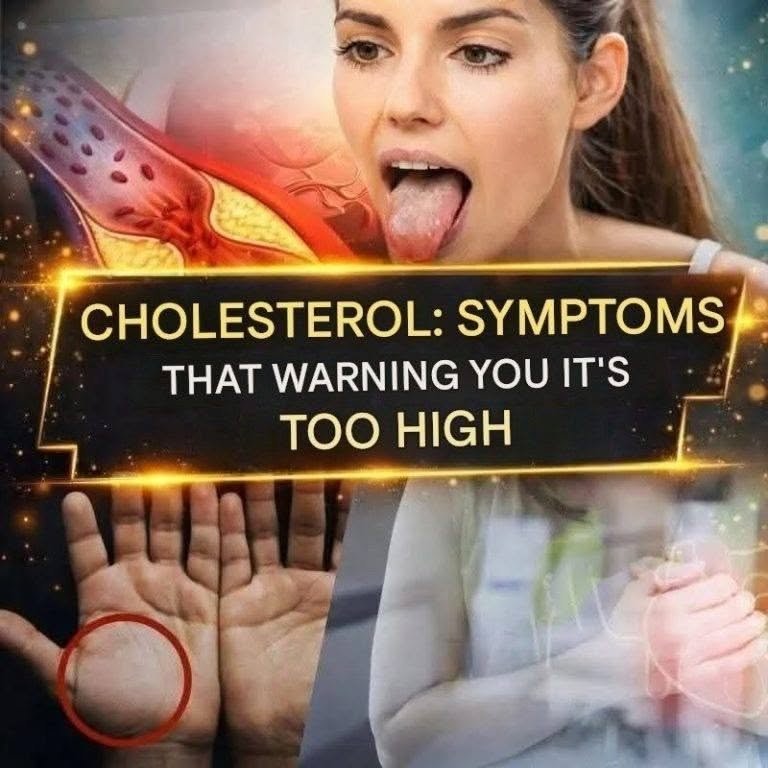
While high cholesterol itself is often called a “silent killer” because it typically has no direct symptoms, prolonged high levels cause fatty deposits to build up in your blood vessels (atherosclerosis). Over time, this narrowing of the arteries limits blood flow throughout the body, triggering noticeable warning signs in key areas:
1. Leg or Foot Pain, Numbness, or Cramping (Peripheral Artery Disease)
-
The Warning Sign: Pain, tightness, heavy aching, or cramping in your calves, thighs, or buttocks during exercise or walking that disappears after a few minutes of rest (claudication). You may also notice coldness in your lower leg or foot compared to the other side.
-
Why It Happens: High cholesterol causes plaque buildup in the arteries carrying blood to your limbs, restricting oxygen and nutrients to your leg muscles.
2. Yellowish Bumps on Skin or Eyelids (Xanthomas and Xanthelasma)
-
The Warning Sign: Soft, yellowish growths, bumps, or patches appearing on your eyelids, hands, elbows, knees, or ankles.
-
Why It Happens: When cholesterol levels are extremely high (often due to familial hypercholesterolemia, a genetic condition), surplus fat deposits can physically collect beneath the skin and around tendons.
3. A Grey or White Ring Around the Cornea (Arcus Senilis)
-
The Warning Sign: A light grey, white, or bluish ring forming around the outer edge of your eye’s cornea.
-
Why It Happens: This occurs when lipid (cholesterol) deposits settle in the outer margins of the corneal tissue. While common and harmless in older adults, its presence in individuals under age 45 is often a clear signal of significantly elevated blood cholesterol.
4. Chest Pain or Angina
-
The Warning Sign: A feeling of tightness, pressure, heaviness, or a squeezing sensation in the center or left side of your chest, particularly during physical exertion or stress.
-
Why It Happens: Plaque buildup restricts blood flow in the coronary arteries supplying the heart muscle. When demand for oxygen increases, the heart becomes starved for blood, causing chest pain.
5. Cold, Pale, or Slow-Healing Legs and Feet
-
The Warning Sign: Toenails growing slowly, loss of hair on legs and feet, or minor cuts/sores on the legs or feet that take an unusually long time to heal.
-
Why It Happens: Severely reduced peripheral blood circulation starves skin cells and tissues of essential oxygen and immune cells needed for normal tissue maintenance and repair.
Note: Because high cholesterol rarely causes symptoms until significant arterial narrowing has already occurred, routine blood tests (a lipid panel) are the only reliable way to catch and manage high cholesterol before complications arise.
