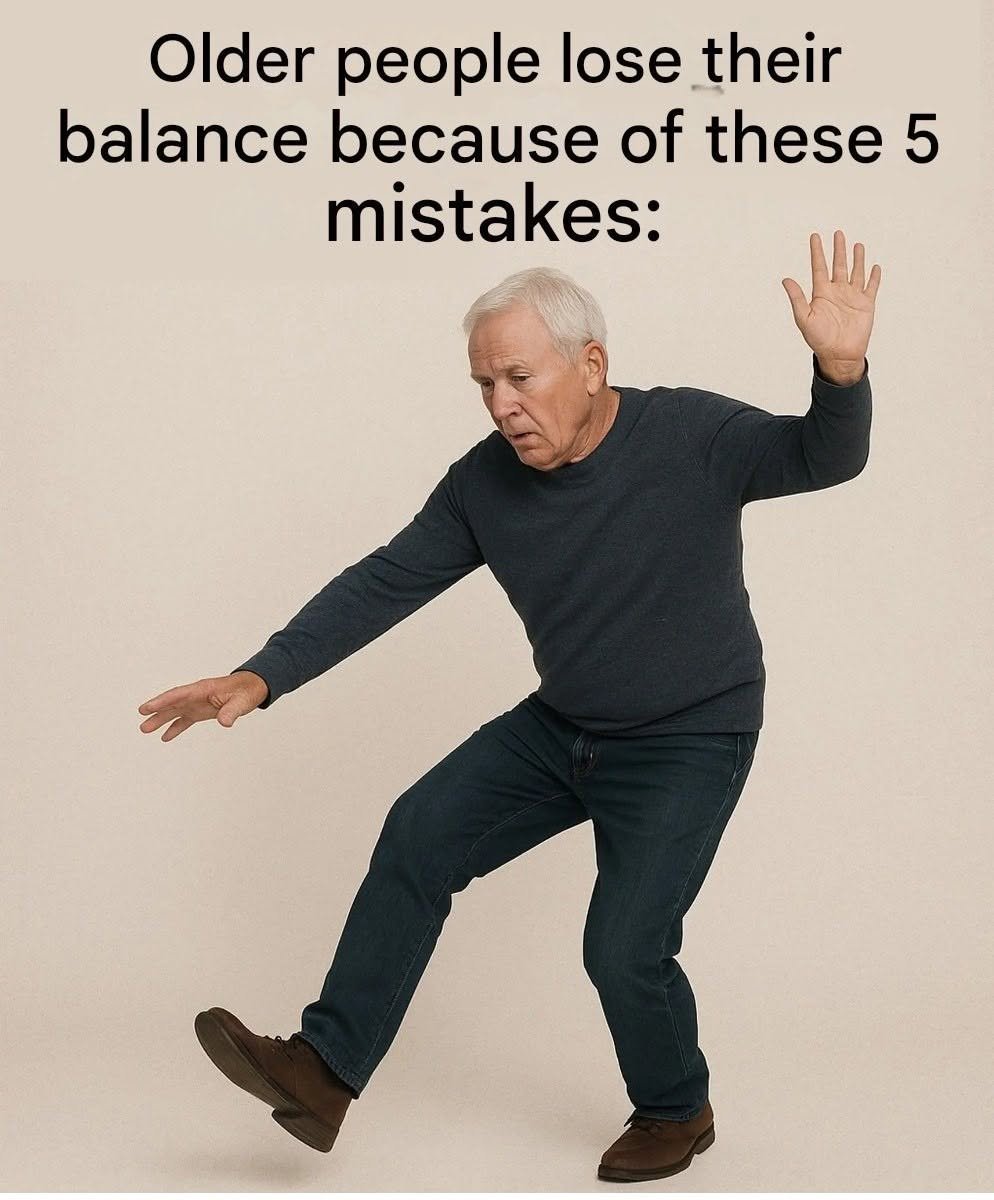
When health articles address balance and fall prevention in older adults, they often frame the issue around everyday habits, physical oversights, and physiological changes. Maintaining stability relies heavily on three sensory systems: vision, the vestibular system (inner ear), and proprioception (awareness of body position in space).
Here are five common lifestyle and physical factors that frequently contribute to a loss of balance in older adults:
1. Inadequate Lower-Body Strength and Sedentary Habits
-
The Underlying Issue: As we age, natural muscle mass declines (sarcopenia)—particularly in the calves, thighs, and core—unless actively maintained through resistance or functional exercise.
-
Why It Affects Balance: When leg and core muscles weaken, the body loses its ability to make rapid micro-adjustments when footing slips or uneven ground is encountered.
2. Overlooking Medication Side Effects and Interactions
-
The Underlying Issue: Older adults are frequently prescribed multiple medications. Certain drugs—including blood pressure medications (which can cause orthostatic hypotension), sedatives, antihistamines, and antidepressants—carry side effects like dizziness, drowsiness, or blurred vision.
-
Why It Affects Balance: Sudden lightheadedness upon standing or mild grogginess impairs spatial awareness and reaction times, dramatically increasing the risk of a misstep.
3. Wearing Improper or Unsupportive Footwear
-
The Underlying Issue: Walking around the house in slick socks, worn-out slippers with no heel structure, or shoes with overly thick, unbending soles can disrupt normal biomechanics.
-
Why It Affects Balance: Feet are packed with sensory receptors that tell the brain what kind of surface you are standing on. Slippers or shoes that lack grip and ankle support block this vital sensory feedback, making slips much more likely.
4. Neglecting Vision and Hearing Checkups
-
The Underlying Issue: Changes in eyesight (such as cataracts, glaucoma, or outdated glasses prescriptions) and hearing loss are often accepted as normal parts of aging without timely intervention.
-
Why It Affects Balance: Vision gives the brain immediate spatial reference points. Meanwhile, the inner ear structures responsible for hearing and balance are closely linked; hearing loss has been clinically correlated with reduced spatial orientation and increased fall risks.
5. Ignoring Environmental Hazards and Lighting at Home
-
The Underlying Issue: Familiarity with a home can lead to ignoring loose throw rugs, cluttered hallways, missing handrails on stairwells, or dim lighting in corridors and bathrooms.
-
Why It Affects Balance: Even with great physical fitness, an unexpected obstacle in low light gives the nervous system too little time to correct a stumble.
