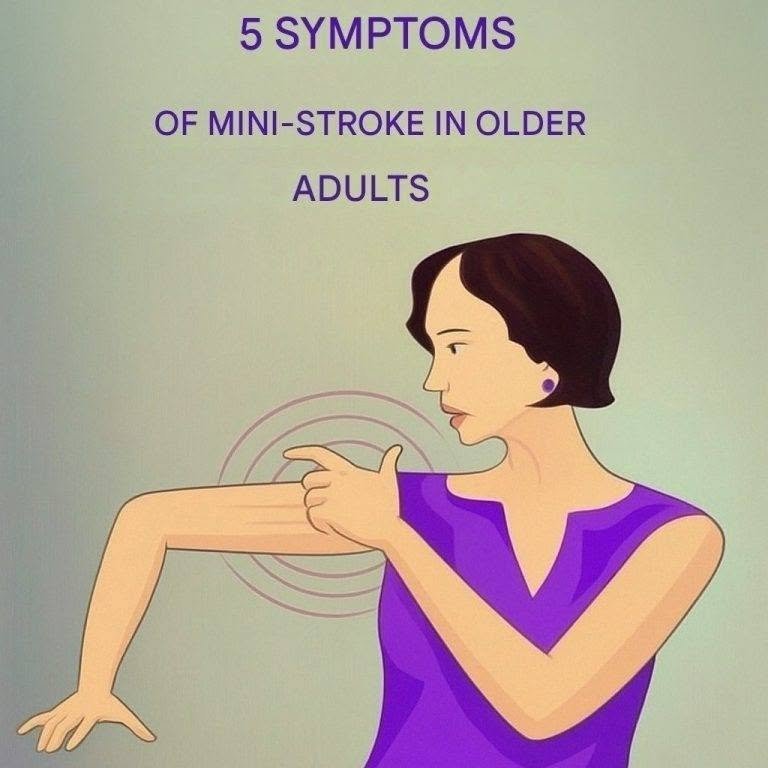
A Transient Ischemic Attack (TIA), often referred to as a “mini-stroke,” is a temporary disruption of blood flow to part of the brain. While the symptoms of a TIA typically resolve within a few minutes to hours without causing permanent brain damage, it is a medical emergency. A TIA serves as a critical warning sign that a full-blown, debilitating stroke may be imminent—often within days or weeks.
In older adults, mini-stroke symptoms can sometimes be subtle, temporary, or mistaken for general confusion or normal aging. Recognizing them immediately can save a life.
Here are 5 symptoms of a mini-stroke in older adults that should never be ignored:
1. Sudden Weakness or Numbness on One Side of the Body
-
What it looks like: One side of the face may droop when smiling, an arm might feel suddenly heavy or drift downward when raised, or a leg may buckle or feel unusually weak while walking.
-
Why it happens: When a temporary blood clot or plaque fragment briefly blocks an artery supplying blood to the motor cortex of the brain, the nerves controlling muscle movement on the opposite side of the body momentarily lose function.
2. Sudden Difficulty Speaking or Understanding Speech
-
What it looks like: The person may suddenly slur their words, struggle to find basic vocabulary, produce jumbled language, or appear completely unable to comprehend simple questions or statements.
-
Why it happens: Transient ischemia in the brain’s language centers (such as Broca’s or Wernicke’s areas, typically in the left hemisphere) disrupts the brain’s ability to process or articulate spoken communication.
3. Sudden Vision Changes or Loss in One Eye
-
What it looks like: A sudden, painless loss of vision in one eye—often described as a dark shade, curtain, or fog pulling down over their field of vision (clinically known as amaurosis fugax). It can also manifest as sudden double vision or blurred sight in both eyes.
-
Why it happens: Micro-clots traveling through the carotid artery can temporarily block the ophthalmic artery supplying blood to the retina, starving the visual receptors of oxygen.
4. Sudden Loss of Balance, Dizziness, or Incoordination
-
What it looks like: An abrupt onset of severe lightheadedness, loss of physical balance, sudden stumbling, or feeling as though the room is spinning (vertigo), often accompanied by difficulty performing simple fine-motor movements.
-
Why it happens: Reduced blood flow to the cerebellum or brainstem—the regions responsible for spatial orientation, balance, and fine motor movement—instantly compromises body stability and coordination.
5. Sudden, Severe Confusion or Mental Fog
-
What it looks like: The person may suddenly appear disoriented, unable to recognize familiar surroundings, unsure of where they are, or unable to follow a basic line of thought, even if they can still speak clearly.
-
Why it happens: Temporary lack of oxygen to key cognitive regions can cause a sudden, transient drop in brain function, which family members often mistake for a sudden bout of dementia or exhaustion.
What to Do: Remember the FAST Protocol
If you observe any of these symptoms—even if they completely disappear after 5 or 10 minutes—do not wait to see if they return, and do not drive yourself to the clinic.
Call emergency services (such as 911) immediately.
Prompt medical evaluation allows doctors to perform brain imaging, evaluate the carotid arteries, and begin preventative interventions (such as antiplatelet or blood pressure medications) to prevent a major, permanent stroke.
