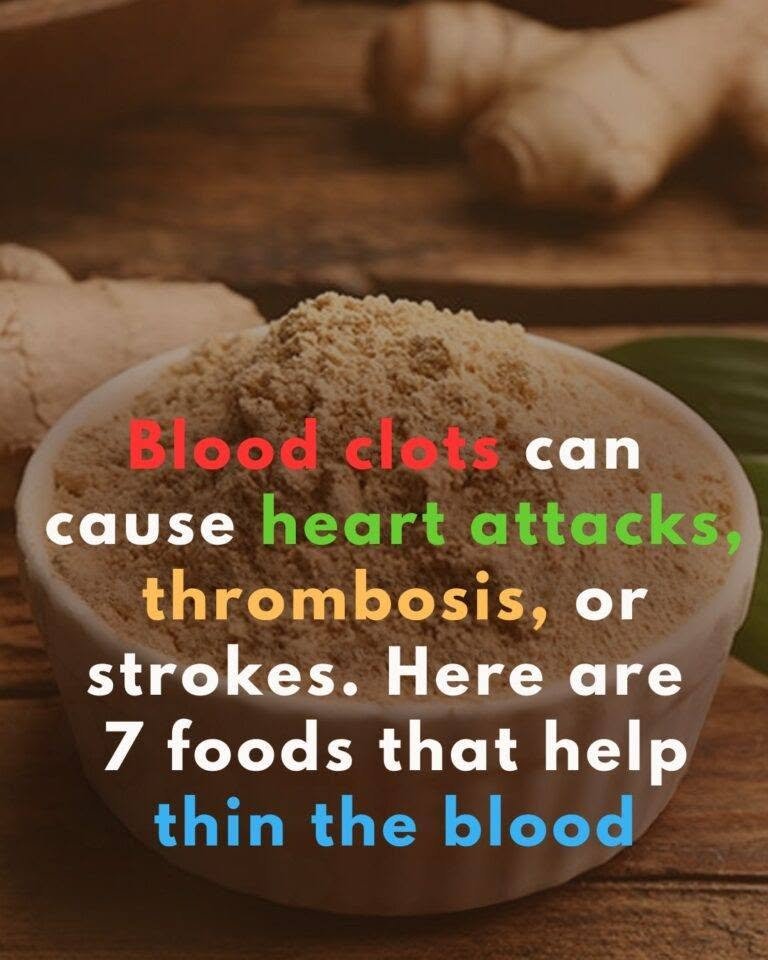
Certain everyday foods contain natural compounds—such as salicylates, coumarin, curcumin, and omega-3 fatty acids—that can gently support cardiovascular circulation and reduce blood platelet stickiness.
While these foods help promote healthy blood flow, it is important to remember that they are dietary aids, not replacements for prescription blood thinners (anticoagulants or antiplatelet medications).
Here are 7 powerful blood-thinning foods and how their active compounds work:
1. Turmeric (Curcumin)
-
Active Compound: Curcumin, the bright yellow antioxidant that gives turmeric its rich color.
-
How It Works: Lab and clinical studies suggest that curcumin acts as a mild anticoagulant by inhibiting components of the coagulation cascade (clotting factors) and reducing platelet aggregation.
-
How to Enjoy: Add ground turmeric to curries, roasted vegetables, warm golden milk, or soups paired with a pinch of black pepper (which increases curcumin absorption).
2. Ginger
-
Active Compound: Salicylates, a natural plant chemical derived from salicylic acid (the same underlying chemical compound found in aspirin).
-
How It Works: Salicylates prevent blood platelets from easily clumping together, promoting smooth blood flow through arteries and veins.
-
How to Enjoy: Steep fresh ginger root slices in hot water for tea, add grated ginger to stir-fries, or blend it into morning smoothies.
3. Garlic
-
Active Compounds: Allicin and sulfur-containing compounds.
-
How It Works: Garlic has been shown to reduce thromboxane formation (a substance released by blood platelets that triggers clotting) and lower blood viscosity, helping maintain healthy blood pressure and circulation.
-
How to Enjoy: Crushing or chopping raw garlic and letting it sit for 5 to 10 minutes before cooking maximizes the activation of allicin.
4. Cinnamon (Cassia Cinnamon)
-
Active Compound: Coumarin, a naturally occurring compound that serves as the chemical precursor for several pharmaceutical blood-thinning drugs.
-
How It Works: Coumarin exhibits potent anticoagulant properties that help prevent clot formation.
-
Important Caution: Cassia cinnamon contains much higher levels of coumarin than Ceylon (“true”) cinnamon. Consuming large amounts of Cassia cinnamon long-term can strain the liver, so moderation is key.
5. Cayenne Pepper (Chili Peppers)
-
Active Compounds: High concentrations of capsaicin and salicylates.
-
How It Works: Capsaicin boosts nitric oxide production in blood vessels, relaxing vessel walls, lowering blood pressure, and inhibiting excess platelet stickiness.
-
How to Enjoy: Sprinkle ground cayenne pepper into stews, marinades, or over roasted nuts for a spicy cardiovascular kick.
6. Fatty Fish (Rich in Omega-3s)
-
Active Compounds: Eicosapentaenoic acid (EPA) and docosahexaenoic acid (DHA).
-
How It Works: Omega-3 fatty acids alter the lipid composition of blood cell membranes, reducing systemic vascular inflammation, lowering triglyceride levels, and decreasing platelet aggregation.
-
Best Food Sources: Wild-caught salmon, mackerel, sardines, herring, and anchovies.
7. Berries & Dark Grapes (Rich in Salicylates & Vitamin E)
-
Active Compounds: Anthocyanins, salicylates, and Vitamin E.
-
How It Works: Blueberries, strawberries, raspberries, and dark grapes contain plant antioxidants and natural salicylates that help protect vascular linings from oxidative damage while subtly thinning the blood.
-
How to Enjoy: Eat a handful of fresh berries daily, or add them to oatmeal, Greek yogurt, or salads.
Important Medical Precautions
-
Medication Interactions: If you are currently prescribed blood thinners—such as Warfarin (Coumadin), Clopidogrel (Plavix), Apixaban (Eliquis), or Daily Aspirin—consuming large amounts of these foods (especially in concentrated supplement forms) can amplify the blood-thinning effect. This increases the risk of excessive bleeding, bruising, or stomach bleeding.
-
Upcoming Surgeries: If you have an upcoming medical or dental procedure scheduled, notify your physician. You may need to pause high-dose herbal supplements (like turmeric, garlic, or ginger extract) 1 to 2 weeks prior to surgery to minimize surgical bleeding risks.
