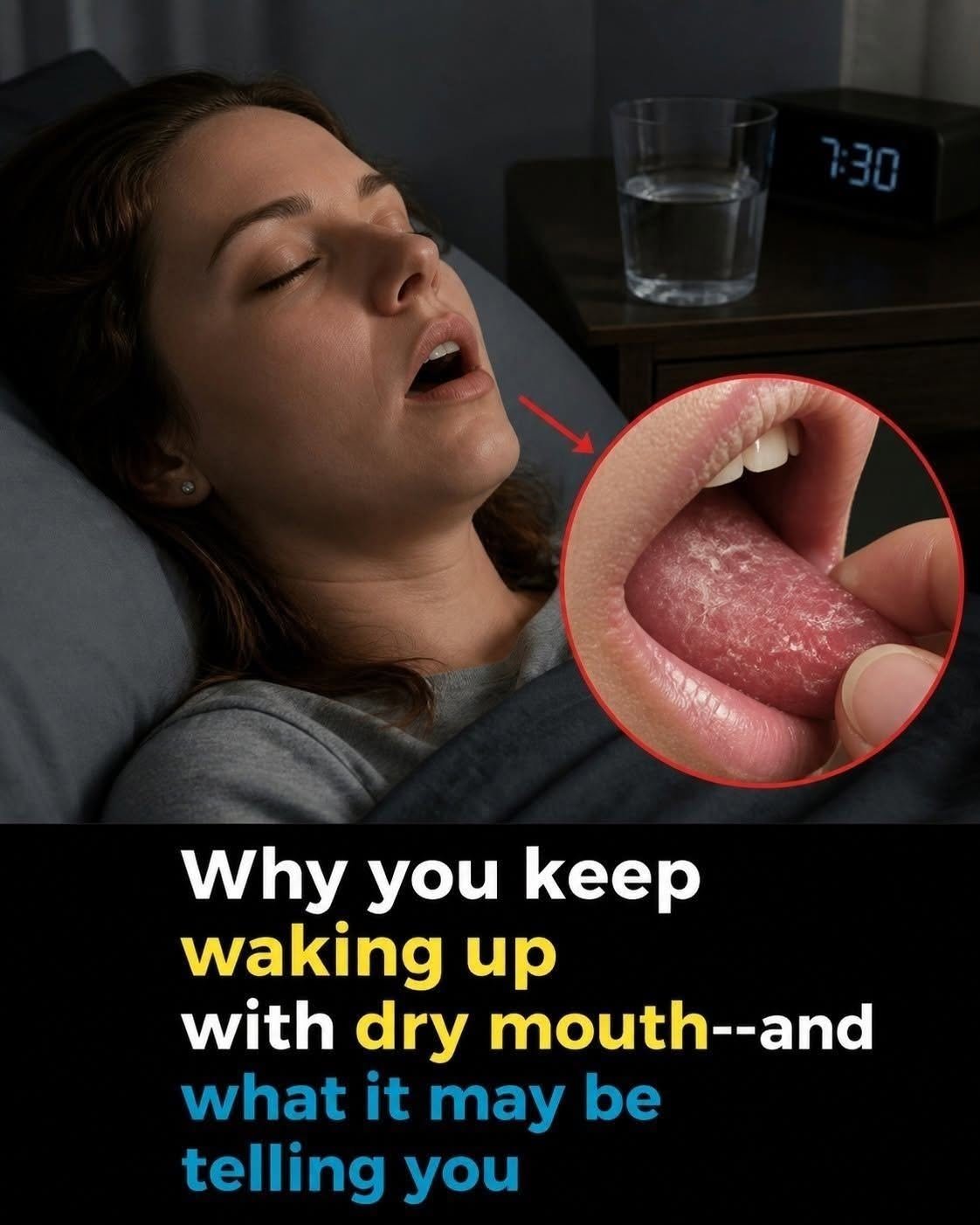
Waking up with a mouth that feels dry, sticky, or parched is more than just an uncomfortable annoyance—it is often a direct signal from your body about your nighttime physiology, hydration levels, or underlying health.
While many people brush it off as a minor inconvenience, persistent morning dry mouth (xerostomia) highlights several key things your body may be trying to tell you:
1. “You Have Been Breathing Through Your Mouth All Night”
-
What’s Happening: This is the most common physical cause of morning dry mouth. If your nasal passages are blocked due to allergies, a deviated septum, sinus congestion, or Obstructive Sleep Apnea (OSA), you automatically resort to mouth breathing while sleeping.
-
The Result: A steady stream of air passes over your oral tissues all night, evaporating the protective layer of saliva and leaving your tongue, teeth, and throat completely dried out by morning.
2. “Your Medication Routine Is Drying Out Your Glands”
-
What’s Happening: If you take medications before bed—such as antihistamines, blood pressure drugs, antidepressants, muscle relaxants, or anxiety medications—their systemic anticholinergic effects peak while you sleep.
-
The Result: These drugs block the autonomic nervous system signals that stimulate your salivary glands, causing baseline fluid production to drop significantly overnight.
3. “Your Evening Habits Need a Re-evaluation”
-
What’s Happening: Consuming alcohol, salty foods, or caffeinated beverages close to bedtime, or using tobacco products in the evening.
-
The Result: Alcohol and caffeine act as diuretics, pulling water from your system and disrupting overall hydration balance, leaving your body parched by morning.
4. “Your Blood Sugar Levels May Be Elevated”
-
What’s Happening: If underlying prediabetes or unmanaged diabetes is present, your body attempts to flush out excess glucose through increased urination.
-
The Result: This nocturnal fluid loss leads to cellular dehydration, which aggressively triggers your brain’s thirst centers and results in a severely dry mouth and intense thirst upon waking.
5. “Your Body Is Mildly Dehydrated”
-
What’s Happening: Drinking inadequate amounts of water throughout the day, or sleeping in a bedroom with very dry air (due to heating, air conditioning, or low humidity).
-
The Result: When total body fluid is low, your body prioritizes hydration for vital organs like the heart and brain, scaling back non-essential fluid secretions like saliva.
Simple Ways to Protect Your Mouth and Relieve Morning Dryness
-
Run a Cool-Mist Humidifier: Placing a humidifier in your bedroom adds moisture back into the air, preventing overnight evaporation of saliva caused by breathing.
-
Sip Water Consistently: Keep a glass of water on your nightstand to take small sips if you wake up parched.
-
Breathe Through Your Nose: Address underlying nasal congestion with saline rinses, allergy management, or consulting an ENT if structural breathing issues are present.
-
Avoid Dry Mouth Triggers Before Bed: Limit evening alcohol, caffeine, and heavy, high-sodium snacks.
-
Practice Good Oral Hygiene: Because saliva protects teeth from decay, waking up dry puts you at higher risk for cavities. Brush thoroughly before bed and consider using a fluoride or alcohol-free, dry-mouth-specific mouthwash.
