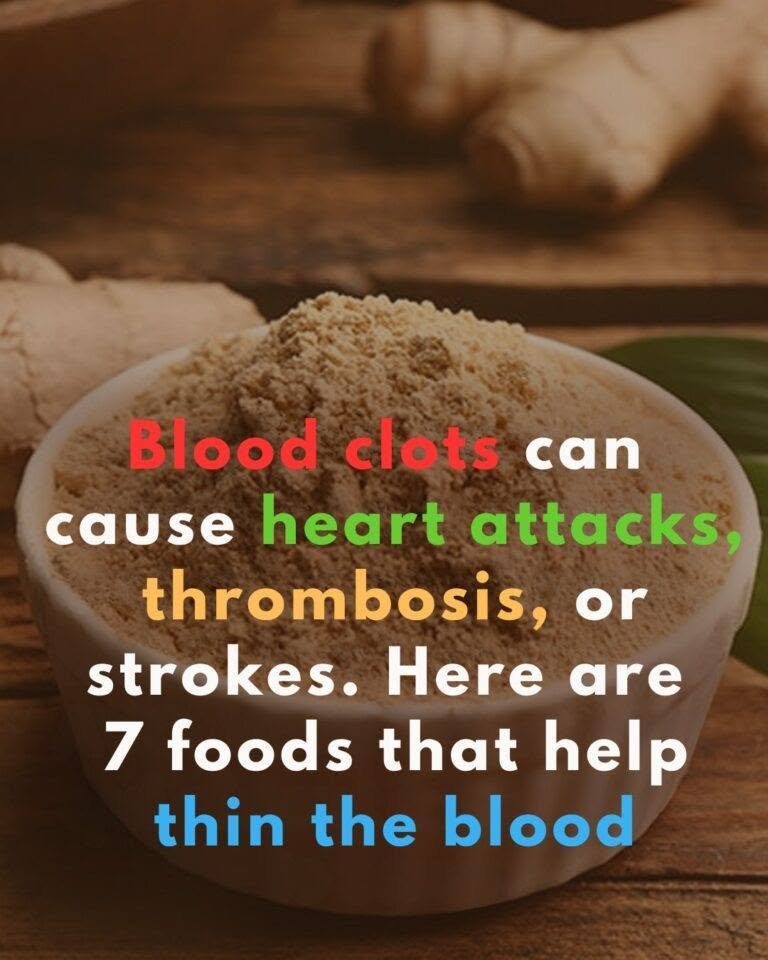
Certain foods contain bioactive compounds—such as salicylates, , and gingerols—that naturally inhibit platelet aggregation or slow down the blood clotting cascade.
While incorporating these foods into your diet supports circulatory health, they can interact strongly with prescription anticoagulants like warfarin or aspirin.
The 7 Powerful Blood-Thinning Foods
1. Turmeric (Curcumin)
-
Active Compound: Curcumin.
-
Mechanism: Inhibits , preventing platelets from clumping together to form arterial clots.
-
Best Consumption: Paired with black pepper (piperine) to boost absorption by up to 2,000%.
2. Ginger
-
Active Compound: Gingerol and natural salicylates.
-
Mechanism: Decreases , reducing the stickiness of blood platelets.
-
Best Consumption: Fresh root steeped in tea, blended into juices, or used in stir-fries.
3. Garlic
-
Active Compound: Allicin and ajoene.
-
Mechanism: Exhibits strong antiplatelet activity and stimulates , helping maintain smooth blood flow through microvessels.
-
Best Consumption: Crushed raw garlic left to sit for 10 minutes before eating to activate allicin synthesis.
4. Cayenne Pepper
-
Active Compound: High concentrations of natural salicylates and capsaicin.
-
Mechanism: Stimulates nitric oxide production to dilate blood vessels while blocking clotting factor activation.
-
Best Consumption: Added to cooking, lemon water, or soups in controlled amounts.
5. Cinnamon (Cassia)
-
Active Compound: Coumarin.
-
Mechanism: Directly interferes with vitamin K-dependent clotting factors in the liver.
-
Caution: Cassia cinnamon contains much higher coumarin levels than Ceylon (“true”) cinnamon; excessive long-term intake can cause liver toxicity.
6. Dark Chocolate & Raw Cacao
-
Active Compound: Flavanols (epicatechin).
-
Mechanism: Reduces platelet reactivity, prevents blood cell adhesion to arterial walls, and enhances endothelial function.
-
Best Consumption: $70\%$ or higher dark chocolate or unsweetened raw cacao powder.
7. Vitamin E-Rich Foods (Almonds, Sunflower Seeds, Avocados)
-
Active Compound: Alpha-tocopherol.
-
Mechanism: Acts as a mild antagonist to Vitamin K, preventing key clotting proteins from binding together.
-
Best Consumption: Whole food sources like raw nuts, seeds, spinach, and cold-pressed extra virgin olive oil.
Bioactive Mechanism & Potency Comparison
| Food / Spice | Primary Active Agent | Main Physiological Action | Relative Potency |
| Turmeric | Curcumin | Directly inhibits thrombin and platelet aggregation | High |
| Cinnamon (Cassia) | Coumarin | Antagonizes vitamin K clotting factors | High (use with caution) |
| Garlic | Ajoene / Allicin | Inhibits platelet binding and boosts fibrinolysis | Moderate-High |
| Ginger | Salicylates / Gingerol | Suppresses thromboxane A2 production | Moderate |
| Cayenne Pepper | Salicylates / Capsaicin | Dilates vessels & reduces blood cell stickiness | Moderate |
| Dark Chocolate | Flavanols | Improves endothelial flexibility & reduces adhesion | Mild-Moderate |
| Almonds & Seeds | Vitamin E | Competes with Vitamin K uptake | Mild |
Critical Clinical Precautions
-
Pre-Surgery Clearance: Discontinue high-dose medicinal intake of these foods (especially garlic, turmeric, and ginger supplements) at least 7 to 14 days before any scheduled surgery or dental procedure to minimize hemorrhage risk.
-
Drug Interactions: If you take prescription blood thinners (Warfarin, Eliquis, Plavix, or daily Aspirin), avoid high-dose supplements of these ingredients. Consuming them in normal culinary quantities is generally safe, but rapid shifts in intake can alter your INR (International Normalized Ratio) clotting scores.
