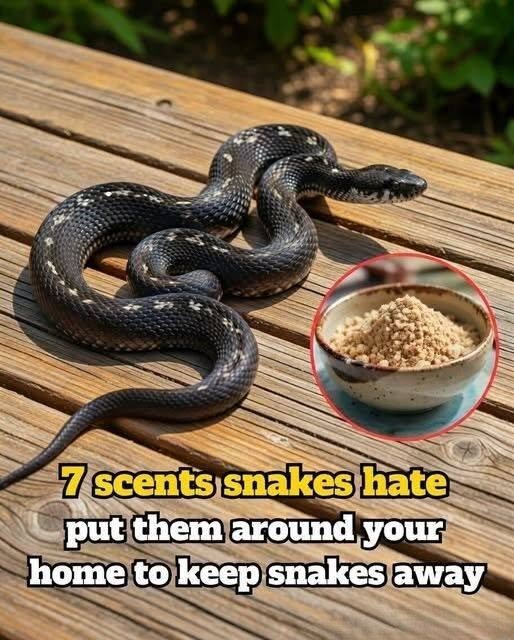
When garden and homestead clickbait flashes headlines like “7 smells snakes hate and how to use them to keep these slithery visitors away from your home,” they love to tap into primal fears. They want you to believe that sprinkling a few drops of essential oil or scattering fragrant plants around your patio will create an impenetrable force field that permanently banishes every snake in the county.
From a herpetological, wildlife biology, and pest-management perspective, snakes do not possess a generalized sense of smell like mammals; instead, they rely on a specialized sensory organ to interpret their environment. While aromatic deterrents offer limited, temporary mitigation, understanding snake ecology cuts right through the garden-lore myths.
The Science Behind Snake Sensory Perception
How do snakes interact with scents in their environment?
-
Jacobson’s Organ (Vomeronasal System): Snakes do not smell through their noses the way humans do. Instead, they flick their forked tongues into the air to collect chemical particles, then touch those particles to the Jacobson’s organ in the roof of their mouths to detect prey, predators, and environmental cues.
-
Olfactory Overload vs. Real Repellents: Certain pungent or volatile organic compounds (such as high concentrations of eugenol, cinnamon oil, or ammonia) can temporarily irritate a snake’s sensitive chemoreception or mucous membranes, causing them to alter their path. However, these scents dissipate quickly outdoors due to wind, sunlight, and rain.
-
The Myth of the “Snake-Proof” Plant: While commercial and clickbait lists often cite plants like marigolds, snake plants, or garlic as natural snake repellents, herpetological field studies show that snakes will readily slither through or nest near these plants if the surrounding habitat provides what they actually care about: shelter and food.
The 7 Common “Hated” Scents (and Their Realistic Limits)
When garden remedies claim snakes “hate” specific aromas, here is how those scents actually behave in the wild:
-
1. Cinnamon and Clove Oil: Contain strong phenolic compounds that irritate a snake’s sensory chemoreception when concentrated, but require frequent reapplication outdoors.
-
2. Peppermint Oil: Highly aromatic and pungent; while a strong dose can temporarily deter a snake from entering a confined space like a shed, its vapor evaporates rapidly in open air.
-
3. Garlic and Onions: Contain sulfur compounds that have a strong odor, but wildlife biologists note that snakes do not possess specialized aversion receptors for allium scents.
-
4. Sulfur Powder: Often marketed in commercial snake repellents; highly irritating to respiratory membranes when inhaled, but its effectiveness drops sharply after rainfall.
-
5. Vinegar: Excellent for cleaning surfaces or neutralizing scent trails of prey (like rodents), but offers virtually no long-term spatial repulsion for snakes.
-
6. Ammonia: Mimics the scent of predators or waste products in high concentrations, but off-gasses quickly and can damage nearby plants if used excessively in garden beds.
-
7. Cayenne Pepper / Chili Extracts: Capsaicin irritates mammalian pain receptors, but reptiles have a different physiological response, making capsaicin far less effective as a direct snake deterrent than folklore suggests.
Evidence-Based, Structural Snake Deterrent Strategies
If you want to keep snakes away from your home sustainably, focus on habitat modification rather than relying on masking scents. Snakes stay away when they cannot find food or shelter:
-
1. Eliminate Rodent Populations: Snakes do not come to your yard for your garden soil; they follow their food source—mice and rats. Secure trash cans, store pet food indoors, and seal entry points to eliminate rodents.
-
2. Clear Shelter and Cover: Snakes are secretive animals that avoid open areas where they are vulnerable to birds of prey. Keep lawns mown, clear away tall brush, elevate firewood at least a foot off the ground, and pull mulch back a few inches from foundation walls.
-
3. Seal Foundation Gaps: Inspect your home’s perimeter, crawlspaces, and basement vents. Seal any cracks or gaps larger than a quarter-inch with heavy-gauge hardware cloth or expanding foam to prevent snakes from seeking shelter indoors.
