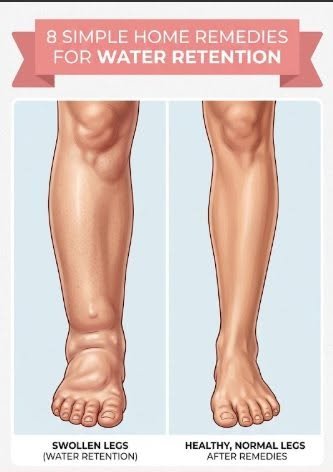
Lists ranking “8 best home remedies to reduce water retention” are a staple of health blogs and viral wellness content. While they often mix helpful physiological adjustments with oversimplified advice, addressing mild fluid retention (edema or temporary bloating) relies on well-established, evidence-based lifestyle habits rather than secret tricks.
Evaluating what actually works helps separate sound physiological care from internet fluff.
Common “Remedies” and What the Evidence Shows
-
Adjusting Sodium and Potassium Balance
-
The Reality: Sodium causes the body to hold onto water to maintain fluid balance. However, simply cutting out all salt isn’t the whole story—improving your sodium-to-potassium ratio matters more. Potassium-rich foods (like leafy greens, beans, avocados, and bananas) help the kidneys excrete excess sodium.
-
-
Staying Consistently Hydrated
-
The Reality: It sounds counterintuitive, but drinking too little water can cause the body to hoard fluids out of a protective survival response. Steady hydration supports kidney function, helping flush out excess sodium.
-
-
Targeting Refined Carbohydrates
-
The Reality: Every gram of carbohydrate stored as glycogen in your muscles and liver holds onto roughly three grams of water. Spikes in refined carbs (white bread, pastries, sugary snacks) cause rapid water weight fluctuations. Eating balanced, complex carbs stabilizes this.
-
-
Physical Movement and Muscle Contraction
-
The Reality: Gravity causes fluid to pool in the lower extremities during long periods of sitting or standing. The skeletal muscles act as a pump; walking, stretching, or light movement helps push fluid back toward circulation.
-
-
Elevation and Compression
-
The Reality: Propagating physical mechanics—such as elevating swollen legs above the level of the heart or wearing properly fitted compression stockings—uses gravity and external pressure to physically prevent and reduce fluid pooling.
-
-
Magnesium and Vitamin B6 Support
-
The Reality: For cyclical or hormonal fluid retention (such as premenstrual bloating), clinical studies suggest that maintaining adequate magnesium and vitamin B6 can moderately improve symptoms by supporting cellular fluid regulation.
-
-
Natural Diuretics (Herbs and Teas)
-
The Reality: Substances like dandelion extract, green tea, or hibiscus have mild, short-term diuretic effects that increase urine output. They can offer temporary relief, but they do not fix the underlying cause of chronic fluid retention.
-
-
When Home Remedies Aren’t Enough (The Medical Reality)
-
The Reality: Persistent, severe, or sudden swelling—especially if it affects only one leg, is accompanied by shortness of breath, or pits deeply when pressed—is not a minor lifestyle issue. It can signal underlying cardiac, renal, hepatic, or vascular pathology that requires a physician, not a home remedy.
-
The Bottom Line
Ignore the clickbait framing that treats water retention as a mysterious toxin buildup requiring a radical “flush.” Managing temporary fluid shifts is about smart hydration, electrolyte balance, movement, and nutrition. If swelling is chronic or severe, the best remedy is a proper medical evaluation to rule out underlying health conditions.
