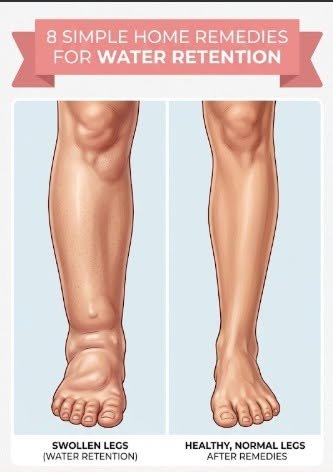
Water retention—medically known as edema—occurs when excess fluid builds up in your body’s tissues, often leaving your fingers, ankles, legs, or abdomen feeling swollen, heavy, or puffy. While mild water retention is frequently triggered by lifestyle factors like high sodium intake, hormonal shifts, or prolonged sitting, persistent swelling should always be evaluated by a healthcare professional to rule out underlying kidney, heart, or circulatory conditions.
When dealing with everyday fluid retention, gentle, evidence-based lifestyle adjustments can help your body naturally restore fluid balance. Here are 8 of the best home remedies to reduce water retention:
1. Drastically Cut Back on Sodium (Salt)
-
Why it works: Sodium is a magnet for water. When you consume too much salt, your body holds onto extra water to maintain the proper balance of fluids in your bloodstream.
-
How to apply it: Skip heavily processed foods, canned soups, frozen meals, and salty snacks, which are the hidden sources of most dietary sodium. Focus instead on fresh, whole foods seasoned with herbs, spices, lemon juice, or garlic rather than the salt shaker.
2. Boost Your Potassium Intake
-
Why it works: Potassium has a direct, inverse relationship with sodium. It helps your kidneys excrete excess sodium through your urine while relaxing the walls of your blood vessels, easing fluid buildup.
-
How to apply it: Incorporate potassium-rich foods into your daily meals, such as bananas, avocados, sweet potatoes, spinach, white beans, and salmon. (Note: If you take blood pressure medications like potassium-sparing diuretics or have kidney issues, check with your doctor before altering your potassium intake).
3. Increase Magnesium-Rich Foods or Supplements
-
Why it works: Magnesium is an essential mineral involved in hundreds of enzymatic reactions, including regulating water balance. Studies suggest that magnesium supplementation can help reduce premenstrual water retention and bloating.
-
How to apply it: Add magnesium-packed foods like dark leafy greens, pumpkin seeds, almonds, dark chocolate, and avocados to your diet, or discuss a safe magnesium supplement with your physician.
4. Move Your Body and Exercise Regularly
-
Why it works: Gravity naturally causes fluid to pool in your lower extremities when you sit or stand for hours. Physical activity acts like a pump, driving excess fluid out of your tissues and back into the circulatory system to be processed by the kidneys.
-
How to apply it: Engage in daily moderate exercise, such as a brisk walk, swimming, or cycling. If you have a desk job, make it a habit to stand up, stretch, and walk around for a few minutes every hour.
5. Elevate Your Legs and Feet
-
Why it works: Harnessing gravity in the opposite direction gives your circulatory and lymphatic systems a mechanical assist in draining pooled fluid away from your lower legs and back toward your core.
-
How to apply it: Several times a day—or whenever you feel heaviness in your ankles—lie down and prop your legs up on pillows so they are elevated above the level of your heart for 15 to 20 minutes.
6. Drink More Water, Not Less
-
Why it works: It sounds counterintuitive, but when you are mildly dehydrated, your body panics and holds onto every drop of water it can, worsening fluid retention. Drinking adequate water signals your body that it is safe to release stored fluids.
-
How to apply it: Keep a reusable water bottle with you and sip pure water consistently throughout the day. Minimize sugary beverages and alcohol, which can promote dehydration and inflammation.
7. Eat More Dandelion and Natural Diuretic Foods
-
Why it works: Certain whole foods possess mild, natural diuretic properties, gently encouraging the kidneys to flush out excess water and salt without stripping the body harshly.
-
How to apply it: Incorporate foods like dandelion greens, parsley, asparagus, cucumbers, watermelons, and green tea into your routine. Dandelion tea, in particular, has a long-standing traditional use for reducing mild bloating and water weight.
8. Avoid Prolonged Sitting or Standing
-
Why it works: Muscular contraction in your calves acts as a natural “second heart,” squeezing veins to push blood and fluid upward. When you stay completely still for hours, that muscular pump is turned off, causing fluid to seep into surrounding tissues.
-
How to apply it: If you travel frequently or work a sedentary job, wear gentle compression socks, flex your ankles regularly while sitting, and take short walking breaks to keep your circulation active.
When to See a Doctor
While these home remedies are wonderful for everyday puffiness or mild bloating, you should seek immediate medical attention if water retention appears suddenly, affects only one leg (which could signal a blood clot like a DVT), or is accompanied by severe shortness of breath, chest pain, or rapid, unexplained weight gain.
