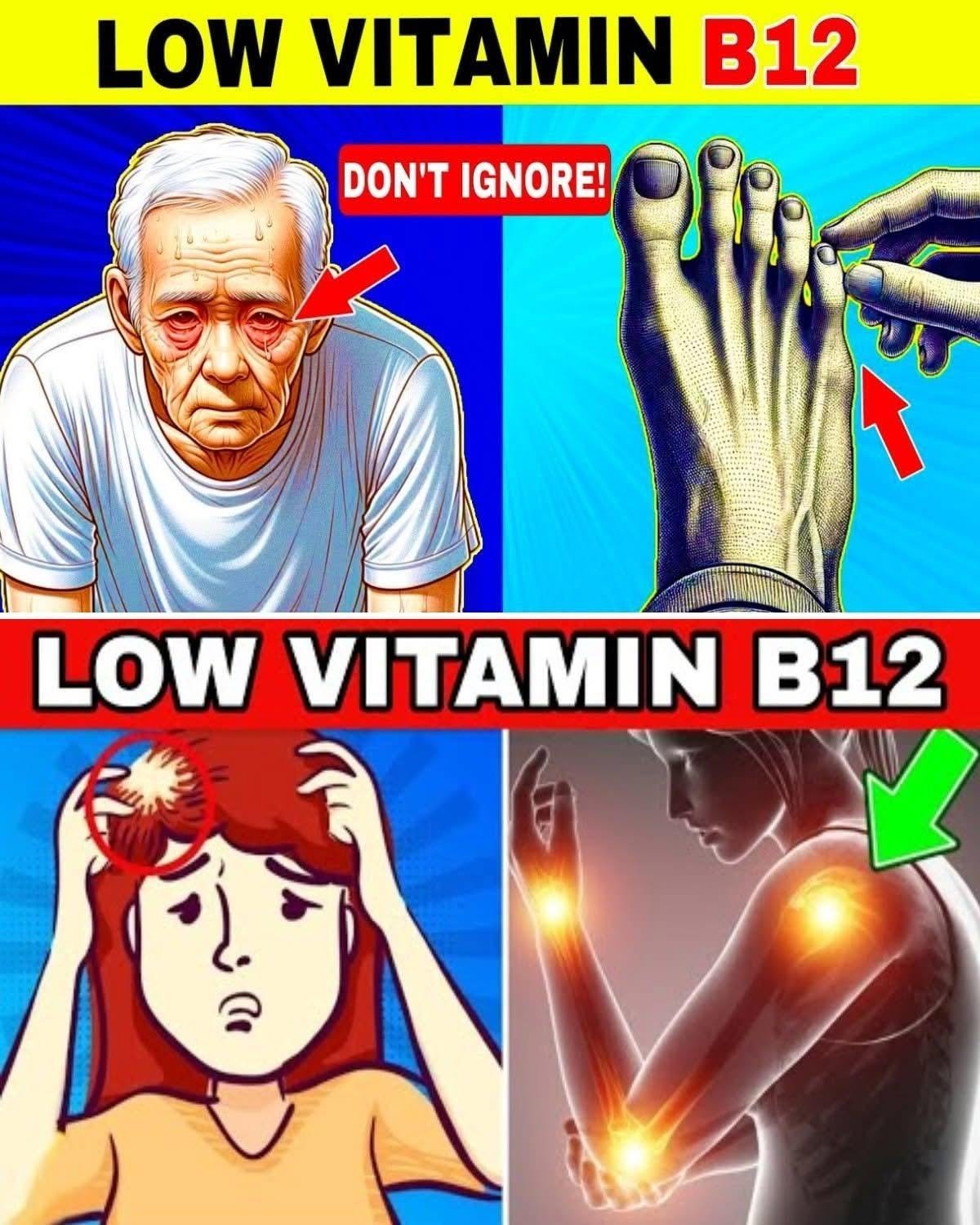
When sensational health articles or viral videos promise to reveal “9 hidden signs your body needs more Vitamin B12,” they often turn normal everyday fatigue into an urgent medical mystery.
The underlying nutritional reality is both simpler and more specific: Vitamin B12 is an essential micronutrient required for DNA synthesis, neurological function, and red blood cell production. Because your nervous system and blood supply rely so heavily on it, a genuine B12 deficiency doesn’t just make you tired—it triggers a distinct cascade of systemic neurological and hematological warning signs.
An evidence-based look at what B12 actually does in the body helps you distinguish everyday exhaustion from true micronutrient depletion.
Why B12 Deficiency Mimics So Many Conditions
Your body cannot synthesize Vitamin B12 on its own; you must absorb it from animal products (meat, fish, eggs, dairy) or fortified foods. Absorption is a complex multi-step process involving stomach acid, digestive enzymes, and a specialized protein called intrinsic factor produced in the stomach.
As we age, or if individuals take acid-suppressing medications (like proton pump inhibitors) or follow strict plant-based diets without supplementation, absorption plummets. When B12 drops, the myelin sheath protecting your nerve fibers and the oxygen-carrying capacity of your red blood cells begin to fail.
The Real Signs of Vitamin B12 Deficiency
While clickbait lists often exaggerate minor quirks, medical science recognizes several hallmark indicators that your B12 levels require attention:
1. Unexplained, Deep-Seated Fatigue and Weakness
-
The Mechanism: Without enough B12, your bone marrow cannot efficiently produce healthy red blood cells (leading to megaloblastic anemia). Fewer red blood cells mean less oxygen delivered to your tissues and muscles, leaving you profoundly exhausted even after a full night’s sleep.
2. Peripheral Neuropathy (Numbness or Tingling)
-
The Mechanism: B12 is vital for maintaining the myelin sheath that insulates your nerves. A deficiency often presents as “pins and needles,” numbness, or a buzzing sensation in your hands and feet.
3. Cognitive Fog, Memory Lapses, and Brain Fatigue
-
The Mechanism: Because the central nervous system depends heavily on B12 for neurological maintenance, low levels can manifest as difficulty concentrating, word-finding issues, or short-term memory lapses that are often mistaken for normal aging.
4. Balance Issues and Unsteady Gait
-
The Mechanism: Advanced B12 deficiency can affect the posterior columns of the spinal cord, impairing your sense of proprioception (knowing where your body is in space). This leads to unsteadiness, stumbling, or clumsiness while walking.
5. A Smooth, Sore, or “Beefy Red” Tongue (Glossitis)
-
The Mechanism: Rapidly dividing cells—like those in the lining of your mouth and tongue—are hit hard by B12 shortages. Your tongue may lose its normal texture, becoming smooth, swollen, red, and painful, sometimes accompanied by mouth ulcers.
6. Pale or Jaundiced Skin Tint
-
The Mechanism: Because defective red blood cells break down prematurely, they release excess bilirubin into the system, which can give the skin and the whites of the eyes a subtle, pale-yellowish tint.
7. Mood Changes, Irritability, or Low Spirits
-
The Mechanism: B12 is intimately involved in synthesizing neurotransmitters like serotonin and dopamine. Depleted levels are frequently linked to mood disturbances, irritability, or depressive symptoms.
8. Visual Disturbances
-
The Mechanism: In rare or severe cases, long-term B12 deficiency can damage the optic nerve, leading to blurry or disturbed vision.
9. Weakened Muscle Function and Joint Aches
-
The Mechanism: Combined with anemia and nerve impairment, systemic B12 depletion often manifests as overall physical heaviness, muscle weakness, and joint discomfort unrelated to injury.
How to Verify and Address B12 Levels
If you suspect a deficiency, do not self-prescribe mega-dose supplements without testing.
-
Get Tested: A simple blood test checking serum B12, along with methylmalonic acid (MMA) or homocysteine levels, gives a definitive clinical picture.
-
Identify the Root Cause: If your diet lacks B12 (common in strict vegans), supplementation or fortified foods resolve the issue easily. However, if your levels are low due to malabsorption (such as pernicious anemia or low stomach acid), oral supplements may not work, and sublingual tablets or B12 injections prescribed by a physician become necessary.
