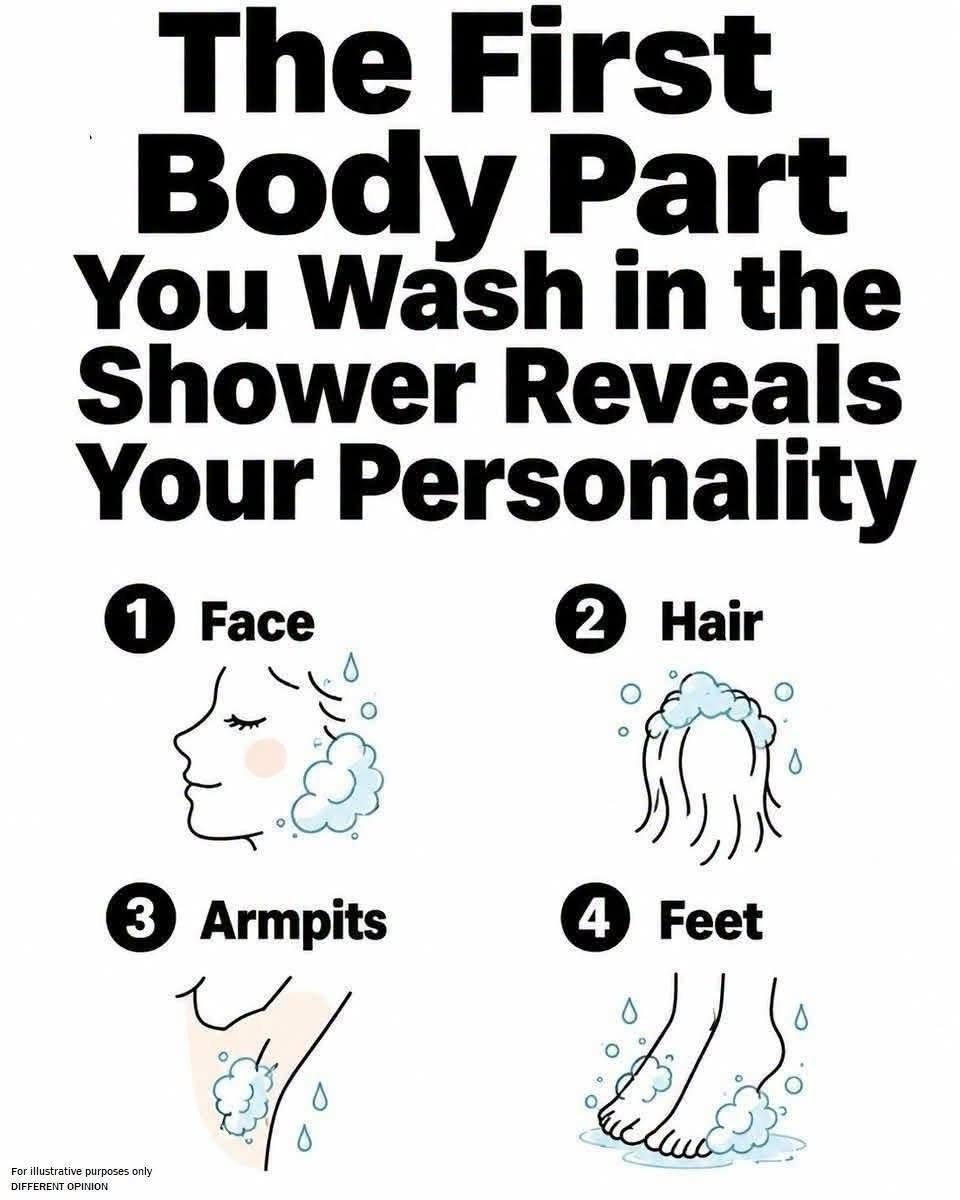
When psychological and lifestyle clickbait flashes headlines like “The Body Part You Wash First While Bathing Reveals Your Personality,” they are leaning into a classic parlor-game trope. They want you to believe that scrubbing your left shoulder or your face first is a secret window into your deepest subconscious traits, anxieties, or hidden leadership potential.
From a behavioral psychology, neurology, and everyday habit perspective, the order in which you wash your body in the shower has nothing to do with deep psychological profiling. Understanding why we do what we do in the shower cuts through the pseudoscience and reveals the actual science of routine.
The Reality Behind Shower Habits and Behavior
Why do we wash in a specific order, and what does it actually reflect?
-
The Power of Habit and Muscle Memory: Over time, most people develop a rigid, automatic sequence for bathing. Whether you start top-to-bottom or bottom-to-top, it is simply procedural memory—the same cognitive mechanism that allows you to tie your shoes or drive a familiar route without actively thinking about every single step.
-
Sensory Preferences and Comfort: The order of your shower is often dictated by pure physical comfort rather than personality traits. For example, rinsing shampoo first to keep soapy water out of your eyes, or letting warm water hit your neck and shoulders first to relax tight muscles, is purely functional.
-
The Barnum Effect in Personality Quizzes: Pseudoscientific personality tests rely heavily on vague, flattering statements that almost anyone can relate to (e.g., “You are hardworking on the outside but sensitive on the inside”). Your brain naturally fills in the gaps to make the description feel uncannily accurate, even though it applies universally.
Why the Shower Actually Matters (The Real Science)
While your shower routine doesn’t reveal your inner psyche, the act of bathing itself plays a genuine role in physiological and mental well-being:
-
Circadian Rhythm and Temperature Regulation: Taking a warm shower an hour or two before bed raises your core body temperature. As you step out into cooler air, your blood vessels dilate to release heat, which triggers a natural drop in core temperature—a powerful biological signal to your brain that it is time for sleep.
-
Hydrotherapy and Stress Reduction: The sensory input of warm water hitting the skin activates cutaneous mechanoreceptors, reducing sympathetic nervous system activity (“fight or flight”) and helping to lower cortisol and soothe everyday tension.
-
Skin Barrier Maintenance: Dermatological science emphasizes that how you wash (using lukewarm water, gentle cleansers, and avoiding excessive scrubbing) matters far more for skin health than the sequence in which the soap touches your skin.
Evidence-Based Hygiene and Self-Care Habits
Instead of looking to the shower for personality insights, you can optimize your routine for genuine physical comfort and skin health:
-
Keep Water Temperatures Moderate: Extremely hot water strips the skin of its natural lipid barrier, leading to dryness, itching, and irritation. Aim for a comfortable, warm temperature rather than a steaming hot one.
-
Focus on Contact Time: For therapeutic cleansers (such as anti-dandruff shampoos or specialized body washes), letting the product sit on the skin or scalp for a minute before rinsing allows active ingredients to work effectively.
