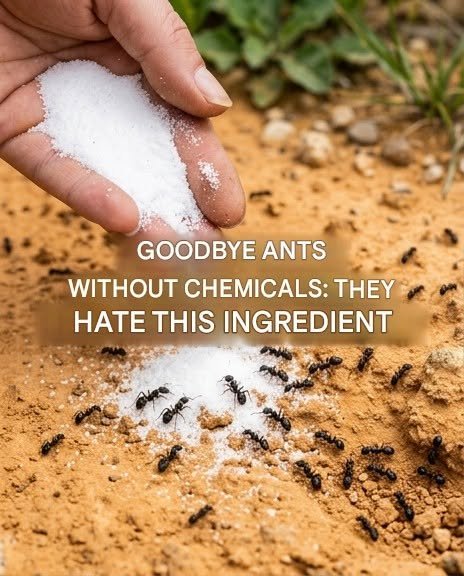
When home and garden clickbait flashes headlines like “Ants can’t stand it! Use it to keep them away for good,” they love to frame household pests like a dramatic battle against an unstoppable invading army. They want you to believe that a single secret household spray, essential oil, or quirky kitchen trick will magically banish every ant from your property forever.
From an entomology, urban pest management, and household science perspective, ants are resilient social insects driven by one primary mission: securing food and water for their colony. While magic silver bullets don’t exist, understanding ant biology allows for highly effective, science-backed prevention and control.
The Science Behind Ant Behavior and Foraging
Why do ants suddenly appear in your kitchen, and why do simple quick fixes often fail?
-
The Pheromone Trail: When a worker ant finds a food source (like a crumb or a sticky spill), it returns to the nest while laying a chemical scent trail called a pheromone. Other ants follow this chemical highway directly to the source. If you only wipe up the ants without removing the invisible scent trail, more ants will simply follow the lingering path.
-
Colony Structure (The Queen is the Key): Spraying individual forager ants you see wandering on your counter only eliminates a tiny fraction of the population. The queen and the brood remain safe deep inside the nest, continuously producing more workers. True control requires targeting the colony, not just the scouts.
-
Sensory Disruption vs. Eradication: Many natural remedies rely on strong sensory deterrents (like essential oils, vinegar, or spices). While these can temporarily mask scent trails or repel ants from a specific entry point, they do not destroy the nest.
The Reality Behind Popular “Ant Deterrent” Remedies
When clickbait articles tout a specific kitchen item as a permanent repellent, they are usually describing temporary deterrents rather than complete solutions:
-
White Vinegar Spray: The reality: Vinegar effectively disrupts and erases pheromone trails, making it an excellent, non-toxic surface cleaner to wipe down countertops where ants have been traveling. However, it is a surface cleaner, not a repellent or poison.
-
Essential Oils (Peppermint, Tea Tree, Citrus): The reality: The intense aromatic compounds in certain essential oils overwhelm ants’ olfactory receptors, causing them to avoid treated areas temporarily. Diluted peppermint oil sprayed around entry points can successfully deter scouts, but the effect fades as the oil evaporates.
-
Cinnamon, Chalk, or Baby Powder: The reality: Often cited as barriers ants won’t cross, these powdery or spiced lines rely on texture or scent interference. While ants may detour around them briefly, they easily find alternative routes if the underlying food attraction remains.
Evidence-Based, Long-Term Ant Management Strategies
If you want to keep ants away sustainably without relying on harsh commercial toxins or falling for “miracle” hacks, clinical pest management emphasizes systematic prevention:
-
1. Eliminate the Food and Water Triangulation: Ants enter your home looking for sustenance. Store pantry goods in airtight glass or heavy plastic containers, wipe down crumbs immediately, fix leaky pipes, and never leave pet food sitting out overnight.
-
2. Neutralize Entry Points and Pheromone Trails: Regularly wash down baseboards, windowsills, and entry thresholds with soapy water or a 50/50 water-and-vinegar solution to wipe away hidden chemical trails.
-
3. Use Baits Strategically When Necessary: If you are dealing with an established indoor colony, slow-acting, sweet- or protein-based baits containing boric acid or low-toxicity active ingredients are far more effective than sprays. Forager ants carry the bait back to share with the queen and larvae, eliminating the source at the nest.
