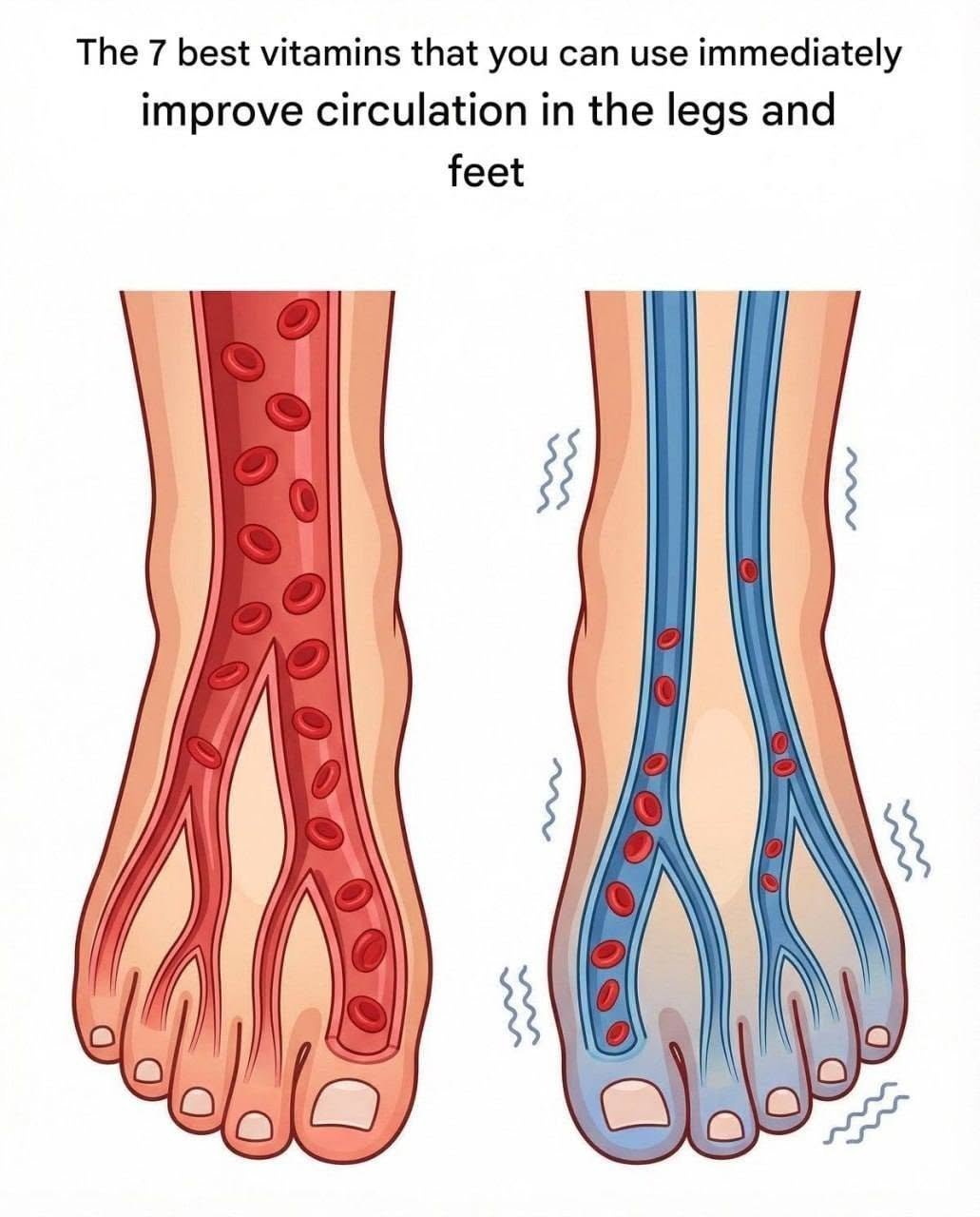
When sensationalized health clickbait flashes headlines like “Suffering from poor circulation? Here’s how to fix it in just 20 minutes!”, they love to exploit a very common physical sensation—cold hands, tired legs, or mild swelling—and promise an instant, miraculous cure. They want you to believe that a quick stretch, a weird gadget, or an obscure foot soak will permanently fix complex vascular dynamics in the blink of an eye.
From a clinical angiology, cardiovascular physiology, and vascular medicine perspective, true chronic poor circulation (such as peripheral artery disease or chronic venous insufficiency) is a medical condition that cannot be “fixed” in twenty minutes. However, acute sluggishness, cold extremities, and fluid pooling from prolonged sitting can be powerfully stimulated and relieved in that exact timeframe through targeted physiological mechanics.
The Reality Behind Circulation and Vascular Health
What is actually happening in your body when you feel sluggish or cold, and how does blood flow work?
-
The Pump and Valve System: Your circulatory system relies on two distinct mechanisms: your heart pumping oxygenated blood through arteries under pressure, and your skeletal muscles acting as a secondary pump (especially in your calves) to push deoxygenated venous blood back up against gravity through one-way valves.
-
The Sitting Trap: When you sit at a desk or couch for hours, your calf muscles remain completely dormant. Without muscle contractions to compress the deep veins, blood and interstitial fluid pool in your lower extremities, leading to heaviness, coldness, and sluggish return flow.
-
Vasodilation and Microcirculation: Cold environments or stress cause peripheral blood vessels to constrict, reducing blood flow to your skin and extremities to preserve core body temperature.
What a 20-Minute Intervention Can Do (The Physiology)
While a 20-minute window won’t reverse chronic vascular disease, it can dramatically boost microcirculation and venous return through specific actions:
-
Skeletal Muscle Contraction (The Calf Pump): Engaging your lower body activates the skeletal muscle pump, instantly accelerating venous return and clearing out pooled fluid.
-
Thermal Vasodilation: Applying gentle warmth or moving from a cold room stimulates local vasodilation, opening up superficial capillaries and flooding cold hands or feet with warm blood.
-
Nitric Oxide Release: Light cardiovascular movement stimulates the endothelial lining of your blood vessels to release nitric oxide, a natural gas signaling molecule that relaxes blood vessel walls and improves local blood flow.
A 20-Minute, Evidence-Based Circulation Routine
If you are feeling sluggish, stiff, or cold from prolonged sitting, here is a practical, science-backed 20-minute protocol to stimulate healthy blood flow:
-
Minutes 1–5: Dynamic Lower-Body Movement
-
The action: Perform seated or standing heel-raises, toe-taps, and gentle ankle circles. This fires up the calf muscle pump, immediately assisting venous return from your lower legs.
-
-
Minutes 6–15: Low-Impact Aerobic Activation
-
The action: Take a brisk 10-minute walk or use a stationary bike at an easy pace. Whole-body movement elevates your heart rate slightly, increases cardiac output, and triggers endothelial nitric oxide production to dilate blood vessels.
-
-
Minutes 16–20: Hydration and Elevation
-
The action: Drink a full glass of water (dehydration thickens blood and sluggishly impacts microcirculation) and elevate your legs above your heart for a few minutes if you experience mild swelling.
-
Evidence-Based Cautions
-
When to See a Physician: If you experience persistent, one-sided leg swelling, sharp pain in your calves while walking (claudication), or non-healing sores on your feet, these are clinical red flags that require professional medical evaluation rather than quick lifestyle hacks.
