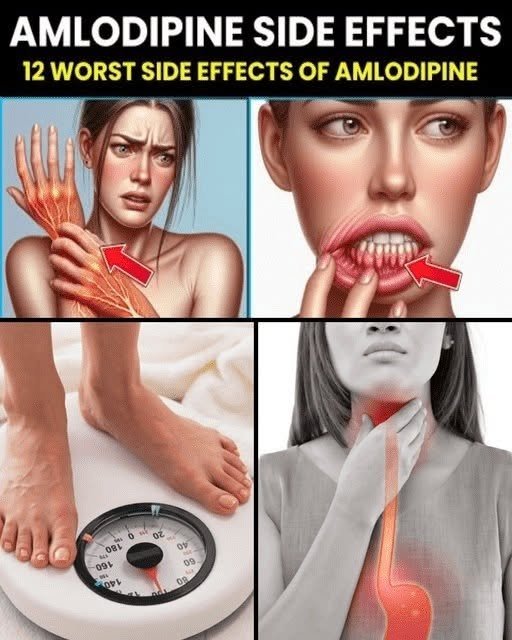
When sensationalized medical clickbait flashes headlines like “12 Worst Side Effects of Amlodipine You Should NEVER Ignore!” they rely on intense pharmacological fear-mongering. They want you to believe that a widely prescribed, life-saving cardiovascular medication is secretly plotting your demise, terrifying patients into abruptly stopping their blood pressure pills—which carries a genuinely dangerous risk of rebound hypertension, stroke, or heart attack.
From a clinical pharmacology, cardiology, and internal medicine perspective, Amlodipine is a well-tolerated, highly effective medication. While all pharmaceuticals have potential side effects, understanding the actual physiological mechanisms behind them separates clinical reality from online panic.
The Clinical Reality Behind Amlodipine
What is Amlodipine, and how does it work in the body?
-
Classification (Calcium Channel Blocker): Amlodipine belongs to a class of drugs known as calcium channel blockers (specifically dihydropyridines). It works by relaxing the smooth muscle in the walls of your blood vessels, causing them to widen (vasodilation). This lowers peripheral resistance, making it easier for your heart to pump and successfully reducing your blood pressure.
-
The Mechanism of Common Side Effects: Because amlodipine dilates blood vessels throughout the body—not just around the heart—it can cause blood to pool slightly in the lower extremities due to gravity. This explains why the most common side effect is harmless lower leg swelling (peripheral edema), rather than a sign of organ failure.
-
Never Stop Medication Abruptly: Stopping a cardiovascular medication cold turkey based on a clickbait article can cause your blood pressure to surge dangerously. Any concerns about side effects should always be discussed proactively with your prescribing physician.
Key Side Effects to Discuss With Your Doctor
While most side effects are mild and manageable, clinical medicine tracks specific symptoms that warrant medical evaluation:
-
1. Peripheral Edema (Ankle and Foot Swelling)
-
What it is: Swelling in the lower legs, ankles, or feet caused by fluid shifting due to vasodilation.
-
Clinical reality: It is non-dangerous and mechanical, often managed by adjusting the dose or timing, rather than an allergic reaction.
-
-
2. Dizziness or Lightheadedness
-
What it is: A brief sensation of unsteadiness when standing up quickly (orthostatic hypotension).
-
Clinical reality: Occurs because your blood pressure has successfully dropped; standing up slowly usually resolves it.
-
-
3. Flushing and Warmth
-
What it is: A sudden feeling of warmth or redness in the face and neck.
-
Clinical reality: A direct result of surface blood vessels dilating.
-
-
4. Fatigue or Palpitations
-
What it is: General tiredness or a fluttering sensation in the chest as the cardiovascular system adjusts to lowered pressure.
-
Evidence-Based Cardiovascular Management
Managing hypertension safely requires close collaboration with your healthcare provider and solid lifestyle foundations:
-
Monitor Your Blood Pressure Routinely: Keep a home log of your readings at consistent times each day to share with your physician during check-ups.
-
Support Vascular Health Through Movement: Regular aerobic exercise and strength training complement blood pressure medications by naturally improving endothelial function.
-
Maintain Sodium Awareness: Balance your dietary sodium intake to support fluid regulation and maximize the efficacy of your treatment plan.
