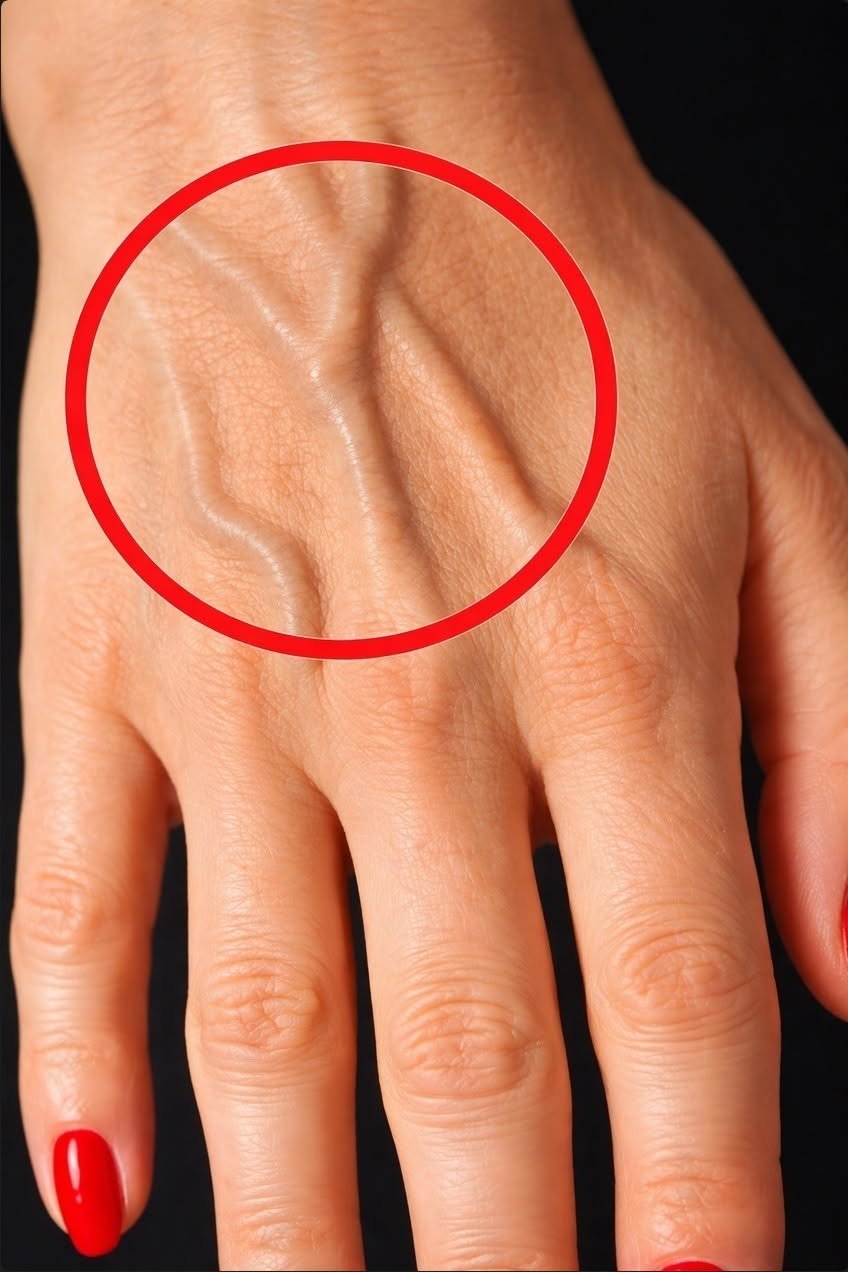
When vascular and health clickbait flashes headlines like “If your veins are visible, it means you are…,” they love to leave the sentence hanging with a mysterious ellipsis, playing on vanity and health anxiety. They want you to believe that noticing prominent veins on your arms, legs, or hands is either a sign of elite athletic perfection or a terrifying harbinger of vascular collapse.
From a vascular surgery, dermatology, and physiological perspective, visible veins are extremely common and influenced by a wide variety of normal anatomical and environmental factors. Understanding why veins become more apparent cuts through the clickbait panic and reveals what your vascular network is actually communicating.
The Reality Behind Visible Veins
Why do veins show through the skin, and what determines their prominence?
-
Skin Thickness and Pigmentation: Your skin’s thickness and melanin levels dictate how much light penetrates and how easily underlying structures are seen. Fair, thin skin naturally reveals superficial veins far more readily than thicker or more pigmented skin, regardless of overall health.
-
Subcutaneous Fat Layer: The amount of adipose tissue (fat) lying directly beneath the skin acts as natural padding. Individuals with lower body fat percentages naturally have less cushioning over their vascular network, making veins appear more prominent.
-
Vasodilation and Blood Volume: When your core body temperature rises (such as during exercise or in warm weather), your body redirects blood flow toward the skin’s surface to dissipate heat. This causes superficial veins to dilate (widen), temporarily increasing their visibility.
What Prominent Veins Actually Indicate
When clinicians evaluate prominent veins, they differentiate between normal physiological variations and underlying vascular conditions:
-
1. Normal Physiological Visibility (Athletic & Low Body Fat)
-
What it looks like: Veins stand out clearly across the arms, hands, or legs in individuals who engage in regular resistance training, have low subcutaneous fat, or have naturally fair skin.
-
Clinical reality: Completely harmless and often a sign of muscular development and low adiposity.
-
-
2. Varicose Veins (Venous Insufficiency)
-
What it looks like: Gnarled, enlarged, twisted, and bulging blue or purple veins usually appearing on the calves and thighs, often accompanied by aching or leg heaviness.
-
Clinical reality: Caused by weakened or damaged one-way valves inside the veins, allowing blood to pool backward due to gravity. This does warrant clinical evaluation by a vascular specialist.
-
-
3. Spider Veins (Telangiectasias)
-
What it looks like: Tiny, delicate red, blue, or purple web-like clusters visible close to the skin’s surface on the legs or face.
-
Clinical reality: Typically caused by minor capillary dilation, hormonal shifts, or localized pressure, and are primarily a cosmetic concern rather than a medical emergency.
-
Evidence-Based Vascular Care and Circulation Habits
To support healthy venous return and maintain optimal vascular integrity throughout your body, incorporate these practical habits into your routine:
-
Engage the Calf Muscle Pump: Your calf muscles act as a secondary heart, squeezing deep veins to push blood back upward against gravity. Regular walking, standing breaks, and calf raises prevent blood from pooling in the lower extremities.
-
Elevate Your Legs: Resting with your legs elevated above heart level for 15 minutes at the end of a long day relieves venous pressure and reduces swelling.
-
Maintain Healthy Hydration and Movement: Staying well-hydrated keeps blood viscosity optimal, while avoiding prolonged periods of static sitting or standing supports overall endothelial and venous health.
