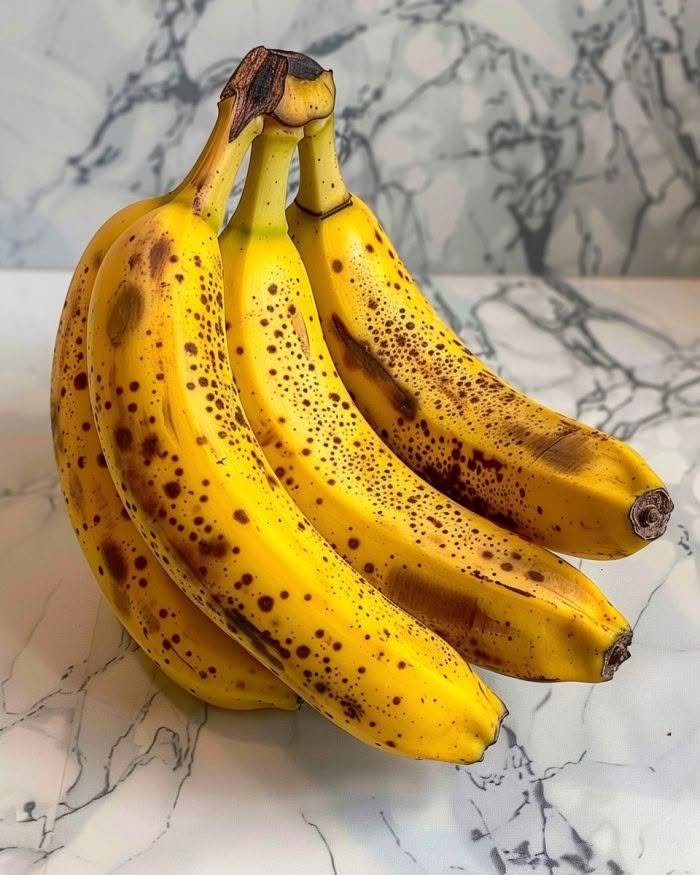
Those brown or black spots on a ripening banana (often called “sugar spots”) are actually a visual roadmap of how the fruit’s nutritional profile changes over time. Far from being a sign that the fruit has gone bad, spotting indicates that the banana has reached peak ripeness.
Here is what eating spotted bananas means for your health:
1. Faster and Easier Digestion
As a banana ripens and spots appear, its complex starches break down into simple sugars (glucose, fructose, and sucrose). Simultaneously, the pectin content changes. This process makes heavily spotted bananas much gentler on the stomach and significantly easier for your digestive system to process compared to firm, green bananas.
2. A Quick, Accessible Source of Energy
Because the complex starches have already converted into simple natural sugars, spotted bananas act as a rapid-fire source of fuel. This makes them an exceptional choice for a pre-workout snack or a quick energy pick-me-up when you are feeling fatigued, as your body can absorb the energy almost immediately.
3. Higher Antioxidant Levels
Research shows that as antioxidant levels increase and the fruit develops spots, its concentration of protective plant compounds rises. These antioxidants help neutralize free radicals—unstable molecules that cause oxidative stress and cellular damage over time.
4. Easier on Acid Reflux (Mild Antacid Effect)
Ripe, spotted bananas are more alkaline than green bananas. Their soft, smooth texture combined with lower starch acidity can help coat the stomach lining and provide mild relief for individuals prone to occasional heartburn or acid indigestion.
A Quick Trade-Off to Keep in Mind
While spotted bananas offer perks like easier digestion and higher antioxidants, the ripening process changes their glycemic profile:
-
Lower Resistant Starch: Green and barely ripe bananas contain high amounts of resistant starch, which acts like fiber, feeding good gut bacteria and causing a slower rise in blood sugar.
-
Higher Sugar Bioavailability: As spots develop, that resistant starch converts to sugar. This means spotted bananas taste much sweeter and will cause a quicker spike in blood sugar—something to keep in mind if you are actively managing diabetes or insulin resistance.
