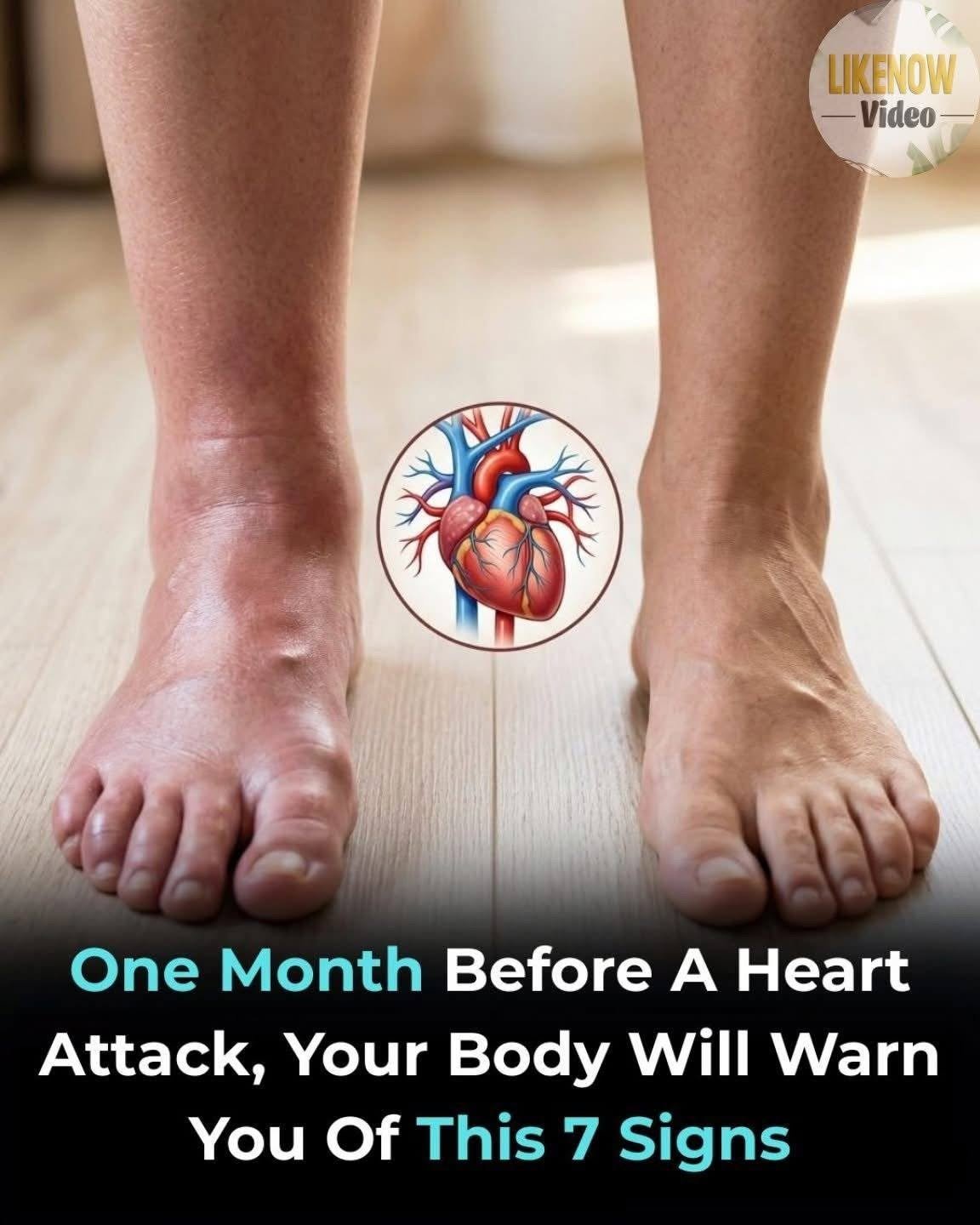
When clickbait headlines warn that “your feet warn you of these six signs a month before a heart attack,” they rely on fear-inducing hooks to generate clicks. However, while sensationalized, the underlying premise touches on a genuine medical reality: peripheral circulation and fluid retention can provide crucial clues about cardiovascular stress.
When the heart begins to struggle with its pumping efficiency—whether due to heart failure, coronary artery disease, or poor circulation—the effects can ripple all the way down to your extremities.
Here is an evidence-based look at the foot-related symptoms that can signal underlying cardiovascular issues, what they actually mean, and how to interpret them:
1. Pitting Edema (Unexplained Foot and Ankle Swelling)
-
The Claim: Sudden swelling in your feet means your heart is failing.
-
The Clinical Reality: When the heart’s pumping capacity weakens (particularly congestive heart failure), blood flow returning from the lower body slows down. Fluid leaks out of the capillaries and pools in the lowest parts of your body due to gravity. Pressing a finger into the swollen skin and leaving an indentation (pitting edema) is a classic sign of fluid overload that warrants a prompt medical check.
2. Cold Toes and Chronic Peripheral Chilliness
-
The Claim: Ice-cold feet mean your blood is blocked from reaching your toes.
-
The Clinical Reality: Peripheral Artery Disease (PAD)—which shares the exact same risk factors as coronary heart disease (atherosclerosis, smoking, diabetes)—occurs when plaque narrows the arteries supplying blood to your limbs. While cold feet can simply be poor circulation or cold weather, persistent, one-sided coldness combined with weak pulses can indicate restricted arterial flow.
3. Discolored, Pale, or Bluish Skin (Cyanosis)
-
The Claim: Your skin changes color because your heart is stopping.
-
The Clinical Reality: Severe circulatory deficits or acute oxygen deprivation can cause toes to look pale, bluish, or dusky (cyanosis). While acute blockage causes sudden pain and coldness (acute limb ischemia), chronic cardiovascular strain can alter skin tone and capillary refill time in the feet.
4. Thickened Toenails and Slow Hair Growth on the Feet
-
The Claim: Weirdly growing toenails are a secret sign of a failing heart.
-
The Clinical Reality: This is a downstream effect of chronic poor circulation (PAD). Because hair follicles and nail beds require robust oxygen and nutrient delivery to grow normally, a lack of arterial blood supply causes hair on the toes to disappear and toenails to become brittle, thick, and slow-growing.
5. Intermittent Claudication (Pain or Cramping with Walking)
-
The Claim: Foot cramps mean a heart attack is coming tomorrow.
-
The Clinical Reality: Cramping, aching, or fatigue in the feet, calves, or thighs that occurs only when walking and disappears quickly with rest is called claudication. It is a hallmark sign of blocked peripheral arteries. Because atherosclerosis is systemic, someone with PAD in their legs is statistically at a much higher risk for coronary artery disease.
6. Slow-Healing Sores or Ulcers on the Feet
-
The Claim: A simple scrape that won’t heal predicts a heart attack.
-
The Clinical Reality: Good circulation is vital for tissue repair and immune defense. If minor cuts, blisters, or sores on the feet take weeks or months to heal—or turn into ulcers—it indicates that localized blood flow and oxygen delivery are severely compromised, pointing to advanced vascular disease or unmanaged diabetes.
The Reality Check: Feet vs. Heart Attack Timing
While circulatory warning signs like severe edema or claudication can develop over weeks or months as heart failure or vascular disease progresses, they are not a direct 30-day countdown timer to a sudden heart attack.
Instead, think of your feet as a window into your vascular system. Persistent swelling, chronic coldness, or unexplained cramping are signals to evaluate your overall cardiovascular health—blood pressure, cholesterol, and circulation—with a physician, long before an acute cardiac event occurs.
