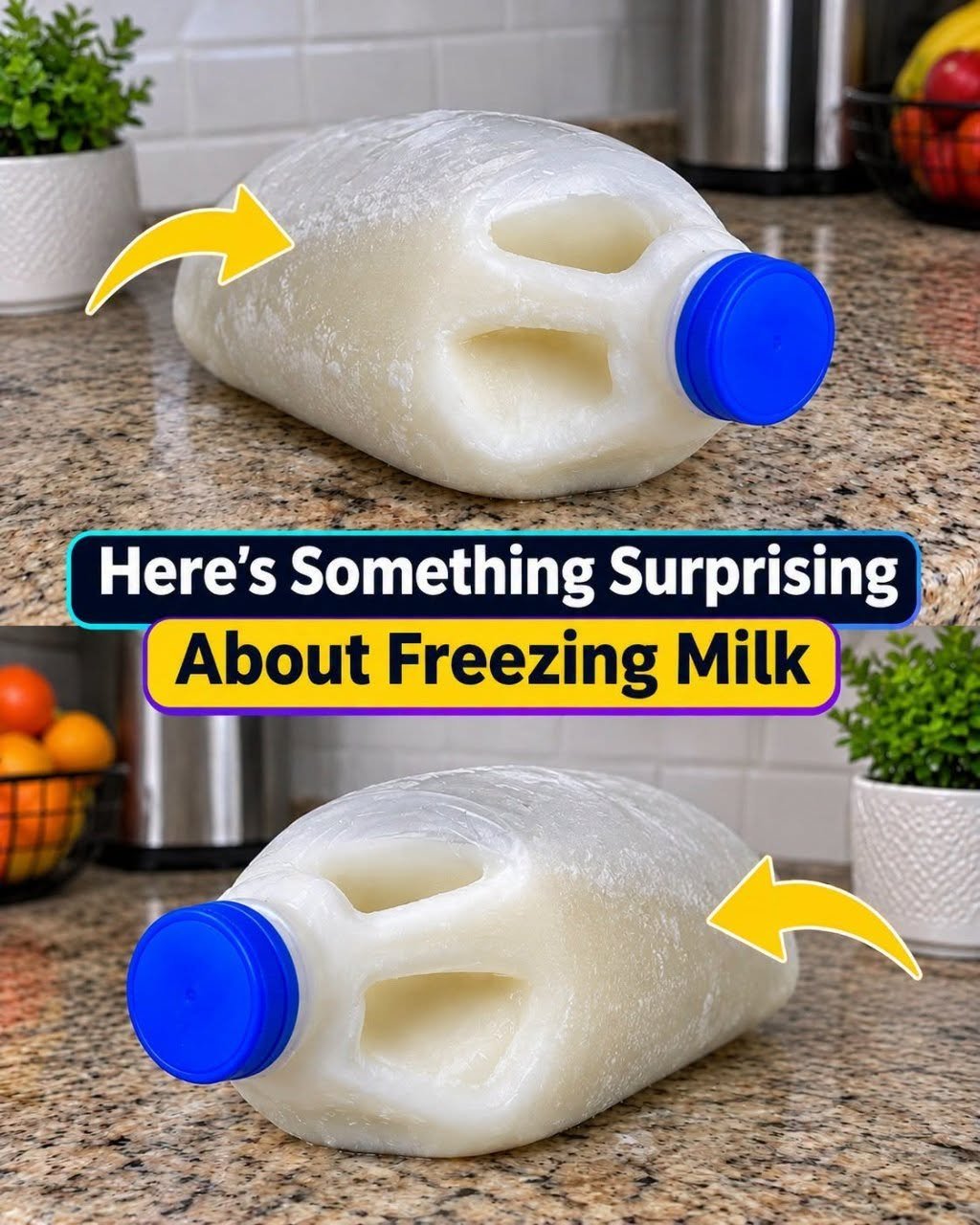
When viral kitchen hacks or homemaking blogs tease that “I never knew freezing milk could…”—leaving you waiting for a disastrous explosion or a culinary miracle—they are usually hyping up a very mundane food-science reality.
The physical truth is simple: yes, you can freeze milk safely, but water expands when it turns to ice. If you don’t account for basic chemistry, you will end up with a cracked container or a strange textural surprise when you pour it into your morning coffee.
What Actually Happens When You Freeze Milk?
-
The Expansion Effect (The Container Trap):
-
Water expands by about 9% when it freezes. If you toss a completely full glass bottle or a bulging plastic jug of milk straight into the freezer, the expanding liquid has nowhere to go, often resulting in cracked plastic or shattered glass.
-
The Fix: Always pour out about an inch of milk from the container (or use a freezer-safe bag/container) to leave ample headspace for expansion.
-
-
The Separation and Graininess (The Fat Shift):
-
Milk is an emulsion—a delicate suspension of water, fats, and proteins. When milk freezes, the emulsion breaks down.
-
When it thaws, the milk will often look watery, and the fat solids may clump together, giving it a slightly grainy or separated appearance.
-
The Fix: It is still completely safe to drink and cook with! Once it’s fully thawed in the refrigerator, give the jug a vigorous shake or use an immersion blender to re-emulsify the fats.
-
-
Nutritional Integrity Stays Intact:
-
Freezing does not destroy the calcium, protein, or vitamins in milk. However, milk readily absorbs odors and flavors from your freezer.
-
The Fix: Ensure your container is tightly sealed, and try to use frozen milk within 1 to 3 months for the best taste.
-
The Verdict
Freezing milk isn’t a secret magic trick; it’s a practical way to prevent food waste if you’re heading out of town or bought extra on sale. Just remember to leave room for it to expand, thaw it slowly in the fridge, and give it a good shake before pouring.
