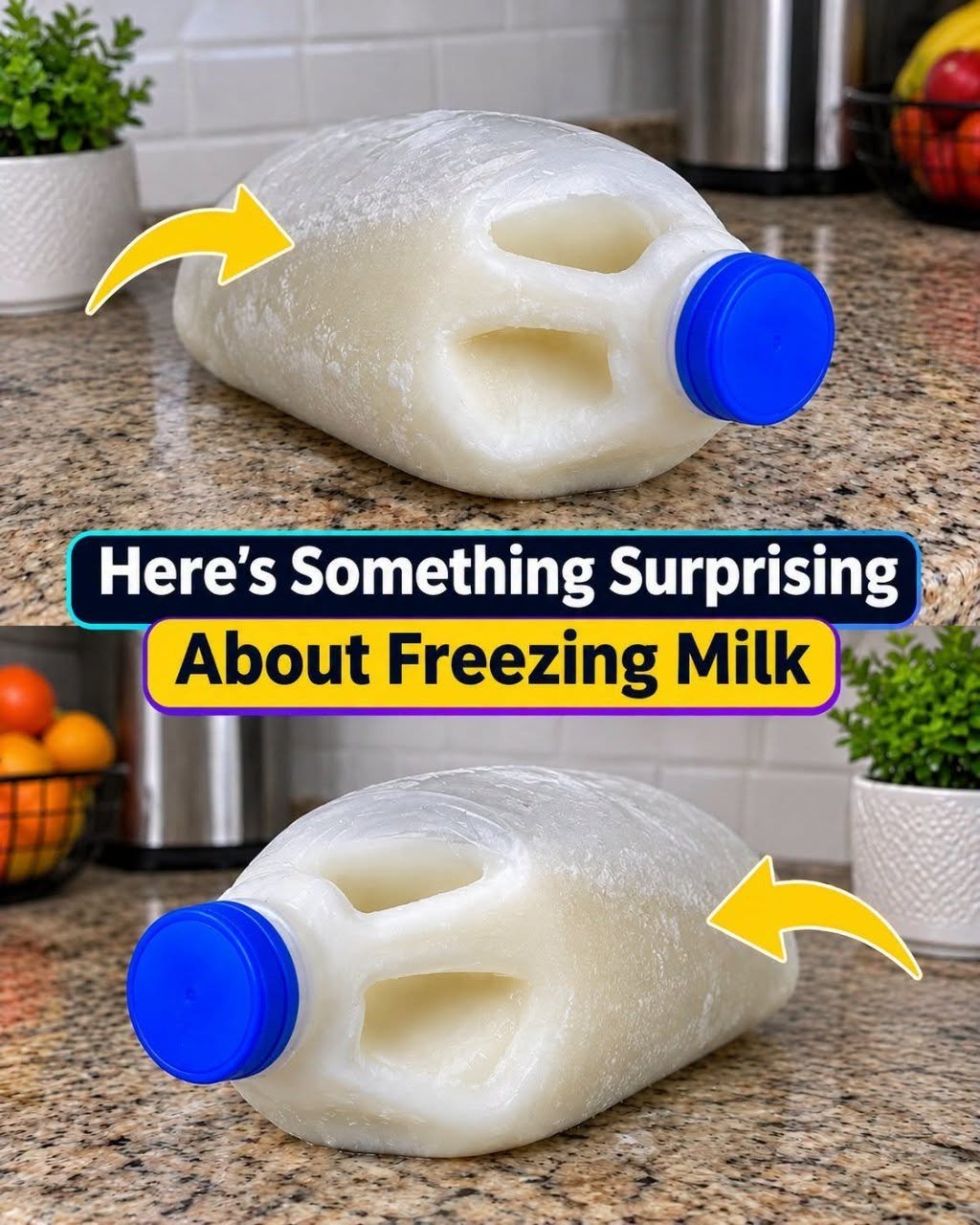
When clickbait food blogs and social media reels cut off with a breathless tease like “I never knew freezing milk could…”, they rely on an exaggerated curiosity gap to trick you into clicking.
The underlying dairy science is far less dramatic, but it is genuinely fascinating: freezing milk does not cause it to magically spoil, turn toxic, or explode, but it fundamentally alters its physical emulsion structure. Because milk is an emulsion of water, fats, proteins (casein micelles), and dissolved minerals, extreme cold forces water molecules to expand into ice crystals, driving fats and proteins out of suspension.
An evidence-based look at what actually happens when you freeze milk separates internet myths from kitchen science.
1. What Actually Happens When Milk Freezes
-
The Separation (The Grainy Texture): As water freezes into ice crystals, the delicate emulsion breaks down. The milk fats coalesce into small, buttery clumps, and the protein structures separate. When you thaw the milk, it will often look watery, watery-blue, and feel somewhat grainy or separated in your mouth.
-
The Bottle Expansion: Water expands as it freezes. If you freeze milk in a tightly capped glass bottle or a completely full plastic jug, the expanding ice will shatter the glass or burst the container seams.
2. Is It Safe to Drink?
-
Yes, absolutely. From a microbiological standpoint, freezing halts bacterial growth entirely. As long as the milk was fresh when it went into the freezer and properly thawed in the refrigerator (rather than left on a warm counter to breed bacteria), it is completely safe to consume.
3. How to Use Thawed Milk Successfully
Because of the textural changes, thawed milk is rarely pleasant to pour directly into a glass or your morning cereal. However, it performs wonderfully in applications where the emulsion is re-blended:
-
Baking and Cooking: Use it in pancake batter, waffle mixes, breads, soups, or sauces.
-
Smoothies and Coffee: Blending thawed milk in a high-speed blender or frothing it for hot coffee largely re-incorporates the separated fats, masking any textural graininess.
The Takeaway
You don’t need to fear frozen milk, nor will it perform kitchen miracles. It’s a completely viable preservation method for extending shelf life by a few months—provided you shake it vigorously after thawing and reserve it for cooking or baking rather than drinking straight.
