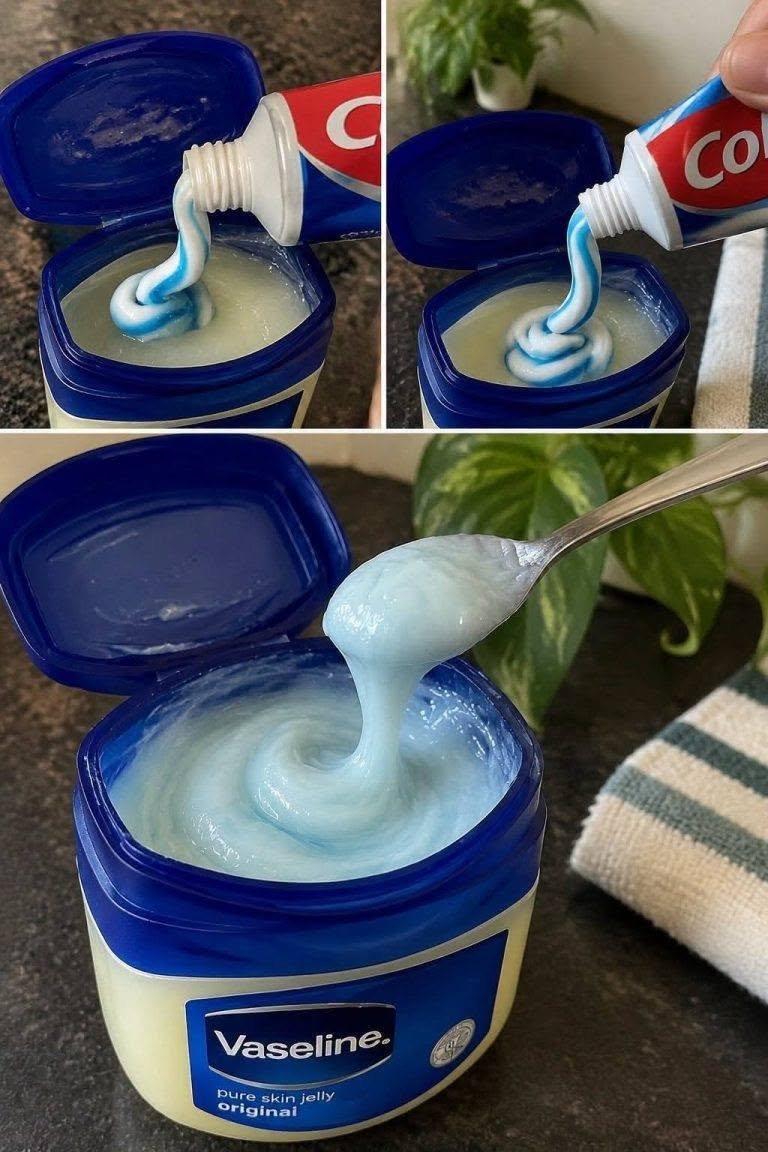
When viral DIY and life-hack videos breathless claim that “mixing toothpaste and Vaseline” creates an astonishingly effective miracle cure for everything from deep wrinkles and acne to hyperpigmentation and skin tightening, they are leaning on misleading cosmetic wizardry.
The underlying dermatological reality is far less glamorous and potentially irritating: combining a commercial toothpaste—which contains abrasive polishing agents, detergents like sodium lauryl sulfate, menthol, and fluoride—with petroleum jelly does not create a safe skincare breakthrough. Instead, it creates a chemically harsh, occlusive mixture that can disrupt the skin barrier, trap bacteria, and cause contact dermatitis.
An evidence-based look at what this DIY concoction actually does on your skin separates internet viral fiction from dermatology.
1. The Ingredients: What They Are Meant For (And What They Aren’t)
To understand why this mix is problematic, look at what each component is designed to do:
-
Vaseline (Pure Petroleum Jelly): An incredible, safe occlusive agent. Its sole job is to sit on top of the skin, forming a protective, hydrophobic seal that locks in existing moisture and keeps environmental irritants out. It does not hydrate on its own, nor does it possess active anti-aging or acne-fighting compounds.
-
Toothpaste: Formulated to scour plaque off hard tooth enamel using abrasive agents (like calcium carbonate or silica), foaming detergents, and flavoring oils (mint/menthol).
2. Why Mixing Them Together is a Dermatological Risk
When you smear a toothpaste-and-Vaseline mixture onto your face or delicate under-eye skin, you are introducing several strong irritants into an occlusive trap:
-
Severe Irritation and Chemical Burns: Menthol, baking soda, alcohol, and hydrogen peroxide found in many toothpastes can cause burning, redness, and peeling when left on sensitive facial skin.
-
Trapped Acne and Clogged Pores: While Vaseline is non-comedogenic on its own, mixing it with heavy foaming detergents and trapping it against the skin creates an ideal environment for clogging pores, triggering breakouts, or causing perioral dermatitis.
-
The “Tightening” Illusion: People who try this hack often report feeling a “tightening” effect. This is not anti-aging collagen production; it is simply skin irritation, drying, and inflammation caused by the harsh chemicals in the toothpaste pulling moisture out of the epidermis.
What to Use Instead (Targeted Skincare)
If you are looking to address specific skin concerns safely, skip the bathroom sink chemistry:
-
For Moisture and Barrier Repair: Use pure petroleum jelly (Vaseline) or a ceramide-based moisturizer on clean skin at night to lock in hydration without chemical additives.
-
For Acne and Blemishes: Use dermatologist-tested spot treatments containing salicylic acid or benzoyl peroxide rather than drying out pimples with minty toothpaste.
-
For Fine Lines and Aging: Look for proven, clinically backed retinoids or peptides rather than relying on temporary skin irritation hacks.
The Takeaway
Skip the viral DIY hacks. Mixing abrasive, minty toothpaste with petroleum jelly isn’t a secret beauty shortcut—it is a recipe for contact dermatitis and skin irritation. Save your toothpaste for your teeth and let evidence-based skincare handle your face.
