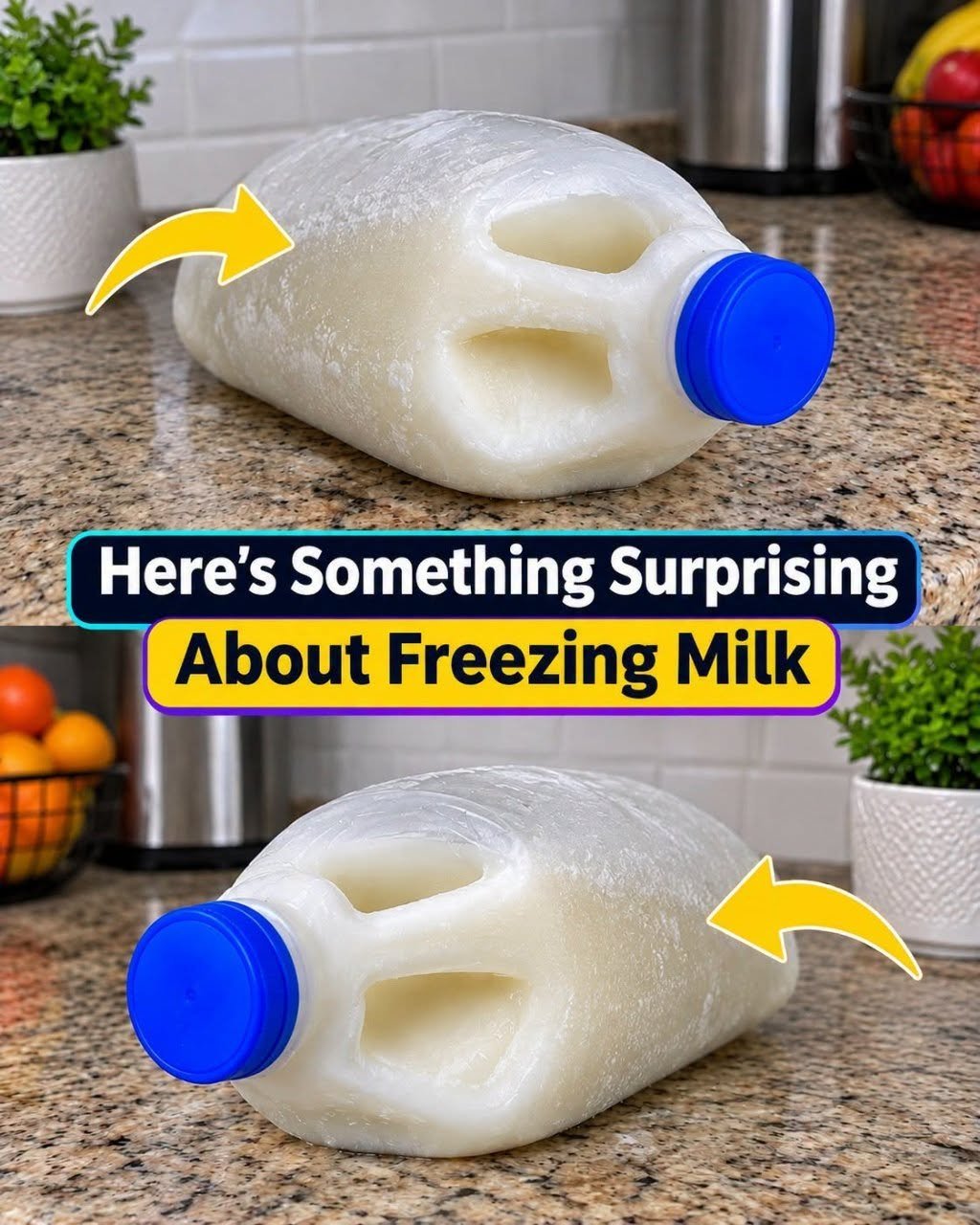
When clickbait lifestyle and food hacks tease that “I Never Knew Freezing Milk Could…” they are usually setting you up for a dramatic kitchen disaster or a revolutionary food-preservation miracle, playing on the common fear of wasting groceries.
The underlying dairy chemistry and thermodynamic reality is straightforward: yes, you can freeze milk safely, but it undergoes a major physical separation process when thawed. Freezing does not ruin the milk or make it unsafe, but the water and milk solids separate, resulting in a grainy, watery texture if you try to pour it directly into a glass of cereal after thawing.
An evidence-based look at how freezing affects milk helps separate kitchen myths from practical food storage.
1. What Actually Happens When Milk Freezes
Milk is an emulsion—a delicate, stable suspension of water, fats, proteins (casein and whey), and lactose.
-
The Separation: When milk freezes, the water expands into ice crystals, forcing the fat globules and proteins out of emulsion.
-
The Thawed Result: When you thaw it, the milk looks slightly yellowish, watery, and separated. If you don’t shake or blend it vigorously, it will have a curdled, unappealing texture.
2. Golden Rules for Freezing Milk Successfully
If you need to freeze milk to prevent spoilage, following a few practical rules ensures it remains usable:
-
Pour Out a Little Headroom: Liquid expands as it freezes. If you freeze a full glass jug or a tight plastic carton right to the brim, the container will crack or explode in your freezer. Always leave an inch or two of headspace.
-
Use Whole or Reduced-Fat Milk: Higher-fat milks freeze slightly better than skim milk, though all varieties will separate to some degree. Plant-based milks (like almond or oat milk) separate even more severely and often become completely unmixable after thawing.
-
Thaw in the Fridge: Move the frozen milk to the refrigerator 24 hours before you plan to use it. Avoid thawing it on the counter or in the microwave, which encourages rapid bacterial growth and worsens the texture separation.
-
Shake Vigorously (Or Blend): Once fully thawed, shake the container aggressively to re-incorporate the fats and water.
3. Best Uses for Thawed Milk
Because of the textural changes, thawed milk isn’t ideal for drinking straight from a glass or pouring over delicate morning cereal. Instead, reserve it for cooking and baking:
-
Pancakes, Waffles, and Breads: The texture changes are entirely unnoticeable when baked into batters.
-
Soups, Sauces, and Mac & Cheese: Perfect for creamy stove-top dishes where the milk is heated and blended with other ingredients.
-
Smoothies: Throwing thawed milk straight into a blender with fruit and protein powder completely masks any minor separation.
The Takeaway
Ignore the sensationalized hype suggesting freezing milk is either a catastrophic mistake or a magical life hack. It is simply a practical preservation method with one catch: expect it to separate, plan for expansion in the freezer, and save your thawed milk for cooking rather than drinking.
