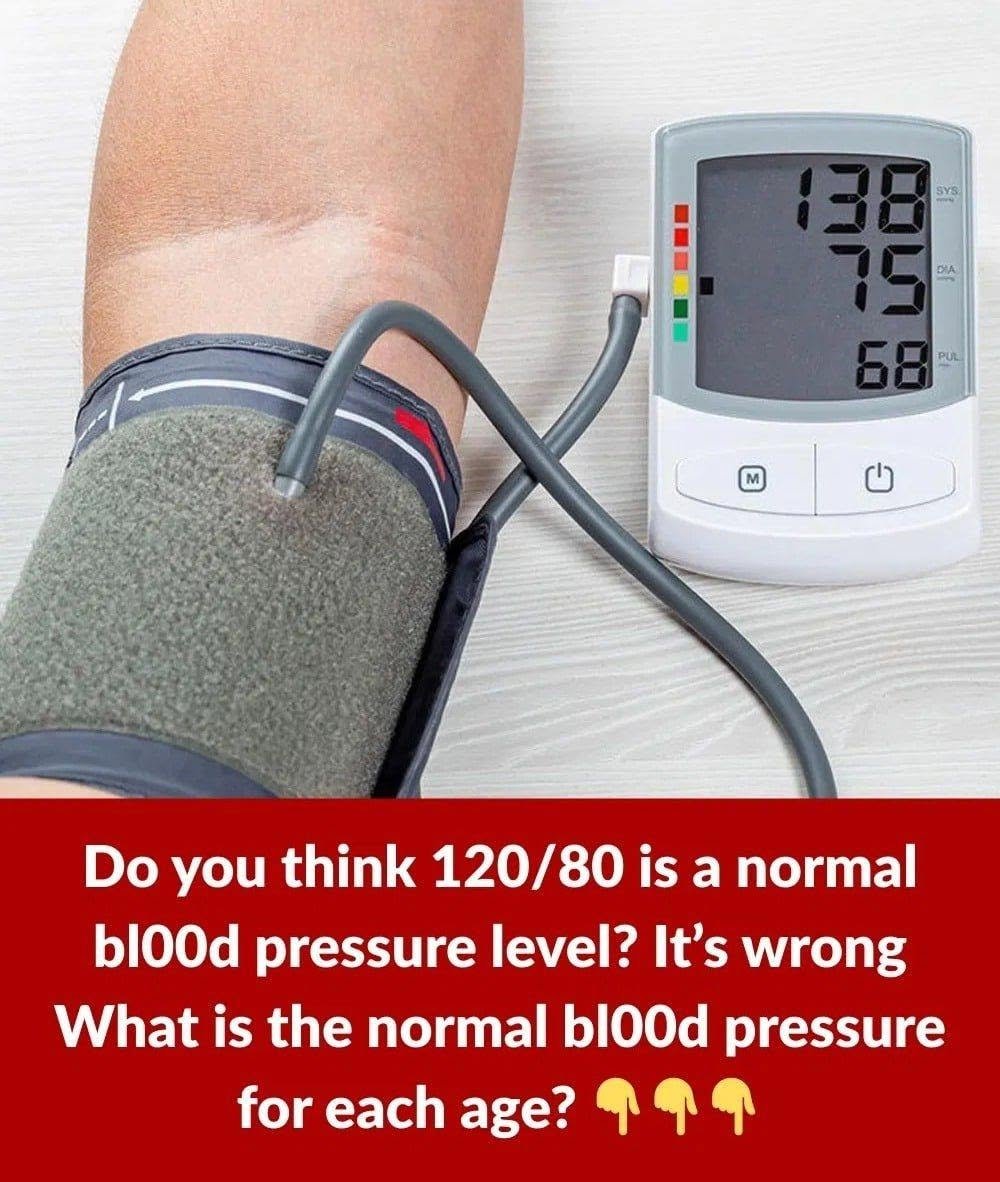
When health articles and viral infographics promise a neat, definitive chart showing “The Normal Blood Pressure for Each Age,” they usually present a rigid grid suggesting that your target blood pressure should climb steadily higher with every birthday.
In clinical reality, modern medical guidelines (such as those from the American College of Cardiology and American Heart Association) do not give a free pass for uncontrolled high blood pressure just because someone is older. Optimal vascular health remains consistent across most adult age groups, though clinical targets and management strategies are always tailored to an individual’s overall health profile.
Understanding the Numbers
Blood pressure is measured in millimeters of mercury (mmHg) and expressed as two numbers:
-
Systolic Pressure (Top Number): The pressure in your arteries when your heart beats and pumps blood out.
-
Diastolic Pressure (Bottom Number): The pressure in your arteries when your heart rests between beats.
The Standard Adult Blood Pressure Categories
Rather than changing drastically every decade, adult blood pressure guidelines categorize readings into distinct clinical zones:
| Category | Systolic (Top) | Diastolic (Bottom) | Clinical Interpretation | |
| Normal | Less than 120 | and | Less than 80 | Optimal vascular health; encourage healthy lifestyle habits. |
| Elevated | 120–129 | and | Less than 80 | Top number creeping up; early sign to evaluate diet, movement, and stress. |
| Stage 1 Hypertension | 130–139 | or | 80–89 | Consistent readings in this range warrant monitoring and lifestyle intervention. |
| Stage 2 Hypertension | 140 or higher | or | 90 or higher | Significant strain on arterial walls; typically requires medical evaluation and potential management. |
Why Age Doesn’t Mean “Higher is Fine”
For decades, an old rule of thumb suggested taking your age, adding 100, and calling that your “normal” systolic blood pressure (e.g., accepting 160 mmHg for a 60-year-old). Modern medicine has firmly rejected this concept.
-
Arterial Stiffness: As people age, natural collagen and elastin changes can cause large arteries to stiffen slightly, which naturally raises systolic pressure. However, stiffening is not a healthy disease-free state—it represents vascular aging and increases the lifetime risk of stroke, heart attack, and kidney strain.
-
The Danger of Orthostatic Hypotension in Older Adults: While optimal targets remain strict, physicians treating older adults (particularly those over 65 or 80) monitor closely for orthostatic hypotension—a sudden drop in blood pressure when standing up that can cause dizziness and dangerous falls. Treatment plans balance cardiovascular protection with safe, steady blood flow to prevent fainting.
What Influences Your Blood Pressure Daily?
Blood pressure is not a static fixed number; it fluctuates constantly throughout the day in response to normal physiological triggers:
-
Physical Activity and Stress: Exercise naturally raises systolic pressure temporarily to pump oxygen to working muscles, returning to baseline afterward. Acute stress or anxiety causes adrenaline surges that spike readings.
-
Caffeine and Sodium: A high-sodium meal or a large dose of caffeine can cause temporary, sharp increases in vascular resistance.
-
Measurement Accuracy: Using a cuff that is too small, talking while being measured, or experiencing “white coat syndrome” (anxiety in a clinical setting) can artificially inflate readings.
The Bottom Line
There is no sliding scale that makes high blood pressure “normal” just because you are getting older. An optimal reading is under 120/80 mmHg for healthy adults of any age. If you want to know what is normal for you, regular monitoring in a calm, resting state is key. If you consistently record readings in the Stage 1 or Stage 2 hypertension ranges, skip the internet age charts and consult a healthcare professional to evaluate your cardiovascular health safely.
