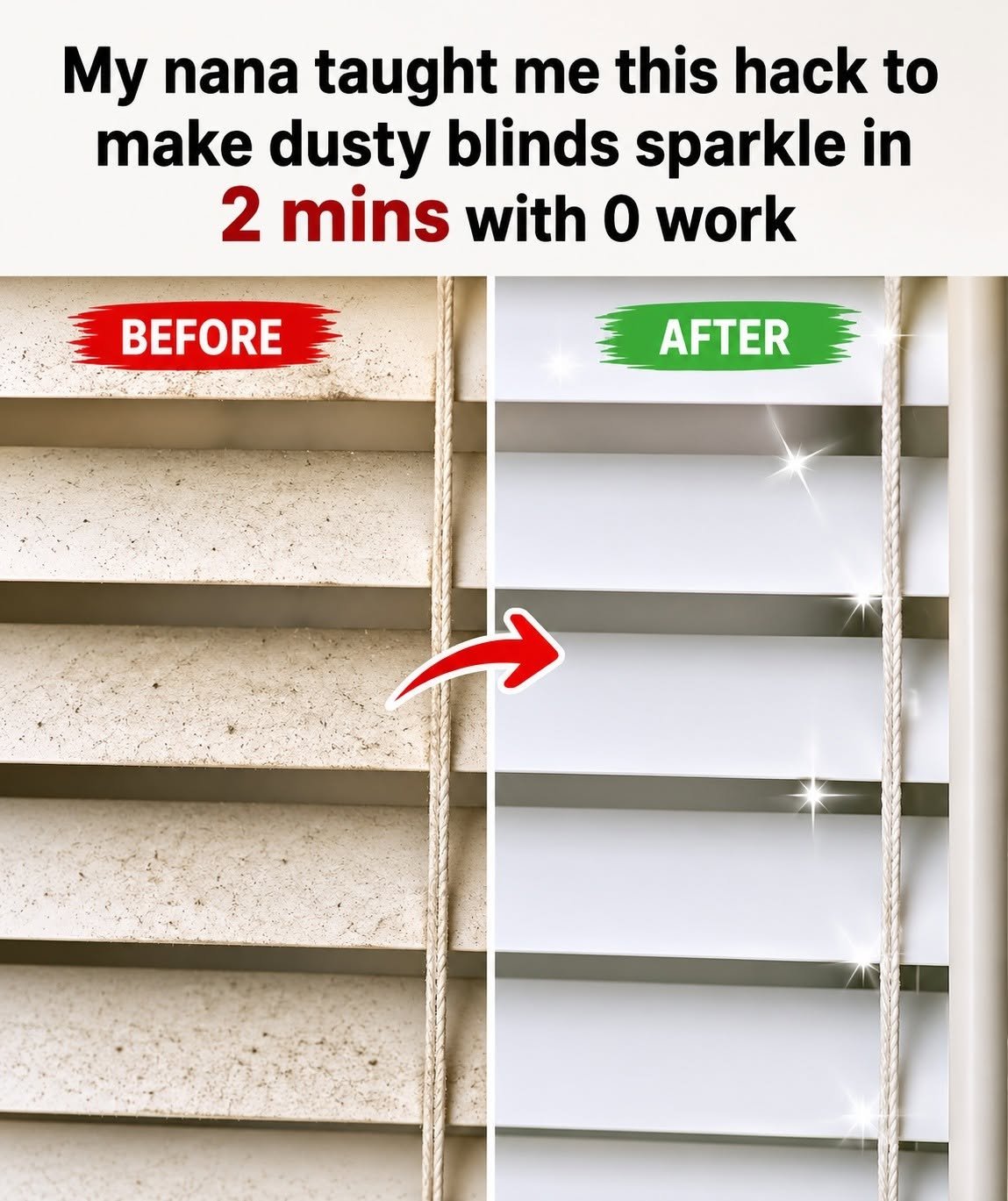
When viral cleaning videos and nostalgic lifestyle posts tease a miracle trick like “My nana taught me this hack to make dusty blinds sparkle in 2 mins with 0 work,” they lean heavily into romanticized folklore. By wrapping a basic household chore in promises of absolute zero effort and instant perfection, these clips trade practical home management for internet theater.
What Clickbait “Blind Hacks” Get Wrong
-
The “Zero Work” Fallacy: Content pieces suggest that waving a magical cloth or wearing an ordinary garment will instantly vaporize months or years of accumulated dust, grime, and kitchen grease without any physical motion on your part.
-
The Overstated Timeline: Cleaning individual horizontal slats thoroughly takes mechanical action; claiming it takes literally two minutes for an entire house ignores basic surface area geometry.
The Practical Reality: Why Simple Tool Hacks Actually Work
While the “zero work” claim is pure hyperbole, the underlying method typically showcased in these viral videos—such as slipping an old sock over your hand or wrapping a microfiber cloth around kitchen tongs—is grounded in basic domestic mechanics:
-
Simultaneous Dual-Sided Friction: Using a flexible material like a cotton sock or microfiber cloth allows you to clamp both the top and bottom surfaces of a blind slat at once. Instead of wiping each side individually, a single sliding motion provides dual-sided friction, cutting physical repetition in half.
-
Electrostatic and Mechanical Adhesion: Dry dust consists of loose particulates (skin cells, textile fibers, outdoor pollen) that cling to surfaces via weak electrostatic charges. Textured fabrics like cotton loops or microfiber synthetic fibers use physical loops and static attraction to trap and lift dust rather than just blowing it into the air or smearing it across the surface.
An Efficient, Realistic Approach to Maintenance
Instead of looking for mythical shortcuts that require zero effort, efficient home care relies on smart technique and routine consistency:
-
Pair with a Diluted Solution for Grime: If blinds are located in a kitchen or near high-traffic windows, dry dusting won’t cut through airborne cooking oils. A 50/50 mixture of warm water and white vinegar applied to your cleaning cloth helps dissolve sticky residue safely.
-
Dust Regularly to Prevent Buildup: Running a tool across your blinds every couple of weeks prevents loose dust from mixing with humidity and turning into a stubborn, cement-like film that requires heavy scrubbing.
-
Protect Against Static: Lightly wiping clean slats with an anti-static agent or a dryer sheet can temporarily reduce dust redeposition, though routine physical dusting remains essential.
For a visual demonstration of how simple physical tools can streamline this chore, check out this guide on cleaning blinds quickly. This video provides a practical look at using basic household items like microfiber cloths and vinegar to tackle dust accumulation efficiently.
