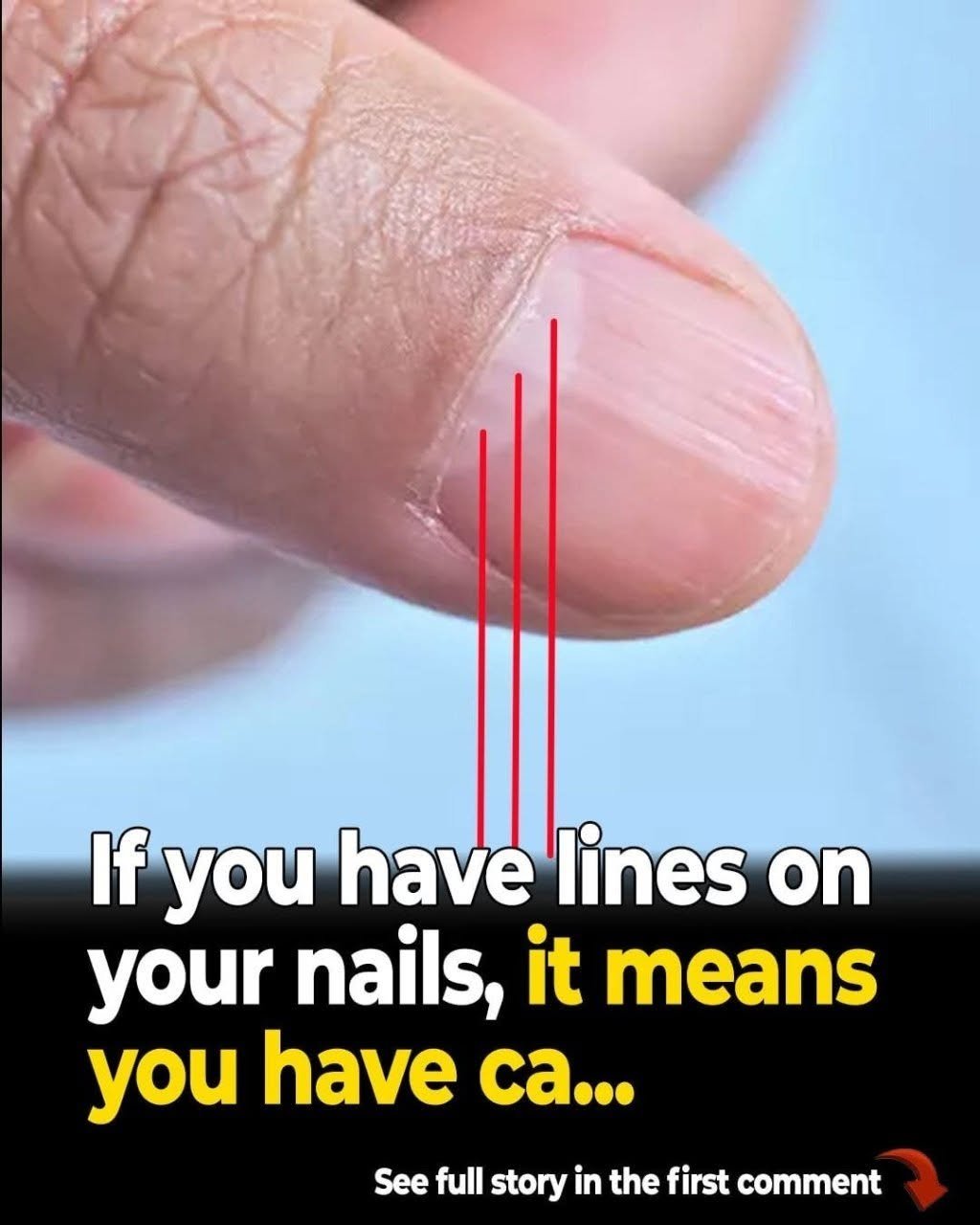
While structural changes like nail clubbing and spoon nails offer dramatic clues into oxygenation and iron status, clinical dermatologists and internal medicine physicians examine several other distinct nail markers that track systemic stress, organ function, and long-term health.
Because the nail matrix relies on a continuous, highly sensitive supply of blood, nutrients, and cellular energy, major internal disruptions leave physical “timestamps” on the growing nail plate.
Beyond standard evaluations, here are several additional nail signs that clinicians use as windows into systemic health:
1. Beau’s Lines (Deep Horizontal Grooves)
-
What it looks like: Distinct indentations, ridges, or deep grooves running side-to-side (transversely) across the nail plate, rather than vertically.
-
Why it matters: Beau’s lines occur when cell division in the nail matrix is temporarily and sharply interrupted by a severe physiological shock or systemic illness. Because fingernails grow at a predictable rate (roughly 3 millimeters per month), physicians can actually measure the distance of the groove from the cuticle to estimate when the trauma or illness occurred. Common triggers include high fevers, major surgery, severe physical trauma, uncontrolled diabetes, acute kidney injury, or heavy systemic stress.
2. Yellow Nail Syndrome (A Triad of Deep Systemic Involvement)
-
What it looks like: The nails become noticeably thickened, highly curved, and take on a distinct pale yellow or greenish tint. They also grow at an extremely slow rate or temporarily stop growing entirely.
-
Why it matters: This rare presentation is known as Yellow Nail Syndrome, and it is rarely just a cosmetic issue or a fungal infection. It is characterized by a diagnostic triad: the distinct nail changes, chronic lymphedema (swelling and fluid buildup in the limbs), and underlying respiratory tract diseases (such as chronic bronchitis, recurrent pleural effusions, or bronchiectasis). Clinicians view these changes as an external sign of lymphatic and microvascular dysfunction.
3. Mees’ Lines (Transverse White Bands)
-
What it looks like: One or more smooth, transverse white bands running horizontally across the width of the nail, which grow out slowly as the nail lengthens.
-
Why it matters: Historically associated with severe heavy metal toxicity (such as arsenic or thallium poisoning), Mees’ lines can also appear following systemic metabolic stress, severe carbon monoxide poisoning, malaria, Hodgkin’s disease, or episodes of profound renal failure. They reflect a temporary disruption in normal keratinization.
4. Abnormal Nail-Fold Capillaries (Microvascular Inspection)
-
What it looks like: Under a specialized magnifying glass or dermatoscope, the tiny capillaries residing in the skin fold right at the base of the cuticle appear visibly distorted, dilated, twisted, or punctuated by tiny micro-hemorrhages.
-
Why it matters: Rheumatologists and immunologists closely examine the nail-fold capillaries because structural alterations here are an early indicator of systemic autoimmune or connective tissue diseases, such as lupus, dermatomyositis, or systemic sclerosis (scleroderma).
The Diagnostic Value of Your Nails
Your fingernails act as a biological archive of your systemic health over the past several months. While isolated lines or minor spots are frequently harmless or the result of a past minor injury, sudden, widespread, or progressive structural and color shifts warrant a professional medical review. Paying attention to these subtle biological signals allows doctors to catch and address underlying metabolic, circulatory, or organ-system strains early.
