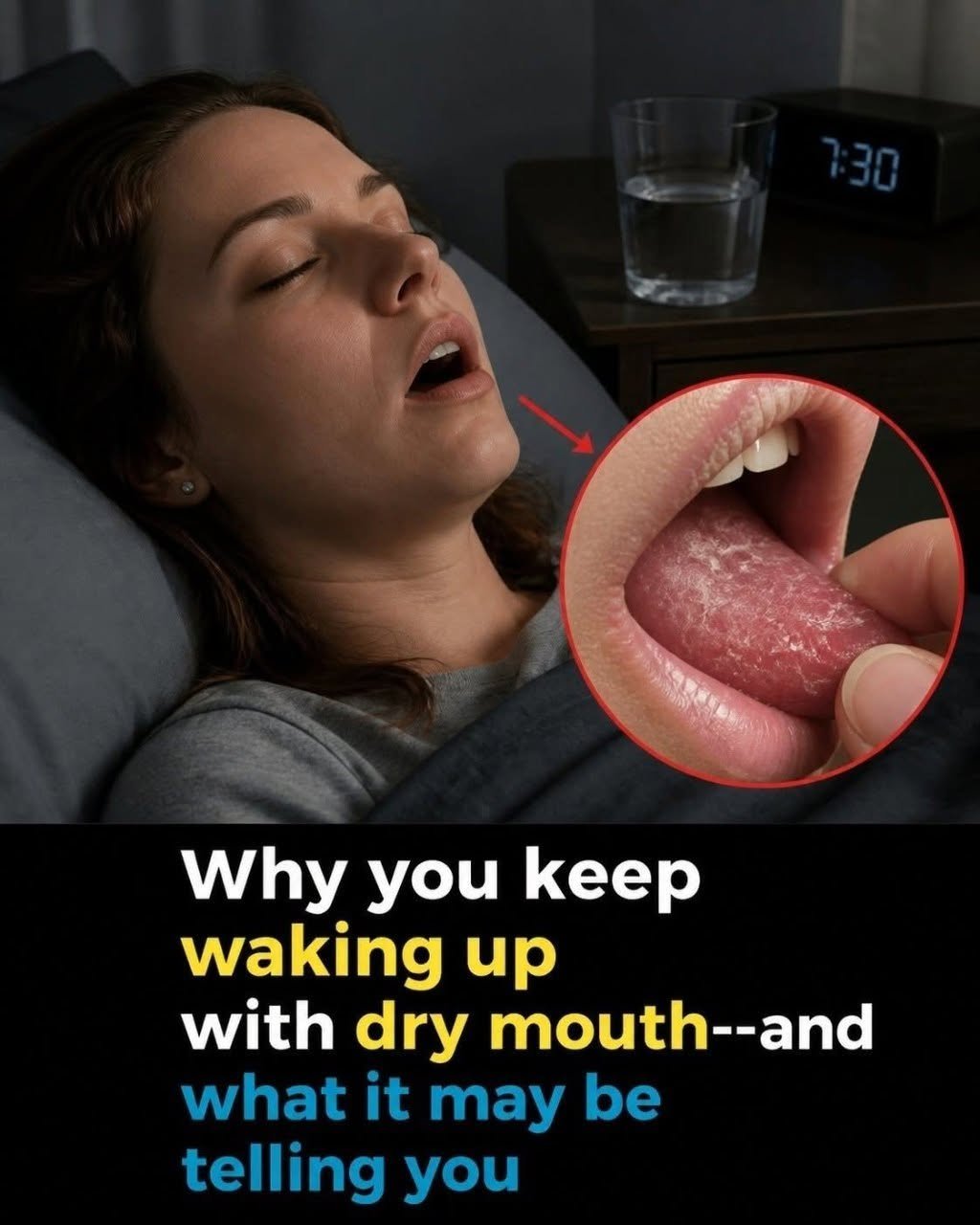
Waking up with a parched, sticky mouth is a remarkably common experience, and while it is often easily explained by a dry bedroom environment or a late-night snack, it can also serve as an important physiological signal from your body.
Saliva production naturally slows down while you sleep, but when you wake up feeling completely dried out, it usually points to one of several underlying causes:
1. Nighttime Mouth Breathing
-
What it means: If your nasal passages are blocked due to allergies, a deviated septum, or a sinus infection, your body naturally switches to breathing through your mouth while you sleep. Continuous airflow over the oral mucosa rapidly evaporates your natural saliva.
-
The Connection: Chronic mouth breathing at night is also heavily associated with sleep-disordered breathing patterns, including snoring and obstructive sleep apnea (OSA).
2. Medication Side Effects
-
What it means: Hundreds of prescription and over-the-counter medications list dry mouth (xerostomia) as a primary side effect. This is especially common with antihistamines, decongestants, blood pressure medications (like diuretics), antidepressants, and anxiety drugs.
-
The Connection: Many of these drugs interfere with the nervous system signals that command your salivary glands to produce adequate moisture.
3. Mild Dehydration
-
What it means: Not consuming enough fluids throughout the day, or losing fluids due to a warm room, heavy exercise, or consuming alcohol or caffeine close to bedtime, reduces your overall blood plasma and body water volume.
-
The Connection: When total body hydration drops, your salivary glands are among the first non-essential systems to have their fluid output conserved.
4. Underlying Metabolic or Systemic Conditions
-
What it means: Persistent, unremitting dry mouth can sometimes be an early clinical indicator of systemic shifts. For example, poorly managed blood sugar levels in diabetes can cause frequent thirst and dehydration. Additionally, autoimmune conditions like Sjögren’s syndrome specifically target moisture-producing glands, leading to chronic dryness in the mouth and eyes.
Simple Ways to Protect Your Mouth
Saliva does much more than just keep your mouth comfortable—it neutralizes acids, washes away food particles, and protects your teeth against decay. If you frequently wake up dry:
-
Keep a glass of water by your bed for regular sips.
-
Use a bedside humidifier to add moisture back into dry indoor air.
-
Address nasal congestion with saline rinses or consult a physician if you suspect snoring or sleep apnea is forcing you to breathe through your mouth.
-
Review your daily medications with your doctor or pharmacist if dry mouth becomes a persistent daily burden.
