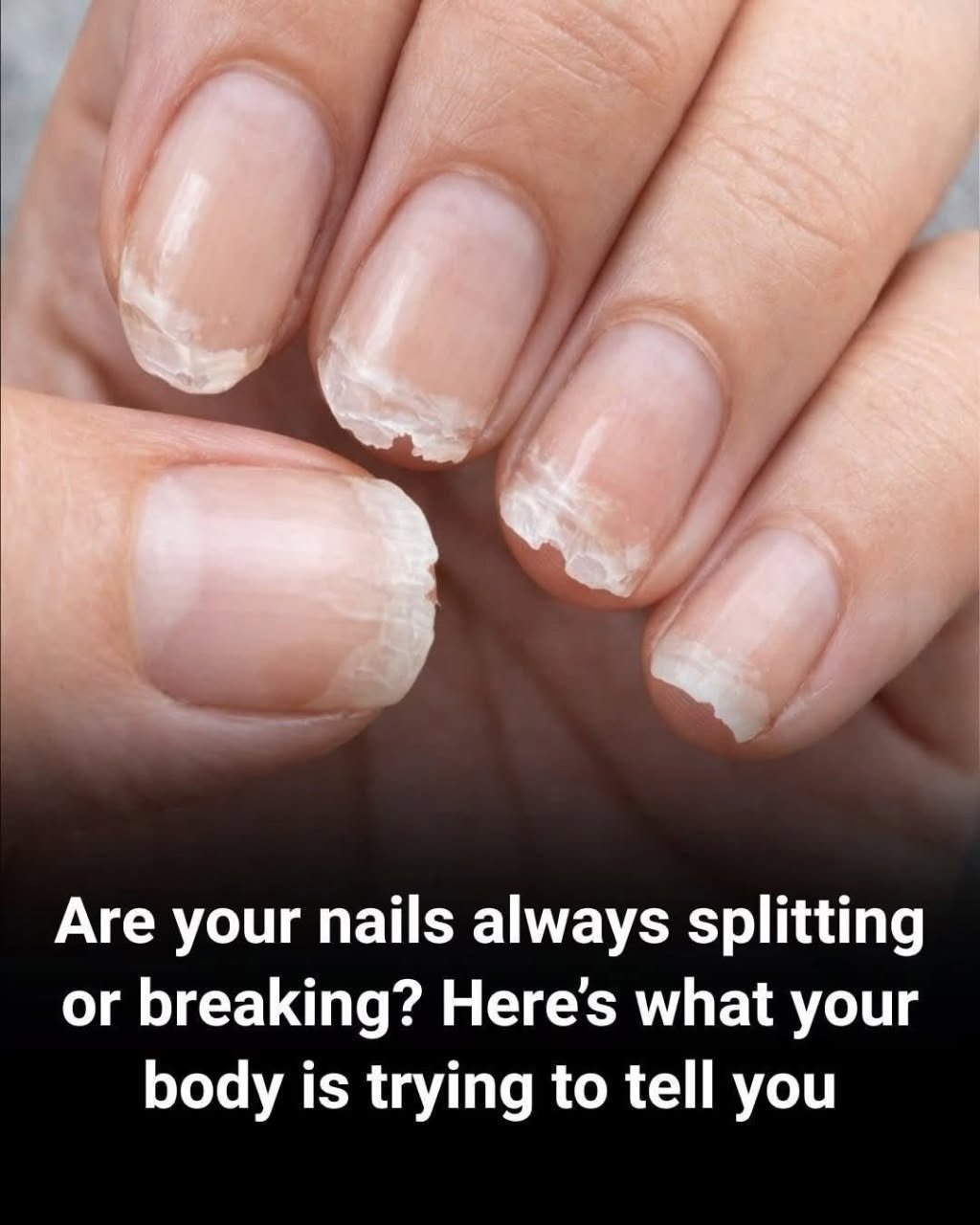
When your fingernails or toenails suddenly start splitting, peeling, breaking easily, or growing exceptionally slow, it is rarely just a cosmetic annoyance. Nails act as a biological mirror for your internal health, reflecting nutrient statuses, metabolic balance, and circulation.
Here is what weak, brittle, or changing nails are often trying to tell you about your body:
1. Iron Deficiency (Anemia)
-
What it looks like: Nails that are very thin, brittle, and curve upward at the edges like a spoon (a condition medically known as koilonychia).
-
What it means: Iron is essential for producing hemoglobin, the protein in red blood cells that carries oxygen to every tissue in your body—including the matrix where your nails grow. Without enough iron, nail cells lack the oxygen needed to build strong, dense keratin plates.
2. Protein Shortage
-
What it looks like: Soft, peeling nails that bend easily before breaking, or slow nail growth overall.
-
What it means: Nails are made almost entirely of a tough, fibrous protein called keratin. If your diet lacks sufficient high-quality protein, your body prioritizes sending amino acids to vital internal organs, leaving your hair and nails under-resourced.
3. B-Complex Deficiency (Particularly Biotin and B12)
-
What it looks like: Dry, brittle nails that easily crack, split vertically, or develop ridges.
-
What it means: B vitamins—especially biotin (Vitamin B7) and B12—play a fundamental role in cell proliferation and the synthesis of amino acids required for nail plate construction. A deficiency directly compromises nail structural integrity.
4. Essential Fatty Acid & Moisture Deficit
-
What it looks like: Excessively dry, brittle nails that look dull and snap under minimal pressure.
-
What it means: Just like your skin, your nail plates require a balanced level of natural moisture and lipids to remain flexible. Without healthy fats in your diet (or due to excessive hand-washing and harsh chemical exposure), nails dry out and lose their natural resilience.
5. Thyroid Imbalance (Hypothyroidism)
-
What it looks like: Thick, rough, extremely dry, and brittle nails that grow sluggishly or lift away from the nail bed.
-
What it means: Your thyroid gland regulates your body’s metabolic rate, determining how fast cells regenerate. When the thyroid is underactive (hypothyroidism), overall metabolic activity slows down, drastically reducing the rate at which nail cells divide and repair.
6. Poor Peripheral Circulation
-
What it looks like: Cold fingertips accompanied by pale nail beds and weak, slow-growing nails.
-
What it means: If your microcirculation is sluggish, oxygen and vital micronutrients struggle to reach the absolute tips of your fingers and toes, starving the nail beds of the constant fuel they need to thrive.
Simple Ways to Support Stronger Nails From Within
-
Audit Your Nutrition: Ensure you are getting adequate lean proteins, healthy fats (like omega-3s from fish, nuts, and seeds), and iron-rich foods (or leafy greens paired with vitamin C to boost absorption).
-
Hydrate Consistently: Internal hydration keeps the nail bed moisturized from the inside out.
-
Protect the Surface: Wear gloves when washing dishes or handling harsh cleaning chemicals, which strip natural oils straight out of the keratin layers.
-
Moisturize Topically: Massage a drop of vitamin E oil, jojoba oil, or a rich hand cream into your cuticles nightly to seal in moisture and protect the growing nail matrix.
