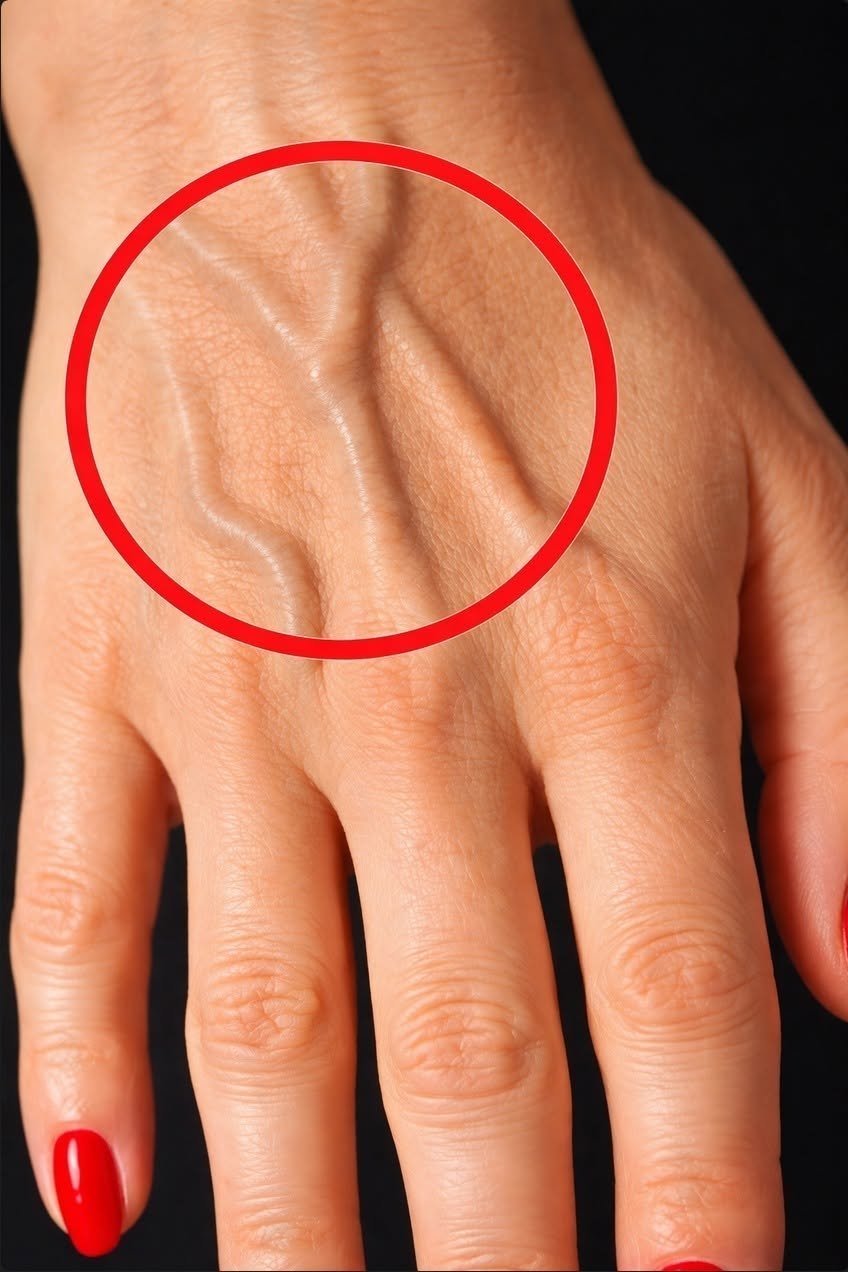
Viral wellness posts and clickbait health articles love to finish the sentence “If your veins are visible, it means you are…” with dramatic claims—ranging from being exceptionally fit to having a dangerous, hidden medical condition.
As is often the case with health trends, the reality is much more nuanced. Seeing your veins is completely normal for most people, but the type of visibility and where it occurs matters.
Here is what medical science says about why veins become visible and when it’s just biology versus when it warrants a closer look:
The Most Common, Harmless Reasons Your Veins Are Visible
For the vast majority of people, prominent veins simply come down to genetics, anatomy, and physical traits:
1. Low Body Fat and High Muscle Tone
-
The Science: Fat acts as a natural layer of insulation and padding beneath the skin. If you have a lower overall body fat percentage or have well-developed muscles (common in athletes or active individuals), your veins are pushed closer to the surface, making them pop out clearly on your arms, hands, or legs.
2. Fair or Thin Skin
-
The Science: Skin tone and thickness play a huge role. People with very fair or translucent skin naturally have veins that show through much more easily because there is less pigment to mask them. Additionally, as we age, skin naturally thins out, making veins on the hands and temples more prominent.
3. Genetics and Body Structure
-
The Science: Some people are simply born with wider superficial veins or skin that is naturally more transparent. If your parents or grandparents have visible veins, you likely inherited that trait.
4. Temporary Environmental Factors
-
The Science: When you exercise, your blood pressure rises and blood flow increases, causing veins to dilate (expand) near the surface to help cool your body down. Similarly, hot weather causes blood vessels to widen, and heavy lifting temporarily forces veins to bulge.
When Visible Veins Indicate a Medical Issue
While surface veins on the hands, arms, or chest are usually harmless, prominent veins in the legs can sometimes signal an underlying circulatory condition called chronic venous insufficiency:
-
Varicose Veins: These are enlarged, twisted, and swollen veins that often look raised and rope-like under the skin of the legs. They happen when tiny valves inside your veins weaken, allowing blood to flow backward and pool instead of efficiently pumping back up to your heart.
-
Spider Veins (Reticular Veins): Smaller, web-like clusters of red, blue, or purple veins close to the skin’s surface. While often cosmetic, they can sometimes cause aching, burning, or heaviness in the legs after standing for long periods.
The Medical Takeaway: If your veins are visible because you have low body fat, fair skin, or you just finished a workout, there is zero cause for concern. However, if your leg veins become bulging, painful, throbbing, or are accompanied by leg swelling, cramping, and fatigue at the end of the day, it’s worth mentioning to your primary care physician or a vein specialist.
Would you like some tips on supporting healthy leg circulation or managing everyday muscle comfort?
