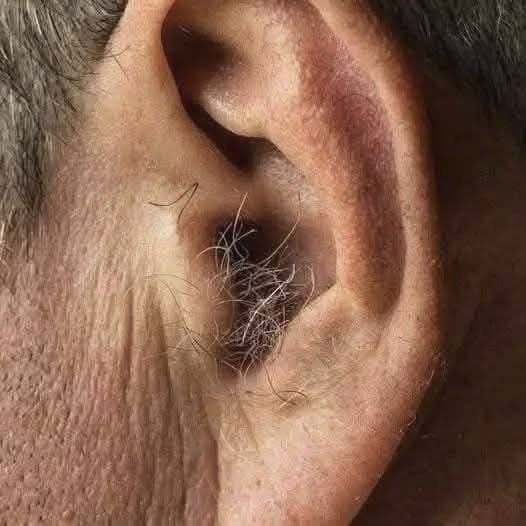
When sensationalized health and internet headlines tease that “if hair grows on your ears, it’s because your body is…”, they are usually capitalizing on curiosity or fear, framing a normal genetic and aging process as an alarming medical mystery.
Let’s cut through the clickbait hyperbole and examine what clinical science actually says about ear hair growth, why it happens, and when (if ever) it requires medical attention.
The Biological Reality: Why Ear Hair Grows
Ear hair growth—whether fine vellus hairs or coarse, wiry terminal hairs—is primarily driven by two biological factors: genetics and hormonal aging.
1. Androgens and Hair Follicle Sensitivity
-
The Role of Hormones: Hair growth across the body is regulated by androgens (male sex hormones like testosterone). As men (and to a lesser extent, women) age, hair follicles in certain areas—such as the ears, nose, and eyebrows—become increasingly sensitive to circulating androgens.
-
The Result: Even if overall hormone levels remain stable or decline with age, these specific follicles switch from producing fine, invisible peach fuzz (vellus hair) to thick, pigmented terminal hair.
2. Genetic Predisposition (Heredity)
-
The Family Blueprint: The density, coarseness, and exact timing of ear hair growth are heavily dictated by your genetics. If older male family members developed prominent ear or nose hair, you are statistically very likely to experience the same trait. (You may have heard of “hypertrichosis pinnae auris”—hairy ears—which was once studied as a Y-linked genetic trait, though modern genetics views ear hair as a polygenic trait influenced by overall hormonal aging).
Is It Ever a Sign of a Medical Problem?
In the vast majority of cases, ear hair is a completely benign, normal part of the aging process. However, there are a few clinical nuances:
-
Sudden or Extreme Changes: If a person experiences a sudden, rapid, or excessive onset of dark, coarse hair growth all over the body (including the ears and face)—a condition known medically as hirsutism in women or generalized hypertrichosis—it can occasionally signal an underlying hormonal imbalance, endocrine disorder, or medication side effect that warrants a doctor’s evaluation.
-
Normal Aging vs. Pathology: For most older adults, finding a few stray, coarse hairs on the outer ear or earlobe is simply an everyday milestone of mature physiology—no different from graying hair or changes in skin texture.
Safe Ways to Manage Ear Hair
If ear hair is purely a cosmetic concern, safe management is straightforward:
-
Electric Trimmers: Using a specialized nose and ear hair trimmer with a protective guard is the safest, most effective way to trim hairs short without nicking the delicate, uneven skin of the ear canal or auricle.
-
Tweezing or Waxing: Proceed with caution. Tweezing can cause mild inflammation or ingrown hairs, and waxing the sensitive ear canal carries a risk of skin tearing or burns if the wax is too hot.
-
Laser Hair Removal: For individuals seeking a semi-permanent solution, professional laser hair removal can target dark terminal hairs on the outer ear, provided it is performed by a licensed technician.
