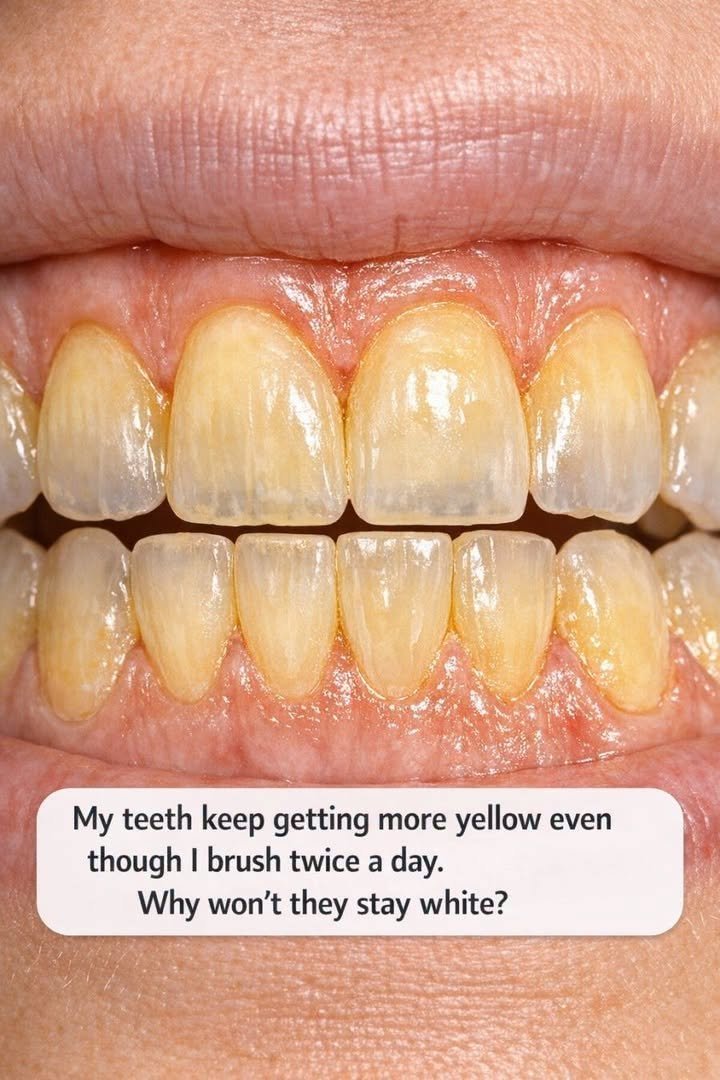
It is deeply frustrating to brush twice a day, maintain a rigorous oral hygiene routine, and still watch your teeth gradually grow more yellow over time. The reassuring news is that this is a completely normal biological process, and it almost never means you are doing something wrong with your toothbrush.
To understand why teeth lose their brightness, we have to look beneath the surface at the actual structure of a tooth.
The Anatomy of Tooth Color: Enamel vs. Dentin
A tooth is not a solid, uniform white object like a piece of porcelain. It is made of two primary layers that dictate its color:
-
Enamel (The Outer Layer): Enamel is the hard, semi-translucent outer shell that protects your teeth. Healthy enamel is actually somewhat clear or bluish-white.
-
Dentin (The Inner Core): Lying directly beneath the enamel is dentin, a dense, naturally yellowish-brown calcified tissue.
As you age, your outer layer of enamel naturally thins from decades of normal chewing, micro-friction, and mild acid wear. As that protective enamel barrier becomes thinner, the naturally yellowish dentin underneath begins to show through more prominently, making the tooth appear darker or more yellow overall.
4 Everyday Reasons Your Teeth Are Yellowing
Aside from natural biological aging, several common factors contribute to tooth discoloration despite regular brushing:
1. Dietary Chromogens and Tannins
-
The Culprit: Consuming dark-colored foods and beverages on a regular basis—such as coffee, black tea, red wine, dark berries, cola, and soy sauce.
-
Why Brushing Isn’t Enough: These items contain intense plant pigments called chromogens and chemical compounds called tannins that chemically bind to and seep into the microscopic pores of your tooth enamel, staining it from the outside in. Brushing removes surface debris, but deep-set chromogens require professional whitening agents to lift.
2. Acidic Foods and Enamel Erosion
-
The Culprit: Frequent consumption of highly acidic foods and drinks like citrus fruits, vinegar-based dressings, and soda.
-
Why It Matters: Acid temporarily softens and microscopically etches your enamel. If you brush your teeth immediately after consuming something acidic, you can actually accelerate enamel wear, exposing more of that yellowish dentin underneath. (Pro tip: Wait at least 30 minutes after eating acidic foods before brushing, or rinse your mouth with plain water in the meantime.)
3. Tobacco Use
-
The Culprit: Cigarettes, cigars, and chewing tobacco.
-
Why It Matters: Tar and nicotine are notorious for leaving stubborn, brownish-yellow chemical residues that deeply penetrate tooth enamel and are nearly impossible to remove with standard toothpaste.
4. Medications and Medical History
-
The Culprit: Certain systemic medications taken earlier in life (such as the antibiotic tetracycline during childhood tooth development) or certain mouthwashes containing chlorhexidine. Additionally, physical trauma to a tooth can cause the nerve inside to die, resulting in the tooth turning grey or yellow from the inside out.
Realistic Steps for Brighter Teeth
If you want to manage or improve tooth color safely, focus on evidence-based strategies rather than abrasive internet hacks (like scrubbing with baking soda and lemon juice, which destroys enamel):
-
Modify How You Sip: When drinking staining beverages like iced coffee or tea through a straw, you minimize direct contact with your front teeth.
-
Rinse After Staining Foods: Swishing plain water around your mouth immediately after eating berries, tomato sauce, or drinking red wine washes away residual pigments before they can bind to enamel.
-
Consult Your Dentist About Whitening: Professional treatments (either in-office or custom take-home trays provided by a dentist) use controlled concentrations of hydrogen peroxide or carbamide peroxide safely to bleach the underlying dentin without destroying your enamel structure.
