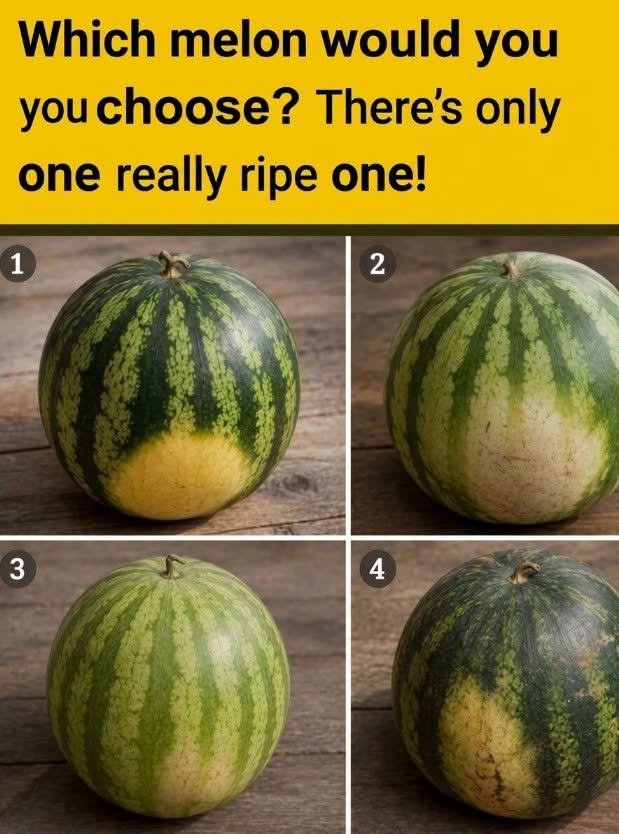
When grocery store displays fill up with watermelons during the warmer months, picking a good one can feel entirely like a game of chance. Thumping or knocking on a melon is the most famous trick in the book, but many shoppers aren’t actually sure what sound they are listening for.
Let’s cut through the produce-section myths and look at the reliable, visual, and tactile signs that indicate a watermelon is fully ripe, sweet, and ready to enjoy.
1. Look for the Field Patch (Ground Spot)
-
What to Check: Turn the watermelon over and look for the creamy yellow or orange-yellow patch where it rested on the ground while growing.
-
Why It Matters: This is called the ground spot. A deep, creamy yellow or buttery orange color indicates that the watermelon spent plenty of time ripening on the vine in the sun. If the spot is stark white or pale greenish-white, the melon was picked too early and will likely be bland and underripe.
2. Inspect the Webbing (Sugar Spots)
-
What to Check: Look for dark, rough, web-like brown scarring or “vein” patterns on the rind.
-
Why It Matters: Far from being a defect, this webbing indicates that bees repeatedly visited and pollinated the flower. More pollination leads to sweeter fruit, meaning those rough, scarred patches are actually a sign of extra sugar accumulation.
3. Check the Stem (Green vs. Dry)
-
What to Check: Examine the little stem tail at the top of the melon.
-
Why It Matters: A dry, brown, and brittle stem indicates that the watermelon ripened fully on the vine and separated naturally. If the stem is green and pliable, the melon was harvested prematurely and will lack its full sweetness.
4. Evaluate Shape and Weight
-
What to Check: Pick the watermelon up and feel its weight relative to its size, and check its overall symmetry.
-
Why It Matters:
-
Weight: A ripe watermelon is about 92% water, meaning it should feel surprisingly heavy for its size. If a large melon feels unusually light, it may be dry, mealy, or overripe.
-
Shape: Look for a uniform, symmetrical shape without odd bumps or indentations. Uniformity means it received consistent water and sunlight throughout its growing cycle.
-
5. The Thump Test (Separating Fact from Fiction)
-
What to Check: Give the melon a gentle tap with your knuckles and listen to the resonance.
-
Why It Matters: An underripe watermelon will produce a sharp, high-pitched “ping” or metallic sound because the flesh is dense and firm. An overripe or hollow melon sounds dull and hollow. A ripe, sweet watermelon produces a deeper, more resonant “tenor” or muffled thump, indicating juicy, pressurized interior flesh.
