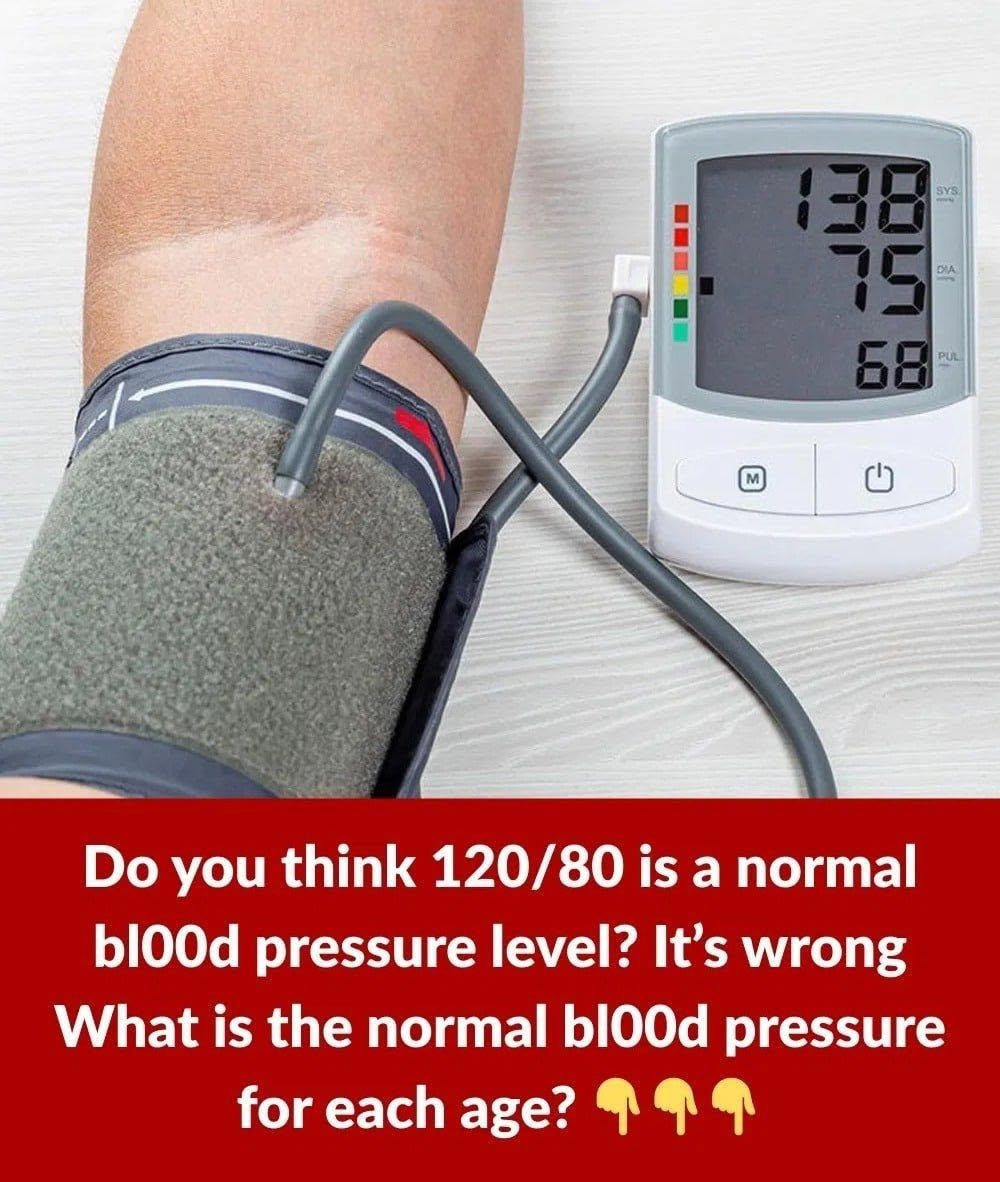
When looking at blood pressure across different stages of life, cardiologists and medical guidelines emphasize an important clinical distinction: while average blood pressure tends to rise slightly with age as blood vessels naturally stiffen, the clinical definition of “normal” healthy blood pressure remains consistent for adults.
The Gold Standard: What Is Normal?
According to major cardiovascular organizations (such as the American Heart Association), the optimal blood pressure reading for a healthy adult—regardless of whether you are 30, 60, or 80—is:
-
Normal: Less than 120/80 mmHg(Systolic—the top number—under 120, and Diastolic—the bottom number—under 80).
Blood Pressure Categories for Adults
To help monitor heart health safely, physicians categorize blood pressure readings into distinct stages:
-
Elevated: Systolic between 120–129 and Diastolic less than 80. (A gentle warning sign to focus on heart-healthy lifestyle changes).
-
Stage 1 Hypertension: Systolic between 130–139 or Diastolic between 80–89.
-
Stage 2 Hypertension: Systolic 140 or higher or Diastolic 90 or higher.
Why Blood Pressure Tends to Rise with Age
As we age, arterial walls naturally experience some loss of elasticity (vascular stiffening). Because of this physiological shift, average blood pressure readings climb slightly over the decades.
However, hypertension is not an inevitable or harmless part of aging. Chronically high blood pressure places extra strain on the heart muscle and blood vessels, increasing long-term cardiovascular risks. Maintaining optimal numbers through heart-healthy nutrition (like potassium-rich foods and low sodium), functional physical activity, and avoiding harsh cardiovascular stressors is one of the most powerful ways to protect your long-term vitality.
Are you keeping a close eye on your blood pressure readings, or discussing heart-health goals with your physician?
