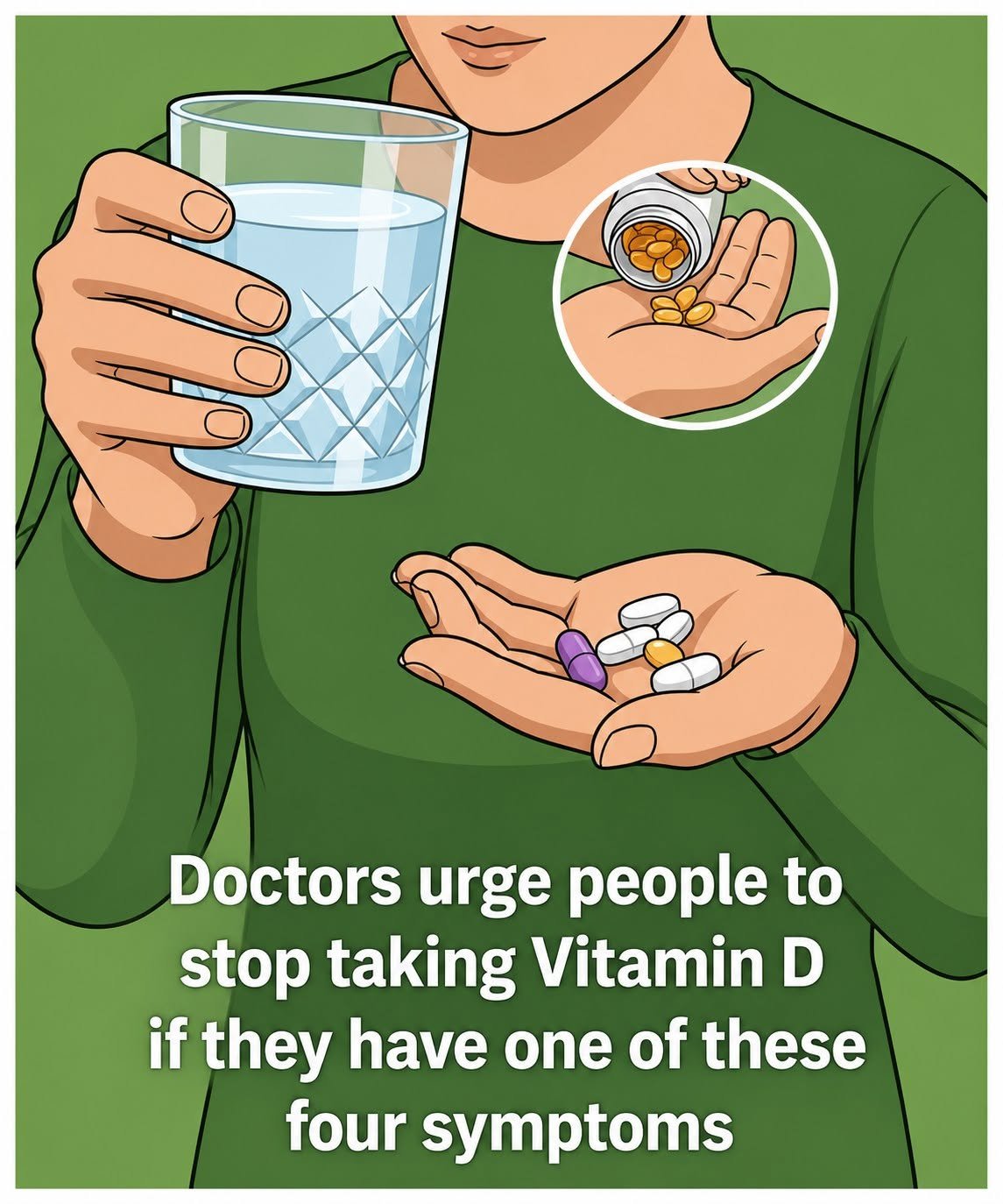
When sensationalized health articles warn that you must “stop taking Vitamin D immediately if you have these 4 symptoms,” they are usually tapping into the real, clinical phenomenon of vitamin D toxicity (hypervitaminosis D).
While Vitamin D is essential for bone health, immune function, and overall vitality, because it is a fat-soluble vitamin, your body stores excess amounts rather than flushing them out. Taking high-dose supplements for prolonged periods without medical supervision can lead to dangerously elevated calcium levels in the blood.
The 4 Key Warning Signs of Excess Vitamin D
When vitamin D levels become excessively high, it triggers hypercalcemia (too much calcium in the bloodstream). Physicians look out for these four distinct red-flag symptoms:
1. Frequent Nausea, Vomiting, and Poor Appetite
-
Why It Happens: High blood calcium levels upset normal gastrointestinal motility and signaling, leading to persistent queasiness, stomach upset, and a sudden disinterest in food.
2. Excessive Thirst and Frequent Urination (Polyuria)
-
Why It Happens: When calcium levels spike, your kidneys have to work overtime to filter and clear the excess mineral from your blood. This places stress on the kidneys and forces frequent bathroom trips, often accompanied by intense dehydration.
3. Muscle Weakness and Generalized Fatigue
-
Why It Happens: Elevated calcium alters how electrical impulses travel through your muscle and nerve fibers, leaving you feeling profoundly weak, sluggish, and fatigued even after a full night’s rest.
4. Brain Fog, Confusion, or Dizziness
-
Why It Happens: Severe hypercalcemia impacts the central nervous system, sometimes manifesting as mental cloudiness, trouble concentrating, or mild disorientation.
What to Do If You Suspect Supplement Overuse
-
Pause and Consult Your Physician: If you are taking high-dose over-the-counter vitamin D supplements and experiencing these symptoms, pause supplementation and schedule a visit with your doctor.
-
Get a Simple Blood Test: A routine 25-hydroxyvitamin D blood test and a basic metabolic panel can quickly verify your actual vitamin levels and check your kidney function and blood calcium.
-
Stick to Safe Dosages: For most adults, the recommended dietary allowance is much lower than the mega-doses found in some viral supplement trends. Always let your healthcare provider guide your individualized supplementation strategy.
Are you taking Vitamin D as part of a routine wellness plan, or discussing your nutritional lab work with your physician?
