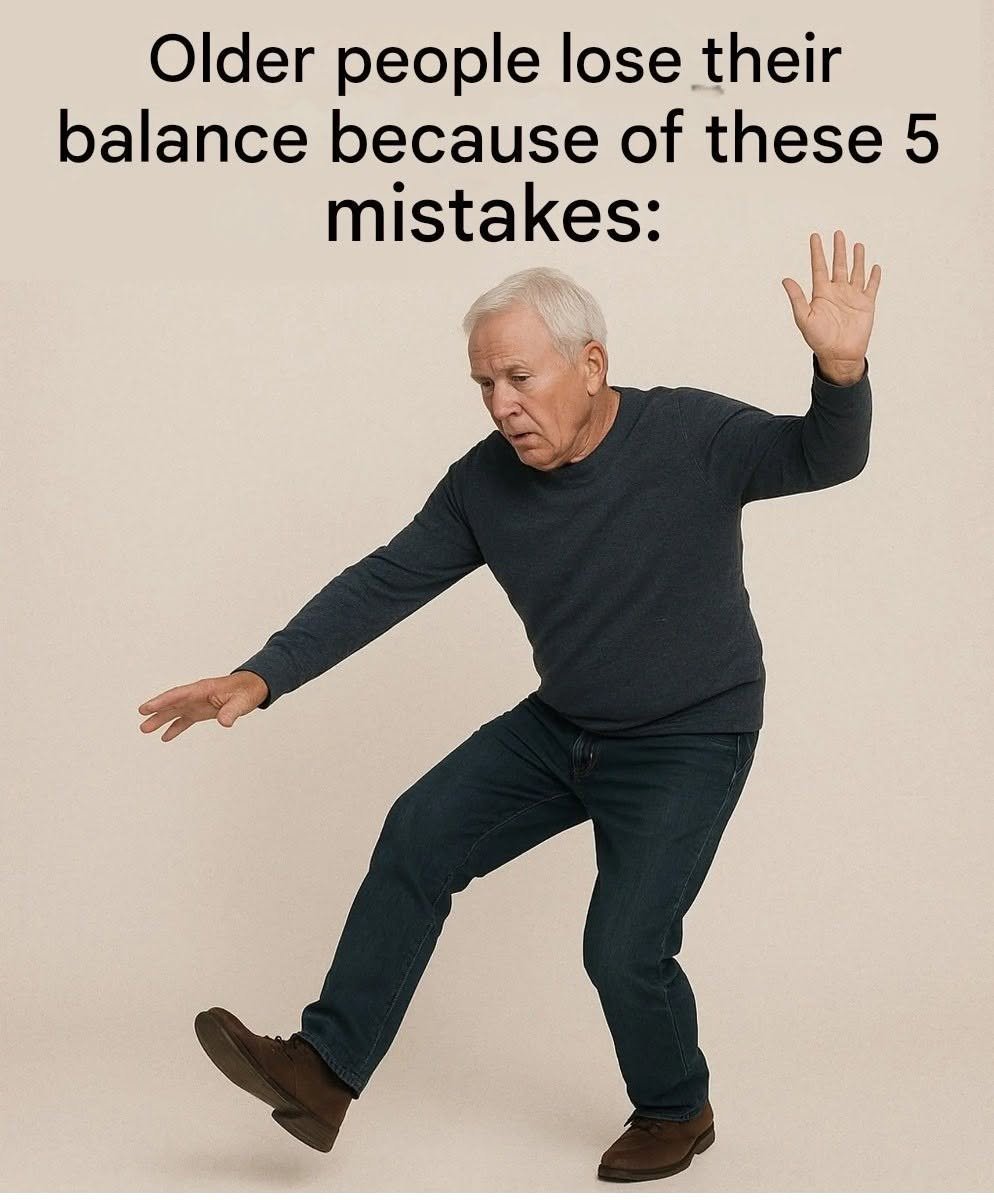
When sensationalized health clickbait warns about “5 Common Mistakes That Cause Older People to Lose Their Balance,” they often frame balance decline as an inevitable catastrophe or try to sell you expensive, unverified balance boards, vibrating insoles, or miracle supplements.
From a clinical geriatric, physical therapy, and physiological perspective, balance is not a single organ system; it is a dynamic, everyday skill that relies on the seamless communication between your inner ear (vestibular system), your eyes, your proprioceptors (joint and muscle position sensors), and your muscular strength. While balance naturally changes with age, falls are rarely caused by a single mysterious mistake—they are usually the result of everyday environmental, physical, and footwear habits that can be easily identified and adjusted.
The Reality Behind Balance and Aging
Why do slips and stumbles become more common as we age? Clinicians and physical therapists look at several clear, manageable physiological factors rather than random misfortune:
-
Deconditioning and Sarcopenia (Muscle Loss): Without regular strength-building activity, our lower body muscles—especially the calves, quads, and glutes—naturally lose mass and power. These are the exact muscles that micro-correct your posture the second you start to lean off-center.
-
Reduced Foot and Ankle Mobility: As we age, we tend to spend more time sitting and less time challenging our ankle mobility. Stiff ankles mean your feet cannot flex quickly to adjust to uneven pavement or small bumps in the rug.
-
Sensory Changes (Vision and Proprioception): Diminishing night vision, reduced peripheral awareness, or decreased sensation in the soles of the feet (neuropathy or simply wearing overly cushioned, unsupportive shoes) can delay how fast your brain realizes your body is tilting.
-
Environmental Hazards at Home: The majority of slips happen indoors—not on icy winter sidewalks—due to loose throw rugs, poor hallway lighting, electrical cords, or rushing to the bathroom in the dark.
Evidence-Based Ways to Protect and Improve Your Balance
Physical therapists and geriatric specialists emphasize that balance is a “use-it-or-lose-it” skill that can be actively preserved and strengthened at any age through simple, non-invasive habits:
-
Incorporate Daily Single-Leg Stands: While standing at your kitchen counter preparing food or brushing your teeth, hold onto the counter and practice standing on one leg for 10 to 15 seconds, alternating sides. This directly challenges your stabilizer muscles and vestibular system.
-
Prioritize Lower-Body Strength Training: Simple, functional movements like sit-to-stands (rising from a dining chair without using your hands) build the exact quad and core power needed to catch yourself if you trip.
-
Choose Supportive, Low-Profile Footwear: Ditch slick-soled slippers, backless sandals, or ultra-thick, spongy running shoes inside the house. Opt for lightweight shoes with firm, textured rubber soles that let you “feel” the ground beneath your feet.
-
Audit Your Home Environment: Secure or remove loose throw rugs, ensure hallways and stairwells are brightly lit with motion-activated nightlights, and keep walking paths completely clear of clutter.
-
Stay Proactive with Vision Checks: Schedule regular annual eye exams to ensure your glasses prescription is up to date, and be cautious when transitioning between bright outdoor light and dim indoor spaces.
Are you looking into home safety modifications, or exploring gentle strength and mobility routines to support steady balance as you age?
