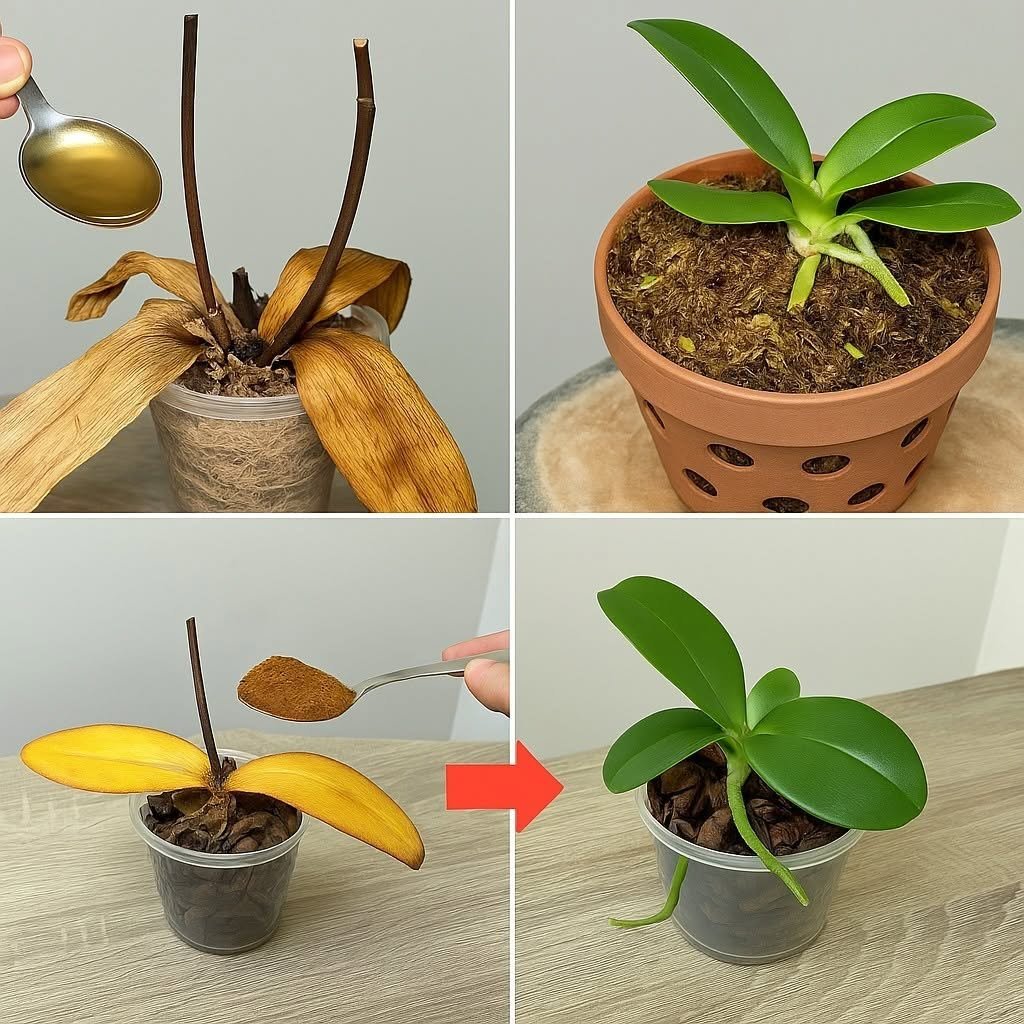
When sensationalized gardening clickbait promises that you can “Sprinkle 1 spoon on dead orchid roots! Suddenly revived and blooms all year round,” they are peddling magical plant snake oil. Whether the secret ingredient is cinnamon, crushed aspirin, Epsom salts, or a mysterious kitchen powder, these viral hacks promise miraculous resurrections while ignoring the actual biological reality of how plants grow.
From a botanical and horticultural perspective, once plant tissue is truly dead, dried out, or rotted away, no single spoonful of anything can bring it back to life. However, orchids are notoriously misunderstood houseplants, and understanding how they actually grow can help you rescue a struggling plant before it reaches the point of no return.
The Reality Behind Orchid Care and Root Health
Why do orchids often look like they are on the brink of death? It usually comes down to a few common care missteps rather than a lack of kitchen magic:
-
The Danger of Overwatering and Root Rot: The #1 killer of indoor orchids is too much water. Most popular orchids (like Phalaenopsis) are epiphytes—meaning in nature, they grow clinging to the sides of trees with their roots exposed to the air, not sitting in soggy soil. When roots stay waterlogged in dense soil, they suffocate, turn mushy and brown, and die.
-
Understanding Orchid Roots: Healthy orchid roots are plump, silvery-green when dry, and bright green when freshly watered. Dead roots are papery, flat, hollow, brown, or mushy to the touch.
-
The “Bloom All Year Round” Myth: Orchids naturally bloom once a year for a few months, followed by a resting (vegetative) phase where they grow new leaves and roots. Forcing a plant to bloom continuously without rest will exhaust it and lead to its decline.
Evidence-Based Steps to Revive a Struggling Orchid
If your orchid is looking sad, dropping buds, or struggling with root issues, skip the viral hacks and use these practical horticultural steps:
-
Inspect and Prune the Roots: Gently take the orchid out of its pot and brush away the old potting medium. Use a pair of clean, sterilized shears to snip away any brown, mushy, or hollow dead roots. Leave the firm, silvery-green roots intact.
-
Repot in Proper Orchid Bark: Never plant an orchid in regular garden soil or potting mix. Repot it in a specialized, chunky orchid mix made of fir bark, perlite, and sphagnum moss. This ensures maximum airflow around the roots, which is essential for preventing rot.
-
Water Correctly (The Soak Method): Instead of giving your orchid a few ice cubes or a random splash of water, soak the inner pot in a bowl of room-temperature water for 10 to 15 minutes, then let it drain completely before putting it back. Only water again when the roots turn silvery-gray (usually every 7 to 10 days).
-
Provide Bright, Indirect Light: Place your orchid near an east- or bright west-facing window where it gets plenty of gentle, indirect sunlight. Direct, harsh sun will scorch the leaves, while too little light will prevent it from ever blooming again.
Are you looking into indoor plant care and gardening tips, or exploring ways to nurture your home greenery?
