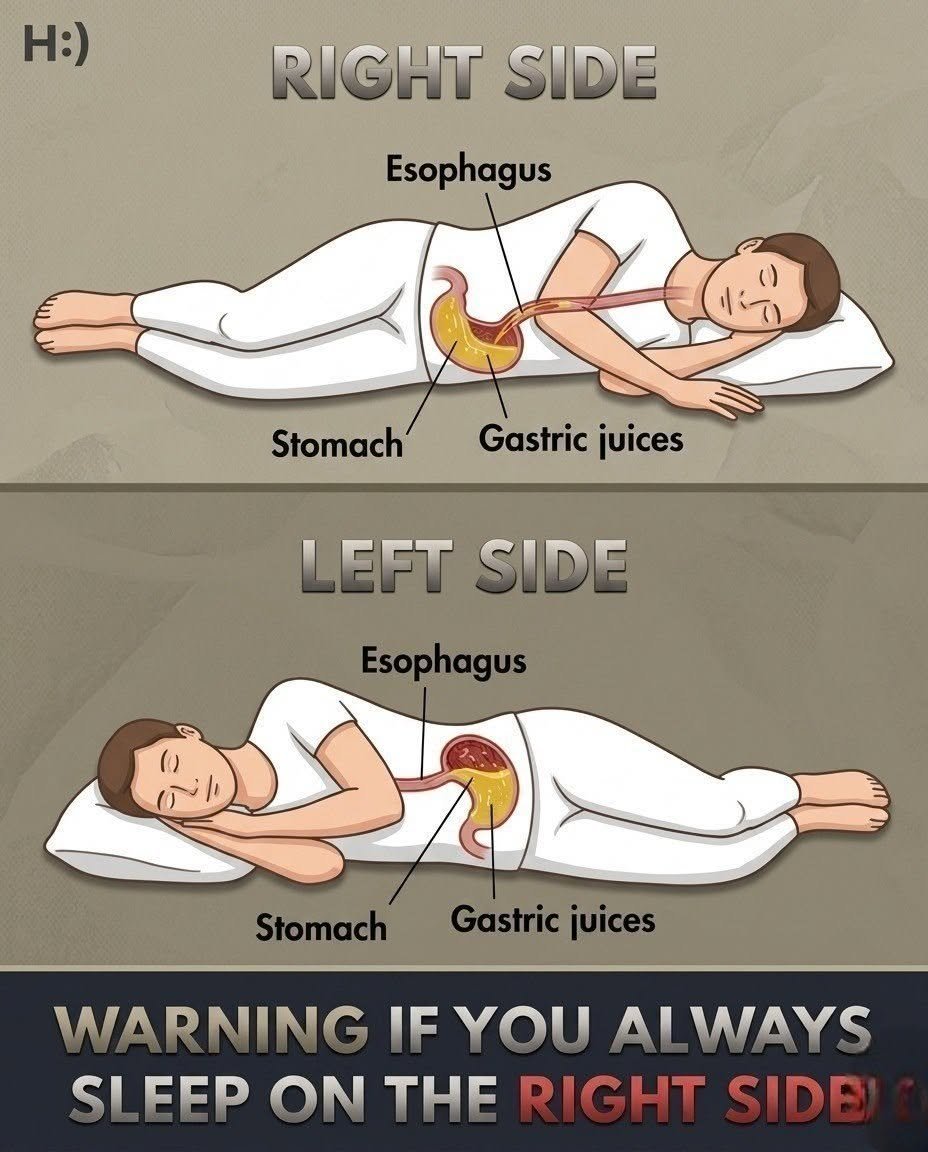
When sensationalized internet wellness hooks finish the sentence “if you always sleep on your right side, you should have…” they are usually setting you up for a dramatic scare about organ compression, acid reflux disasters, or selling you an overpriced ergonomic body pillow with miraculous claims.
From a clinical sleep medicine and anatomical perspective, sleep position does interact with certain digestive and cardiovascular factors, but there is no single “magic” sleeping position that applies to everyone, nor is sleeping on your right side an impending health emergency.
The Reality Behind Right-Side Sleeping
Why do sleep researchers look closely at which side you favor? It comes down to basic human anatomy and how gravity affects your internal organs:
-
The Stomach and Acid Reflux (GERD): Your stomach naturally curves to the left. When you sleep on your left side, your stomach sits lower than the esophagus, making it physically harder for stomach acid to leak upward. Conversely, sleeping strictly on your right side can sometimes relax the lower esophageal sphincter, making acid reflux or heartburn more frequent for people prone to GERD.
-
Heart Mechanics: For most healthy individuals, sleeping on either side has minimal impact on the heart. However, for those with certain chronic heart conditions, some cardiologists note that left-side sleeping can sometimes cause a shifting sensation or slight discomfort as the heart moves closer to the chest wall, making right-side sleeping actually feel more comfortable.
-
Pregnancy Considerations: During pregnancy, obstetricians generally recommend sleeping on your left side because it keeps the growing uterus off the inferior vena cava (the large vein running up the right side of your spine), ensuring optimal blood flow back to the heart and placenta.
-
Natural Movement During Sleep: It is completely normal to shift positions multiple times throughout the night. Your body instinctively moves to relieve pressure points, so rigidly forcing yourself to stay locked in one position all night can lead to shoulder stiffness or hip discomfort.
Evidence-Based Ways to Optimize Your Sleeping Comfort
If you are a dedicated side sleeper looking to protect your joints, improve your spinal alignment, and minimize discomfort, physical therapists and sleep specialists recommend these practical adjustments:
-
Pillow Placement Between the Knees: If you sleep on your side, place a firm pillow between your knees. This prevents your top leg from dragging downward, keeping your hips and pelvis in neutral alignment and protecting your lower back.
-
Support Your Neck Alignment: Choose a pillow that fills the exact gap between the mattress and your ear, keeping your neck aligned straight with your spine rather than tilted upward or sagging downward.
-
Manage Reflux Triggers Separately: If you experience nighttime heartburn, the solution isn’t necessarily giving up your favorite sleeping position—it’s avoiding heavy, spicy, or acidic meals 3 hours before bed and elevating the head of your bed slightly if needed.
-
Prioritize Restful Consistency: Ultimately, the best sleeping position is the one that allows you to fall asleep comfortably and wake up feeling rested without chronic pain.
Are you looking into sleep ergonomics and posture support, or exploring ways to manage nighttime comfort as you age?
