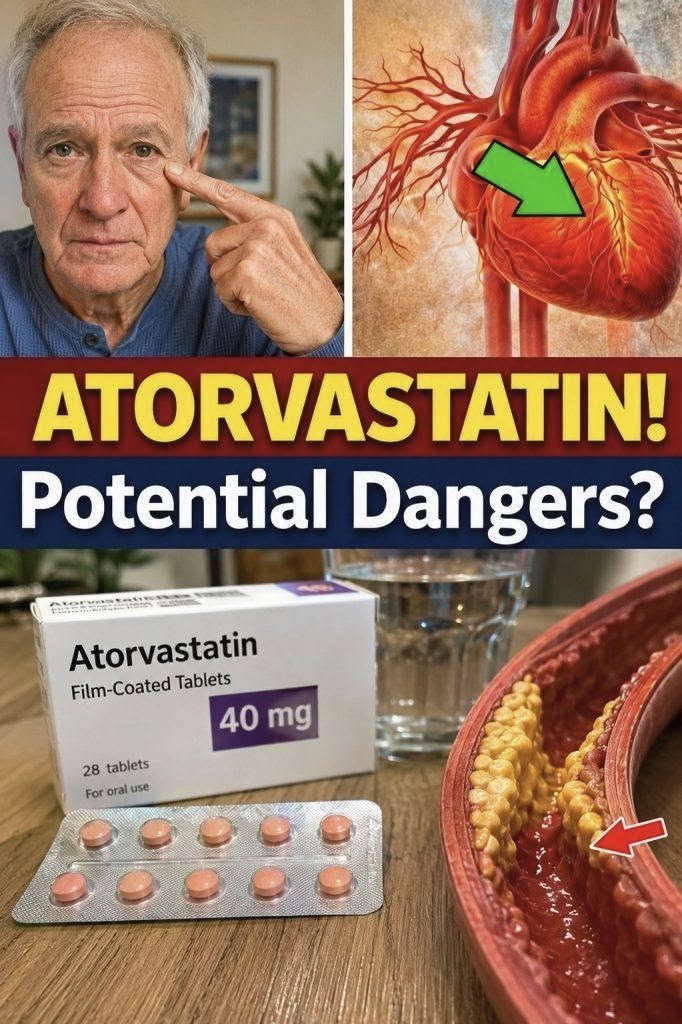
Atorvastatin—commonly known by the brand name Lipitor—belongs to a class of medications called HMG-CoA reductase inhibitors (statins). It works by blocking the liver enzyme responsible for producing cholesterol, thereby lowering Low-Density Lipoprotein (LDL) and reducing the risk of heart attack and stroke.
While generally well-tolerated by millions of patients worldwide, understanding its potential side effects and management protocols is essential for safe long-term treatment.
15 Essential Insights into Atorvastatin Side Effects
1. Muscle Aches and Weakness (Statin-Associated Muscle Symptoms)
-
Physiological Driver: Muscle discomfort—ranging from mild aches to stiffness—is the most frequently reported side effect. Statins can impair mitochondrial energy production within skeletal muscle cells.
-
Management: Discomfort is typically symmetrical, affecting large muscle groups like the thighs, calves, shoulders, or lower back.
2. Risk of Severe Muscle Breakdown (Rhabdomyolysis)
-
Physiological Driver: In extremely rare cases, high-dose statin therapy can cause rapid muscle breakdown, releasing the muscle protein myoglobin into the bloodstream.
-
Warning Signs: Dark, tea-colored urine combined with severe, incapacitating muscle pain. This is a medical emergency that can lead to acute kidney failure.
3. Elevated Liver Enzymes
-
Physiological Driver: Atorvastatin is metabolized in the liver, which can cause transient elevations in liver enzymes such as serum transaminases (ALT and AST).
-
Monitoring: Baseline liver function tests are routinely conducted before initiating therapy. Persistent elevation may require dose adjustment or alternative agents.
4. Mild Blood Glucose and HbA1c Elevation
-
Physiological Driver: Statins can slightly impair peripheral insulin sensitivity and reduce pancreatic beta-cell insulin secretion.
-
Clinical Context: For individuals with pre-diabetes or metabolic syndrome, this may trigger a minor increase in blood sugar levels. However, the cardiovascular benefit of stroke/heart attack prevention overwhelmingly outweighs this modest risk.
5. Digestive and Gastrointestinal Disturbance
-
Physiological Driver: Alterations in local lipid handling within the gut lining can trigger mild GI discomfort.
-
Common Symptoms: Nausea, flatulence, diarrhea, constipation, or heartburn, particularly when starting treatment or adjusting doses.
6. Central Nervous System Effects (Headaches & Dizziness)
-
Physiological Driver: Changes in systemic vascular tone and lipid transport during early treatment phases.
-
Duration: Mild tension headaches or lightheadedness are usually self-limiting and resolve within the first few weeks of therapy.
7. Transient Cognitive Symptoms (Brain Fog & Memory Hesitation)
-
Physiological Driver: Central nervous system cellular membranes require cholesterol for optimal signaling. Rare, reversible cognitive slowing or mild memory lapses have been reported.
-
Resolution: Symptoms typically resolve promptly upon discontinuation or dose reduction under medical supervision.
8. Grapefruit Juice Interactions
-
Physiological Driver: Atorvastatin is processed by the CYP3A4 enzyme in the liver and intestines. Grapefruit contains compounds that block CYP3A4.
-
Impact: Consuming large quantities of grapefruit juice prevents the drug from breaking down, causing blood levels of atorvastatin to spike and significantly increasing the risk of muscle toxicity.
9. Joint and Tendon Pain (Arthralgia)
-
Physiological Driver: Low-grade systemic connective tissue inflammation occasionally accompanies muscle-related side effects.
-
Presentation: Unilateral or bilateral stiffness in the knees, hips, wrists, or ankles that persists independent of physical exertion.
10. Sleep Disturbances and Vivid Dreams
-
Physiological Driver: Alteration of cellular lipid synthesis pathways can affect melatonin production and sleep architecture in sensitive individuals.
-
Adaptation: Taking the medication consistently in the morning rather than at night often mitigates insomnia or vivid dreams.
11. Skin Reactions and Rash
-
Physiological Driver: Mild hypersensitivity reactions of the dermal layer.
-
Presentation: Itching (pruritus), mild hives, or red skin patches. Severe skin reactions are exceedingly rare.
12. Interaction with Coenzyme Q10 (CoQ10) Levels
-
Physiological Driver: The mevalonate pathway blocked by statins produces both cholesterol and Coenzyme Q10, a critical enzyme for cellular energy in mitochondria.
-
Clinical Use: Depleted CoQ10 levels are thought to contribute to muscle fatigue, leading some clinicians to suggest CoQ10 supplementation alongside statin therapy.
13. Drug-Drug Interactions (Fibrates & Antifungals)
-
Physiological Driver: Combining atorvastatin with specific medications—such as gemfibrozil, azole antifungals, clarithromycin, or certain HIV protease inhibitors—compounds liver stress.
-
Impact: Dramatically elevates systemic statin concentrations, increasing the likelihood of myopathy.
14. Weight Changes and Systemic Fatigue
-
Physiological Driver: Altered cellular metabolism and muscle lethargy can indirectly decrease daily physical activity levels.
-
Presentation: Patients may report general fatigue or mild weight shifts during the initial months of treatment.
15. Gender- and Age-Based Sensitivity
-
Physiological Driver: Females, adults over age 65, and individuals with lower body mass index or underlying hypothyroidism display higher baseline sensitivity to statin side effects.
-
Clinical Management: Lower starting doses and periodic serum monitoring are often recommended for higher-risk groups.
Side Effect Profile & Clinical Management
| Side Effect Category | Common Symptoms | Action Protocol |
| Mild Neuromuscular | Muscle soreness, joint stiffness, low fatigue | Discuss CoQ10 supplementation or minor dose adjustment with physician |
| Gastrointestinal | Nausea, bloating, altered bowel habits | Take dose with an evening meal to minimize stomach upset |
| Severe Toxicity | Dark/tea-colored urine, extreme muscle pain | Stop medication immediately and seek emergency medical evaluation |
| Metabolic Shift | Slight increase in fasting blood glucose | Continue therapy; optimize diet and physical activity |
