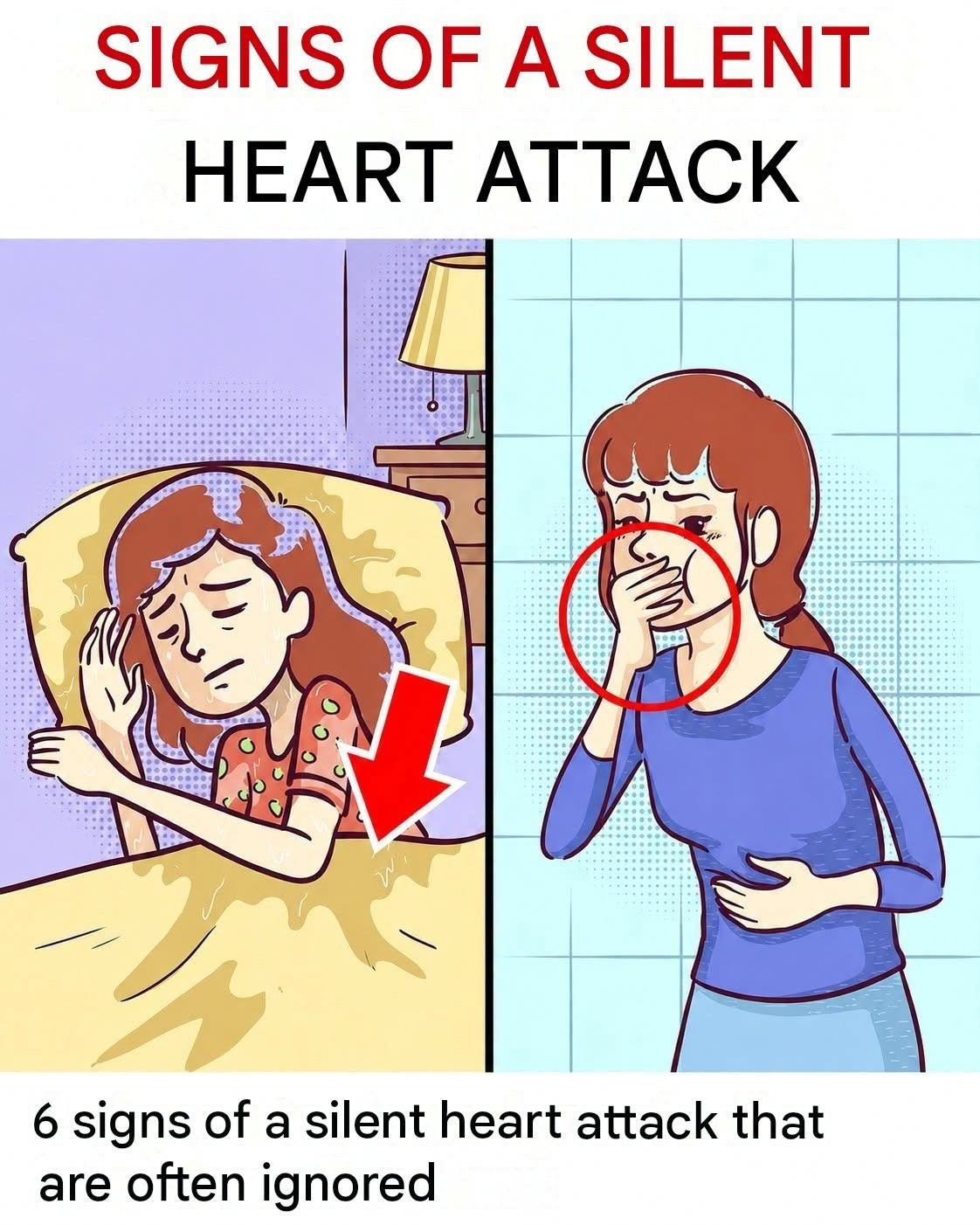
A silent heart attack—clinically known as a silent myocardial infarction (SMI)—occurs with minimal or non-traditional symptoms, accounting for up to 45% of all heart attacks. Because it lacks the classic crushing chest pain, patients often misattribute the event to heartburn, stress, or muscle strain.
6 Overlooked Signs of a Silent Heart Attack
1. Unexplained Upper Back, Jaw, or Neck Discomfort
-
Mechanism: Pain signals originating from ischemic heart tissue share neural pathways with spinal nerve roots ($T1\text{–}T5$), causing pain to radiate to secondary locations.
-
Symptom: A dull ache, tightness, or toothache-like pressure in the center of the upper back, jawline, or throat that appears without an obvious physical injury.
2. Persistent Flu-Like Exhaustion
-
Mechanism: Reduced cardiac output starves peripheral tissues of oxygenated blood, forcing skeletal muscles to work under hypoxic conditions.
-
Symptom: Sudden, overwhelming fatigue during low-effort tasks (like making a bed or walking to the mailbox) that feels similar to recovering from a severe viral infection.
3. Recurrent Indigestion or Gastric Fullness
-
Mechanism: Inferior wall heart attacks irritate the vagus nerve and diaphragm, which sit directly above the stomach.
-
Symptom: A burning, heavy, or bloated sensation in the upper abdomen (epigastrium) that does not improve after taking antacids.
4. Cold Sweats and Unexplained Clamminess
-
Mechanism: The acute drop in cardiac efficiency triggers a sympathetic nervous system “fight-or-flight” response, unleashing a surge of epinephrine.
-
Symptom: Sudden, profuse sweating paired with pale, clammy skin while resting in a cool room.
5. Brief Mild Dizziness or Lightheadedness
-
Mechanism: Temporary ventricular dysfunction or transient arrhythmias lower systemic mean arterial pressure, reducing blood flow to the brain.
-
Symptom: A sudden feeling of weakness, unsteadiness, or feeling “faint” upon standing or walking that passes after a few minutes.
6. Mild Unexplained Shortness of Breath
-
Mechanism: Impaired left ventricular contraction causes fluid backpressure into the pulmonary capillaries.
-
Symptom: Feeling unusually winded during routine movements, or waking up needing to sit upright to catch your breath easily.
Silent vs. Classic Myocardial Infarction
| Clinical Feature | Classic Heart Attack | Silent Heart Attack (SMI) |
| Primary Sensation | Substernal chest pressure (“elephant on chest”) | Vague discomfort, pressure, or no pain at all |
| Common Misdiagnosis | Easily identified by patient as cardiac | Confused with GERD, flu, or muscle strain |
| Demographic Risk | Universal | Higher prevalence in diabetics & older adults |
| Detection Method | Acute emergency room visit | Uncovered later via routine ECG or echo |
Diagnostic Protocol Following a Suspected Event
Clinical Note: Individuals with diabetes face a significantly higher risk of silent heart attacks due to autonomic neuropathy, which blunts the body’s visceral pain pathways.
