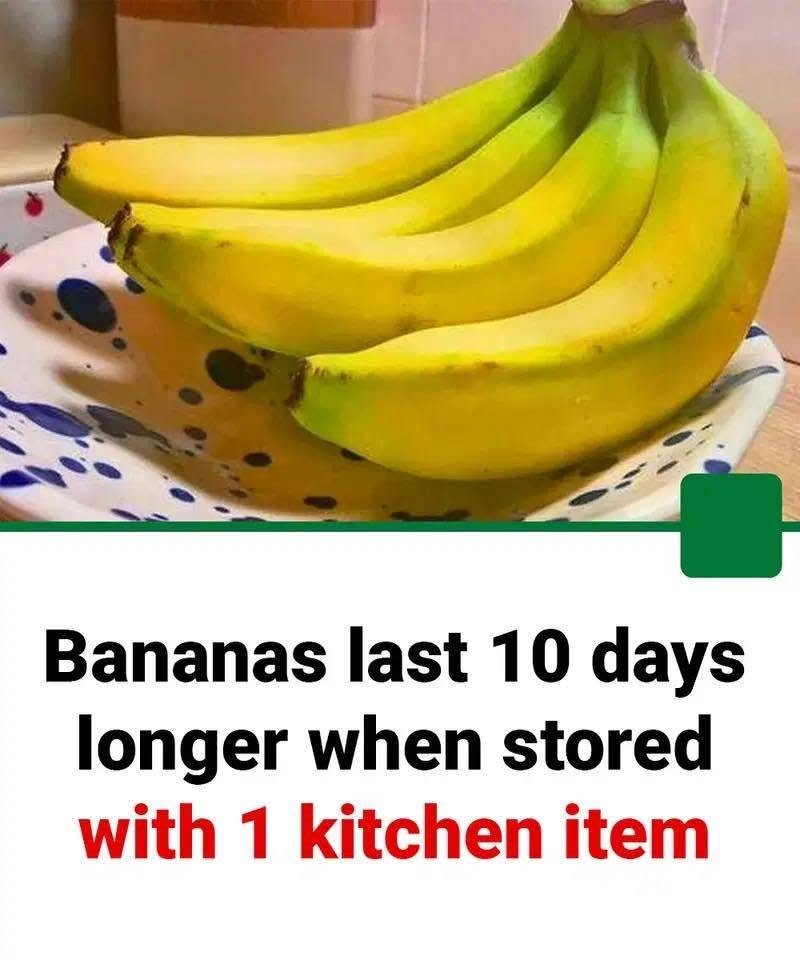
Keeping bananas from turning brown and mushy too quickly comes down to controlling ethylene gas. Ethylene is a natural, odorless plant hormone that fruits emit as they ripen. When bananas sit together in a traditional fruit bowl, they trap and concentrate this gas, accelerating their own ripening—and causing any nearby produce to rot right along with them.
The simple kitchen item that can make your bananas last up to 10 days longer is standard household plastic wrap.
The Science: Why Plastic Wrap Works
Bananas release the vast majority of their ethylene gas through their crown (the stem where they were all connected). By sealing off the crown, you choke off the source of the gas emission, slowing down the ripening process dramatically without harming the fruit.
Step-by-Step Guide: How to Store Bananas for Maximum Shelf Life
-
Separate the Bananas: Do not leave them as a whole bunch. Break or cut the bananas apart so you have individual or paired bananas with their individual stem caps intact.
-
Wrap Each Stem: Take a small piece of plastic wrap and tightly wrap it around the stem/crown of each individual banana, making sure there are no gaps where air can escape.
-
Store Correctly: Place the wrapped bananas on a cool, flat surface or hang them up. Do not put them back into a crowded fruit bowl with other ripening fruits like apples or tomatoes, and keep them out of direct sunlight.
Pro-Tips for Banana Storage
-
What to Do When They Reach Perfection: Once your bananas reach your preferred stage of ripeness (bright yellow with minimal green), you can place them in the refrigerator. While the peels will turn completely black due to the cold breaking down the fruit’s enzymes, the actual fruit inside will remain firm, sweet, and fresh for another week.
-
Got Overripe Bananas Instead? If your bananas have already turned spotty and soft, don’t throw them out! Peel them, toss them into a freezer bag, and save them for morning smoothies, or thaw them out to bake a batch of healthy banana bread.
