Viral wellness posts and social media medical ads frequently suggest that burning, numbness, and tingling in the feet are mysterious, sudden phenomena easily cured by herbal foot soaks, vibration therapy mats, or detox patches.
In neurology and vascular medicine, however, these symptoms are classic clinical indicators of peripheral nerve irritation, localized nerve entrapment, or impaired microvascular circulation.
Here is an objective, science-based breakdown of why feet burn, go numb, or tingle, the primary medical causes behind these sensations, and when to seek professional evaluation:
The Physiological Mechanism: Why Nerves Misfire
Sensory nerves in the feet transmit vital signals (temperature, touch, pain) up through the spinal cord to the brain. When these nerves or their tiny blood supply (vasa nervorum) are damaged, compressed, or deprived of oxygen, they begin to misfire spontaneously.
-
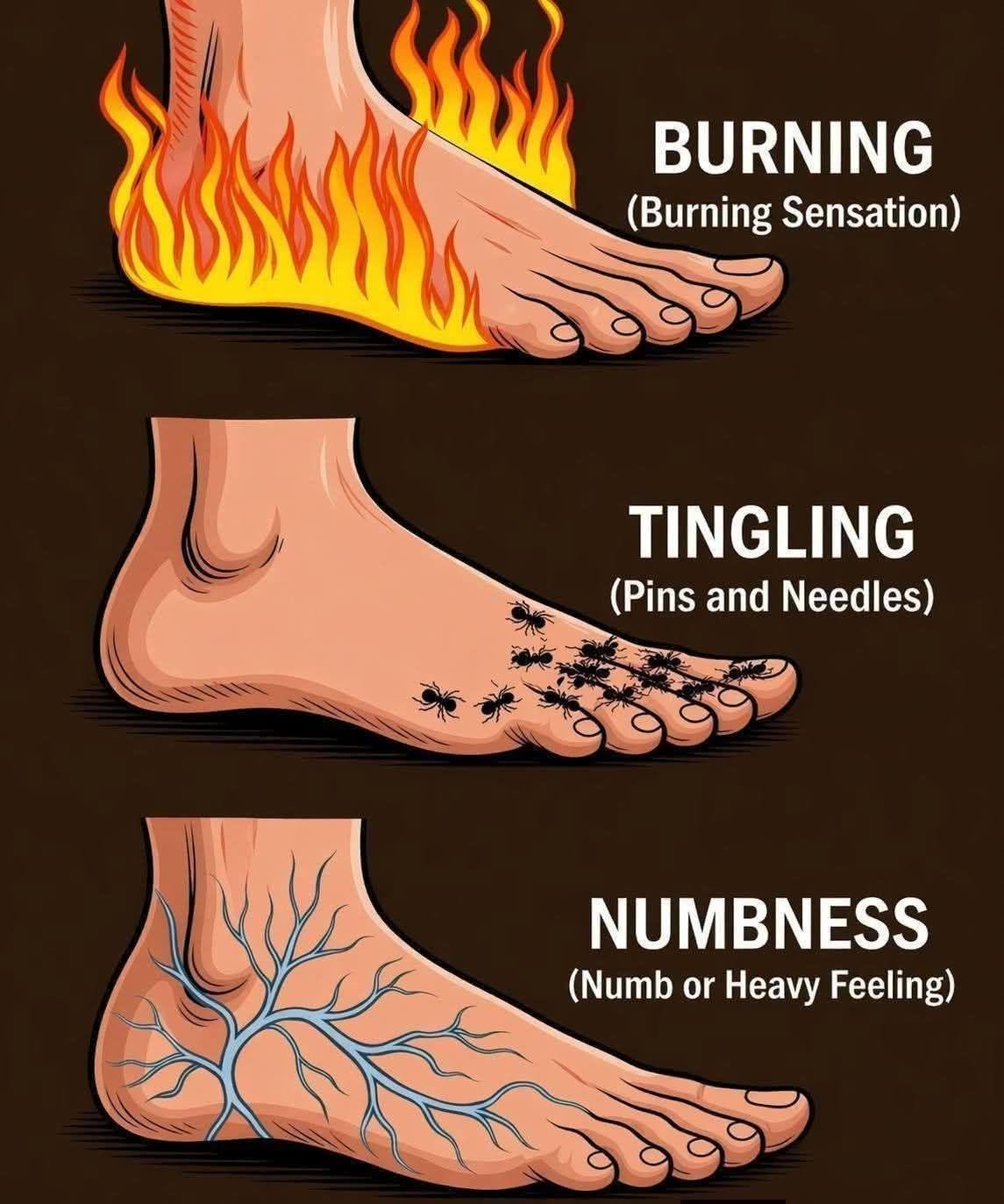
Tingling (“Pins and Needles”): Occurs when nerve transmission is briefly interrupted and then partially restored (paresthesia).
-
Numbness: Happens when nerve signals are severely blocked or transmission is lost entirely.
-
Burning: Results from damaged small-fiber sensory nerves sending erratic pain signals that the brain interprets as intense heat.
Common Clinical Causes of Foot Burning, Numbness, and Tingling
1. Peripheral Neuropathy (Most Commonly Diabetic)
-
The Mechanism: Persistently elevated blood glucose damages the delicate blood vessels supplying peripheral nerves. Over time, this leads to oxidative stress and nerve fiber degeneration, typically starting symmetrically in the longest nerves first (the toes and soles of the feet).
-
The Clinical Sign: A “stocking-glove” pattern of numbness, a constant burning sensation that worsens at night under the bedcovers, or a feeling like you are walking on pebbles or cotton.
2. Nerve Compression Syndromes (e.g., Tarsal Tunnel Syndrome)
-
The Mechanism: The tibial nerve passes through a narrow space on the inside of the ankle (the tarsal tunnel). When swollen tendons, tight ligaments, or ganglion cysts compress this nerve, it disrupts nerve conduction.
-
The Clinical Sign: Sharp, shooting pain, burning, or tingling along the sole of the foot and toes, often aggravated by standing or walking for long periods.
3. Vitamin Deficiencies (Particularly B12)
-
The Mechanism: Vitamin B12 is essential for maintaining the protective myelin sheath that insulates nerve fibers. A deficiency leads to demyelination and progressive neurological dysfunction.
-
The Clinical Sign: Numbness and tingling in both feet, often accompanied by unsteadiness, fatigue, or brain fog. (Particularly common in older adults or individuals taking acid-suppressing medications like PPIs long-term).
4. Lumbar Radiculopathy (Sciatica or Pinched Nerve in the Spine)
-
The Mechanism: A herniated disc, degenerative disc disease, or spinal stenosis in the lower back (lumbar spine) can compress nerve roots exiting the spinal cord that travel down into the legs and feet.
-
The Clinical Sign: Tingling, numbness, or a burning “electric shock” sensation that radiates from the lower back or glutes down through the calf and into the foot, often triggered by certain sitting or twisting postures.
5. Peripheral Artery Disease (PAD)
-
The Mechanism: Atherosclerosis narrows the major arteries supplying blood to the lower extremities, starving nerve and muscle tissues of oxygen and essential nutrients (ischemia).
-
The Clinical Sign: Numbness or a cold, heavy feeling in the feet during exertion (claudication), accompanied by pale skin, absent foot pulses, or slow-healing sores.
When to See a Physician
While occasional, temporary tingling happens to everyone if a foot falls asleep from prolonged pressure, persistent, progressive, or unexplained burning, numbness, and tingling require a formal medical evaluation.
Schedule an appointment with your primary care physician or a neurologist. Diagnostic testing—such as blood panels (to check blood sugar, B12, and thyroid function) or an Electromyography (EMG) and Nerve Conduction Study (NCS)—can pinpoint the exact origin of nerve irritation and ensure you receive targeted, evidence-based treatment.
