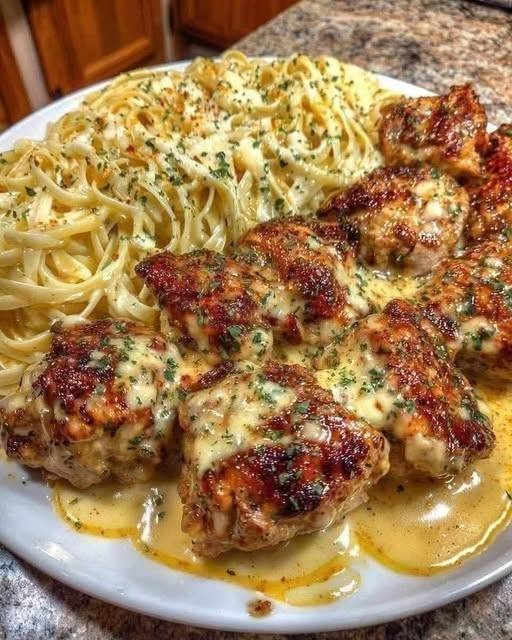
The Ultimate Masterclass: Creamy Garlic Butter Chicken & Linguine Alfredo
Achieving a restaurant-quality plate of garlic butter chicken and linguine Alfredo at home requires more than just following a basic ingredient list—it requires understanding the thermal chemistry of pan-searing, the physics of sauce emulsification, and the structural integrity of pasta starches. This comprehensive guide breaks down every technique necessary to elevate this comforting classic into a masterclass dish.
Part 1: Ingredient Science & Selection
The success of a rich, cream-based pasta dish relies heavily on the quality and fat content of its components. Because this recipe bridges a flavorful pan-dripping garlic butter sauce with a classic dairy emulsion, selecting the right ingredients prevents common culinary failures like a broken, oily sauce or dry, overcooked chicken.
1. The Poultry: Selection and Preparation
-
Chicken Cutlets: Opt for fresh, air-chilled boneless, skinless chicken breasts. Air-chilled chicken has not absorbed excess water weight during processing, ensuring a crispier, better-defined Maillard crust when seared.
-
The Cut: Slicing the breasts horizontally (butterflying) creates uniform cutlets of even thickness. This ensures that the edges do not dry out while waiting for the thickest part of the meat to reach a safe internal temperature of 165°F (74°C).
2. The Dairy Foundation
-
Heavy Cream (Whipping Cream): You must use heavy cream containing at least 36% to 40% milk fat. Lower-fat dairy products (such as half-and-half, whole milk, or light cream) contain too much water and not enough milk solids/fat, causing the sauce to curdle or separate when exposed to the heat of the pan and the acidity of aged cheese.
-
The Cheese: Parmigiano-Reggiano DOP is non-negotiable for authentic depth of flavor. Avoid pre-shredded or pre-grated cheeses, which are coated in cellulose powder or potato starch to prevent clumping. These anti-caking agents prevent the cheese from melting smoothly into the cream, resulting in a gritty, grainy texture. Grate a block of authentic aged Parmigiano-Reggiano on a microplane grater immediately before cooking.
3. The Pasta Matrix
-
Durum Wheat Semolina Linguine: Look for high-quality bronze-die extruded pasta if possible. Bronze dies leave a rough, porous surface texture on the pasta strands, which acts like microscopic velcro, allowing the rich Alfredo sauce to cling to every single strand rather than sliding off to the bottom of the bowl.
Part 2: Comprehensive Ingredients
For the Garlic Butter Chicken Cutlets:
-
2 large boneless, skinless chicken breasts (butterflied into 4 even cutlets)
-
1 tsp dried Italian seasoning (or a blend of dried basil, oregano, and thyme)
-
1/2 tsp garlic powder
-
1/2 tsp smoked paprika (adds a subtle background warmth and color)
-
1 tsp kosher salt
-
1/2 tsp freshly cracked black pepper
-
2 tbsp unsalted butter (for the sear)
-
1 tbsp high-smoke-point neutral oil (avocado or grapeseed oil, to raise the burning point of the butter)
For the Linguine & Velvety Alfredo Sauce:
-
8 oz (225g) high-grade linguine pasta
-
4 tbsp (1/2 stick) unsalted butter
-
4 large cloves fresh garlic, finely minced or pressed
-
1.25 cups heavy whipping cream (room temperature helps prevent thermal shock)
-
1.25 cups freshly microplaned Parmigiano-Reggiano cheese
-
A pinch of freshly grated nutmeg (a classic Italian touch that enhances the savory richness of dairy)
-
Fine sea salt and white pepper (to taste, avoiding black flecks in the bright white sauce)
-
2 tbsp fresh flat-leaf Italian parsley, finely minced (for garnish)
Part 3: Step-by-Step Execution & Technical Precision
Phase 1: Precision Pan-Searing the Chicken
-
Moisture Management: Pat the chicken cutlets completely dry with paper towels. Surface moisture is the enemy of a good sear; wet chicken steams rather than browns.
-
Seasoning: Combine the kosher salt, black pepper, garlic powder, smoked paprika, and Italian seasoning in a small bowl. Season both sides of the chicken cutlets generously, pressing the spices gently into the meat.
-
Thermal Dynamics: Place a large, heavy-bottomed skillet (cast iron or heavy stainless steel work best) over medium-high heat. Add the neutral oil and 2 tablespoons of unsalted butter. The oil raises the smoke point of the butter solids, preventing them from burning while the butter delivers rich flavor.
-
The Sear: Once the butter is melted and foaming, lay the chicken cutlets into the pan away from you to avoid splashing. Do not move them for the first 5 minutes. Allow the natural sugars and proteins to undergo the Maillard reaction, developing a deep golden-brown crust.
-
Completion & Rest: Flip the cutlets and cook for an additional 4 to 5 minutes until an instant-read thermometer inserted into the thickest part registers 165°F (74°C). Transfer the chicken to a warm plate and tent loosely with aluminum foil. Crucial Rule: Let it rest for at least 5 to 7 minutes to allow the muscle fibers to relax and reabsorb their juices before slicing.
Phase 2: Building the Emulsion Base
-
Pasta Water Harvest: Bring a large pot of generously salted water (it should taste like sea water) to a rolling boil. Drop the linguine and cook until precisely 1 minute shy of al dente. Before draining, carefully ladle out 1 cup of starchy pasta cooking water. This water contains gelatinized starches that act as a natural emulsifier for your sauce.
-
Fond Integration: Lower the skillet heat used for the chicken down to medium. Do not wipe out the pan; those golden-brown bits stuck to the bottom (the fond) are pure concentrated umami. Add the remaining 4 tablespoons of butter to the residual chicken fats, melting it down while scraping the bottom of the pan with a wooden spatula.
-
Aromatic Infusion: Add the minced garlic to the bubbling butter. Sauté gently for precisely 45 to 60 seconds. Watch the garlic closely—it should turn fragrant and lightly golden, but never brown, as burnt garlic turns aggressively bitter.
Phase 3: Constructing the Alfredo Emulsion
-
Cream Reduction: Pour the heavy whipping cream directly into the garlic butter. Bring the mixture to a gentle, rolling simmer. Let it bubble undisturbed for 2 to 3 minutes, allowing excess water content to evaporate and the cream to thicken slightly.
-
Temperature Control (The Break Point): Turn the heat down to low. High heat will cause the proteins in cheese to seize up into a ball and separate the milk fats, resulting in an oily, grainy mess.
-
Cheese Incorporation: Gradually sprinkle the freshly microplaned Parmigiano-Reggiano into the simmering cream, whisking continuously in a figure-eight motion. Add a pinch of fresh nutmeg. Whisk until the cheese melts entirely into the cream, forming a smooth, velvety blanket.
-
Starch Integration: Add the drained, slightly undercooked linguine directly from the pot into the pan with the Alfredo sauce. Toss vigorously using tongs. Pour in 2 to 4 tablespoons of your reserved starchy pasta water. The starches will marry with the fat and dairy proteins, tightening the sauce into a glossy, clingy emulsion that coats every strand of pasta.
Part 4: Plating, Troubleshooting, and Service
Professional Plating Technique
-
Use a large carving fork to twirl the creamy linguine into a neat, high nest in the center of a warmed pasta bowl.
-
Slice the rested garlic butter chicken breasts on a clean cutting board at a sharp 45-degree angle to showcase the juicy interior.
-
Fan the sliced chicken gracefully over or alongside the pasta nest.
-
Spoon any remaining garlic butter pan juices left on the chicken resting plate directly over the meat.
-
Garnish lightly with freshly minced Italian parsley for a pop of color and herbaceous freshness, finishing with an extra dusting of microplaned Parmigiano-Reggiano.
Troubleshooting Guide
-
Problem: The sauce looks grainy or oily (broken emulsion).
-
Cause: The pan was too hot when the cheese was added, or pre-grated cheese with anti-caking starches was used.
-
Fix: Remove the pan from the heat entirely. Whisk in 1 to 2 tablespoons of ice-cold heavy cream or a splash of cold starchy pasta water vigorously off the heat to shock the proteins back into suspension.
-
-
Problem: The sauce is too thick and heavy.
-
Cause: The pasta absorbed too much liquid or the sauce reduced too long.
-
Fix: Loosen the consistency instantly by splashing in small increments of reserved starchy pasta water while tossing over low heat until the desired silky texture returns.
-
