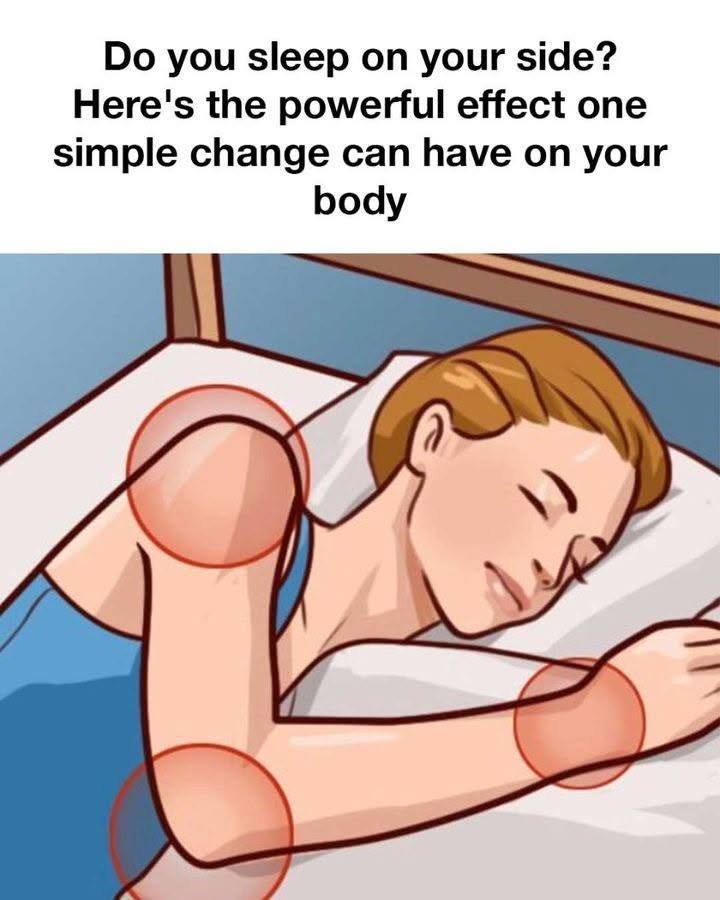
That classic viral hook is usually designed to introduce the side-sleeping alignment trick—specifically, placing a supportive pillow between your knees (or under your waist).
While it sounds too simple to make a big difference, side-sleeping with proper support has profound biological and structural effects on your body.
Here is what that simple change—and side-sleeping in general—actually does to your health:
1. Realigns the Spine and Relieves Lower Back Strain
When you sleep on your side, your top leg naturally drops forward, twisting your pelvis and pulling your lower spine out of alignment. Over 7 to 8 hours, this twisting motion puts continuous strain on the lumbar spine and hip joints.
-
The Simple Change: Placing a firm pillow between your knees keeps your hips, pelvis, and spine in neutral alignment, taking immediate pressure off your lower back, hip joints, and sciatic nerve.
2. Reduces Acid Reflux and Heartburn (Left Side)
Sleeping on your left side takes advantage of the stomach’s natural anatomical shape. Because the stomach sits on the left side of the upper abdomen, sleeping left keeps the junction between your stomach and esophagus above the level of gastric acid.
-
The Biological Effect: Gravity helps keep stomach acid where it belongs, significantly reducing nighttime gastroesophageal reflux (GERD) and heartburn symptoms.
3. Enhances Brain Health and Waste Clearance
Your brain has a specialized waste-clearance network known as the glymphatic system. During deep sleep, this system flushes out metabolic waste products, including amyloid-beta and tau proteins associated with neurodegenerative diseases.
-
The Research: MRI studies on brain transport systems show that glymphatic clearance is actually most efficient in the lateral (side) position compared to sleeping on your back or stomach.
4. Keeps Airways Open and Reduces Snoring
Back-sleeping allows the tongue and soft tissues at the back of the throat to collapse backward into the airway, worsening snoring and obstructive sleep apnea (OSA). Side-sleeping naturally keeps the upper airway clear, making breathing easier and encouraging deeper, more restorative sleep cycles.
5. Boosts Circulation and Venous Return
Sleeping on your left side relieves pressure from the heavy abdominal organs on the inferior vena cava—the large vein that returns blood from your lower body back to your heart. This improves general blood circulation, reduces swelling in the feet and ankles, and is particularly vital during pregnancy.
The Best Way to Implement the “Change” Tonight
-
The Knee Pillow: Use a standard or contoured memory foam pillow between your knees and ankles.
-
Head Support: Ensure your head pillow is thick enough to fill the gap between your ear and shoulder, keeping your neck straight (not tilting up or dipping down).
-
Avoid the “Fetal Crunch”: Try not to curl into a tight ball, which can restrict your diaphragm and interfere with deep breathing. Keep your torso elongated.
