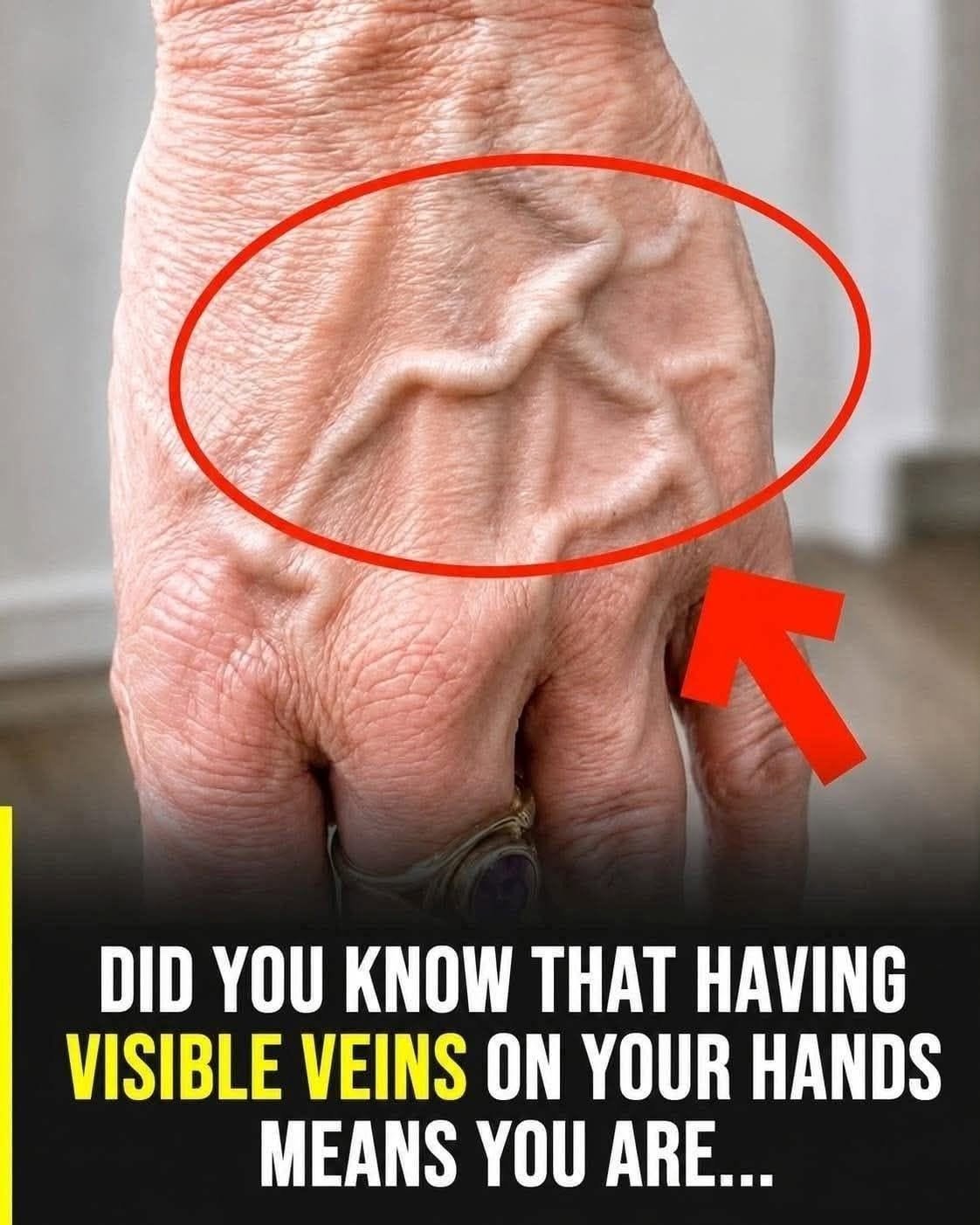
Visible veins are often a topic of online curiosity, with viral claims suggesting they mean you are exceptionally fit, have low body fat, or conversely, suffer from poor circulation.
In vascular biology, having visible veins is almost always a normal physiological trait determined by individual anatomy rather than a direct indicator of overall health or disease.
Here is an objective, science-based breakdown of why veins become visible and what they actually indicate:
1. Low Subcutaneous Fat and Thin Skin
-
The Mechanism: Veins sit just beneath the layer of fat that lies directly under the skin (subcutaneous fat). When a person has a lower percentage of body fat, that insulating layer thins out, allowing surface veins to show through more clearly.
-
The Clinical Sign: This is why athletes, very active individuals, or people with a naturally lean genetic build frequently have prominent veins on their arms, hands, legs, or chest. Similarly, as people age and skin naturally loses collagen and thins, veins on the hands and temples naturally become more apparent.
2. High Blood Pressure or Increased Blood Flow
-
The Mechanism: During intense physical exercise, hot weather, or heavy lifting, cardiac output increases and blood vessels dilate to help release body heat and deliver extra oxygen to working muscles. This temporary surge in blood volume causes surface veins to swell or “pop” visibly. Once the body cools down and blood pressure normalizes, they typically recede.
3. Genetics and Skin Pigmentation
-
The Mechanism: The thickness of your skin, the depth at which your veins naturally run, and your genetic predisposition are major factors. People with very fair skin often have veins that appear strikingly blue or green simply because light penetrates the translucent skin layers and reflects off the deoxygenated blood inside the vessels.
When Visible Veins Indicate an Underlying Medical Issue
While surface veins are usually harmless, distinct types of visible veins can point to specific vascular conditions that require medical evaluation:
-
Varicose Veins: These are enlarged, twisted, and bulging veins—most commonly appearing in the legs and calves. They occur when tiny one-way valves inside the veins weaken or fail, causing blood to pool backward due to gravity rather than flowing smoothly back to the heart. Symptoms include aching, heaviness, or swelling in the legs.
-
Spider Veins (Telangiectasias): Smaller, fine red, purple, or blue lines that form a web-like network close to the skin’s surface. Like varicose veins, they are typically caused by minor venous pressure or weak capillary walls, but they are usually a cosmetic concern rather than a medical emergency.
The Bottom Line
Having visible veins is generally a normal variation of skin thickness, body composition, and genetics. However, if prominent veins are accompanied by persistent leg pain, swelling, skin discoloration, or ulcers around the ankles, it is worth consulting a physician or a vascular specialist to check your vein valve function.
