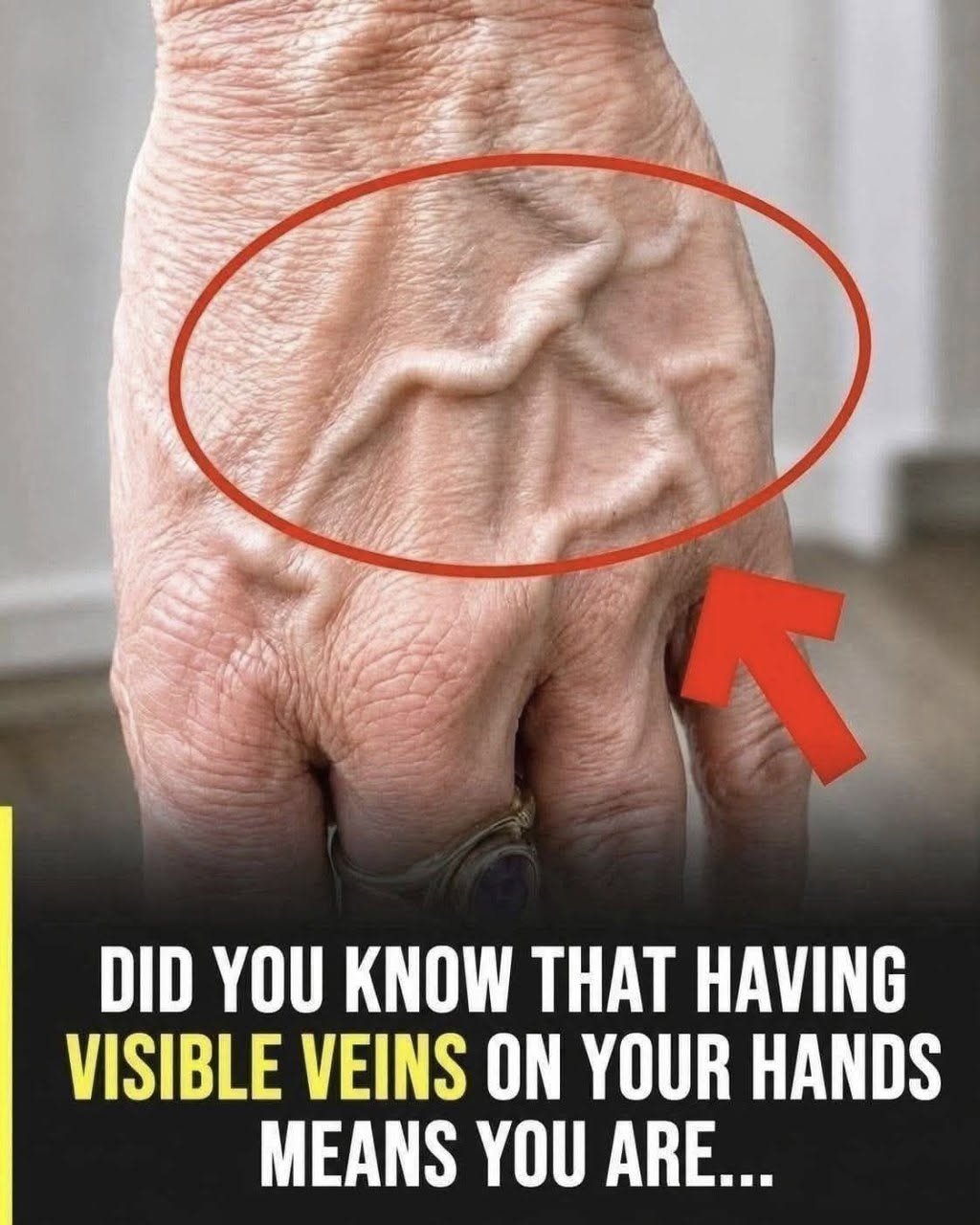
When sensationalized internet myths finish the sentence “having visible veins means you are…” they usually try to sell you a terrifying medical scare or a bizarre, unverified detox cure—claiming it’s a sign of severe disease, toxin overload, or impending doom.
From a clinical anatomy and vascular perspective, having visible veins is completely normal and overwhelmingly benign for the vast majority of people. Surface veins are simply part of your body’s natural plumbing system, returning blood back up to your heart.
The Reality Behind Visible Veins
Why veins become more prominent on the hands, arms, legs, or temples depends on several clear, physiological factors rather than a mysterious health crisis:
-
Low Body Fat Percentage: Subcutaneous fat sits right beneath the skin like a natural insulating blanket. When body fat levels are lower, that blanket is thinner, making the veins running just beneath the surface much easier to see.
-
Natural Aging and Skin Thinning: As we age, our skin naturally loses collagen, elasticity, and dermal thickness. At the same time, the subcutaneous fat layer diminishes, causing healthy veins to become more apparent, especially on the hands and forearms.
-
Physical Activity and Muscle Pump: When you exercise, your blood pressure rises temporarily, and your working muscles demand more oxygen-rich blood. Your veins dilate and push closer to the skin’s surface to handle increased blood flow, which is why athletes and active individuals often have prominent vascularity.
-
Heat, Hydration, and Blood Pressure: On hot days, your blood vessels dilate (expand) to help cool your body down, which can make veins pop out more. Similarly, high ambient temperatures or increased blood volume can make veins more noticeable.
-
Varicose Veins vs. Normal Surface Veins: While normal surface veins are flat, soft, and painless, varicose veins are enlarged, twisted, and bulging veins caused by weakened valves that allow blood to pool in the legs. These can cause aching or heaviness and are worth discussing with a doctor, but they are very different from simply having visible surface veins.
Evidence-Based Ways to Support Vascular Health
If you want to keep your circulatory system strong, elastic, and efficient as you age, clinicians recommend these practical habits:
-
Stay Regularly Active: Low-impact movement—such as walking, swimming, or cycling—engages your calf muscles, which act as a natural “second heart” to help pump blood efficiently back up from your lower extremities.
-
Maintain Healthy Hydration: Drinking enough water keeps your blood viscosity optimal, supporting smooth circulation throughout your entire vascular network.
-
Elevate Your Legs: If you spend long hours standing or sitting at a desk, taking a few minutes to elevate your legs above your heart can relieve pressure on your lower vein valves and reduce swelling.
Are you looking into circulatory health and wellness, or exploring ways to support healthy circulation as you age?
