When medical researchers and clinicians look closely at your fingernails, they are reading a biological archive of your systemic health. Because nail plates grow continuously from living tissue supplied by a dense network of micro-capillaries, profound shifts in oxygenation, circulation, and metabolism leave permanent physical markers over time.
While no single nail anomaly is a standalone crystal ball for life span, certain dramatic structural and color changes serve as critical clinical warning signs of underlying organ strain or systemic disease:
1. Advanced Nail Clubbing (Cardiopulmonary Distress)
-
What it looks like: The fingertips widen and bulge outward, and the nails curve sharply downward, resembling the back of a spoon. The normal angle at the cuticle disappears, and the nail bed feels spongy.
-
Why it matters: Clubbing is driven by chronic tissue hypoxia—a long-standing shortage of oxygen in the bloodstream. Clinicians treat this as a major red flag because it is heavily linked to severe underlying conditions, including advanced pulmonary fibrosis, chronic obstructive pulmonary disease (COPD), congenital heart defects, or thoracic malignancies.
2. Splinter Hemorrhages (Microvascular Warnings)
-
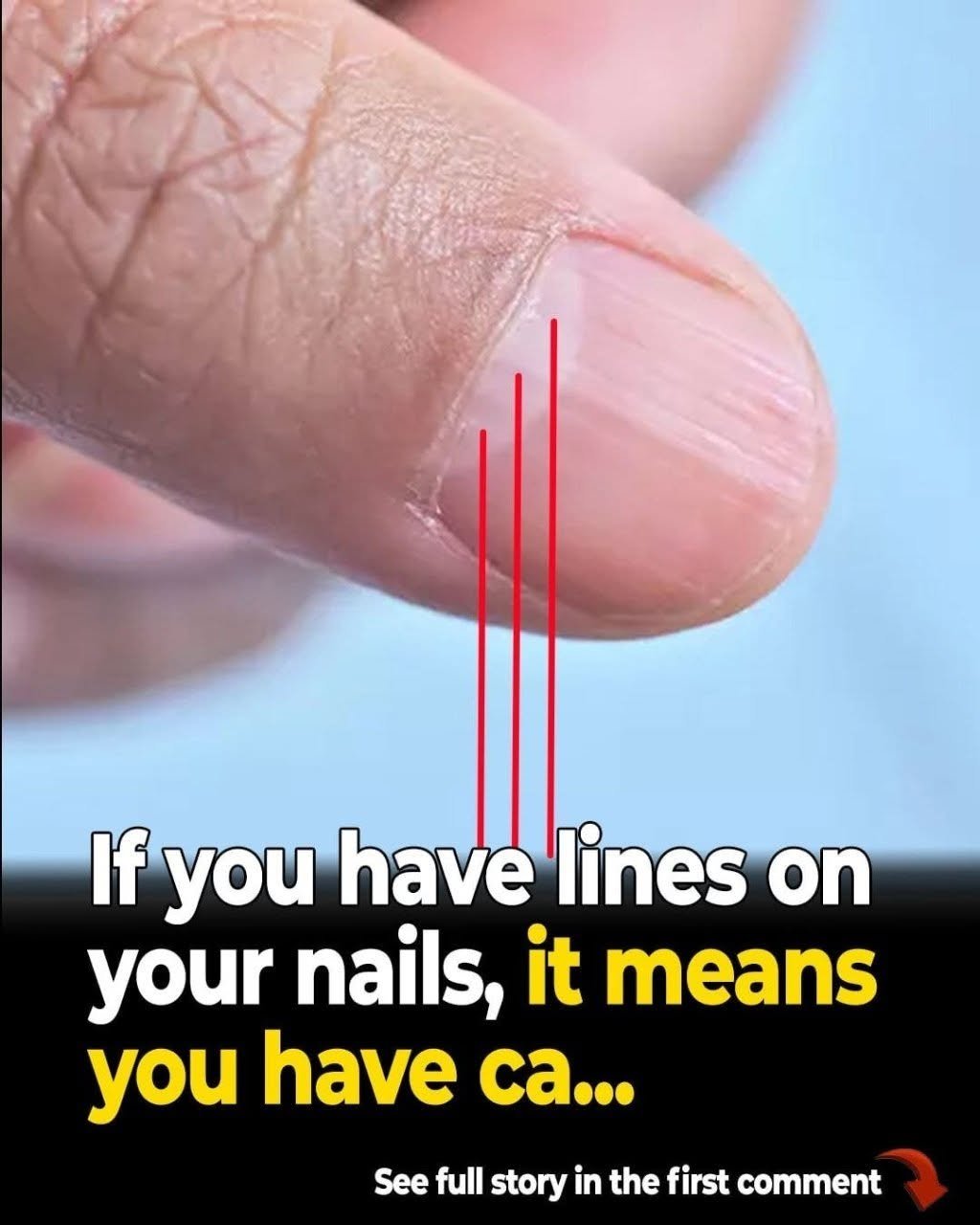
What it looks like: Tiny, reddish-brown, vertical lines running underneath the nail plate that resemble small wood splinters.
-
Why it matters: These are microscopic blood clots resulting from damage to tiny capillaries beneath the nail. While they can occasionally happen after minor physical trauma, recurrent or unexplained splinter hemorrhages across multiple nails can be a classic sign of infective endocarditis (a dangerous heart valve infection) or systemic vasculitis, both of which require urgent medical evaluation.
3. Terry’s Nails and Half-and-Half Nails (Internal Organ Strain)
-
What it looks like: In Terry’s nails, the majority of the nail turns stark white, leaving only a narrow, dark pink or reddish-brown band at the very tip. In Lindsay’s (half-and-half) nails, the lower portion is white and the upper portion is reddish-brown.
-
Why it matters: These distinctive color transformations reflect alterations in blood protein levels and micro-vessel density. They are frequently observed in patients experiencing significant filtering or circulatory stress, such as cirrhosis of the liver, chronic kidney failure, or congestive heart failure.
4. Beau’s Lines (Deep Horizontal Grooves)
-
What it looks like: Distinct indentations or deep grooves running horizontally (side-to-side) across the width of the nail plate.
-
Why it matters: These lines appear when cell division in the nail matrix is abruptly halted by a severe physiological shock, high fever, major surgery, uncontrolled diabetes, or acute systemic stress. Because fingernails grow at a predictable rate, doctors can often estimate when the major health crisis occurred just by measuring the distance of the groove from the cuticle.
The Takeaway
Your fingernails act as a slow-motion recording device for your body’s internal stability. While minor spots or normal ridging are a routine part of aging, sudden, widespread, or dramatic structural shifts—such as clubbing, deep horizontal grooves, or unexplained color splits—should never be ignored. Consulting a physician for comprehensive diagnostic work can uncover and address root metabolic or circulatory issues long before they threaten your long-term health.
