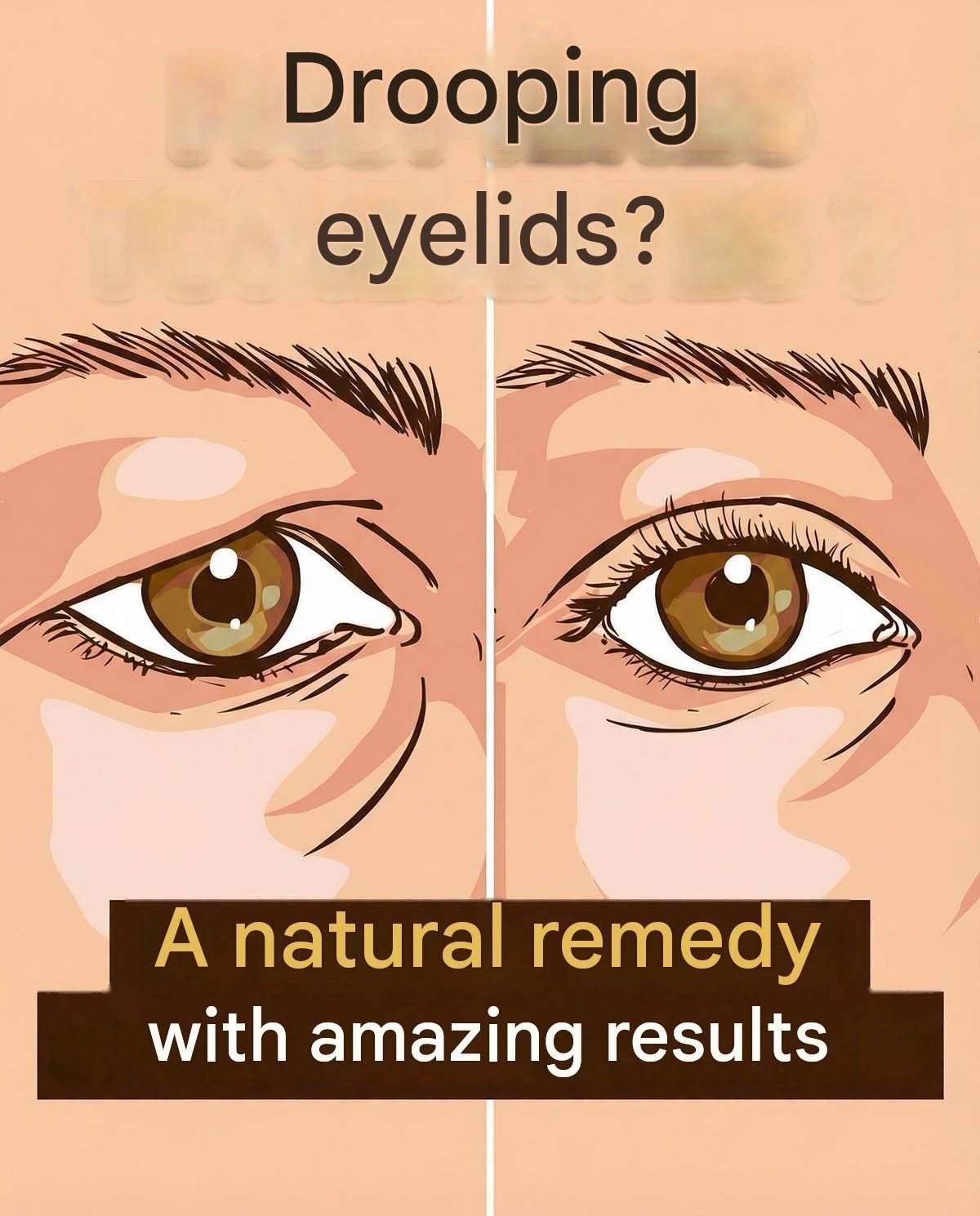
When health and beauty articles discuss droopy eyelids, they are addressing a condition known clinically as ptosis (drooping of the upper eyelid) or dermatochalasis (excess upper eyelid skin caused by natural aging). While internet remedies often promise that facial exercises or DIY creams can lift sagging eyelids overnight, understanding the biological reality helps separate harmless cosmetic changes from serious medical concerns.
Let’s cut through the hyperbole and examine what causes eyelid drooping, realistic ways to manage mild appearance changes, and the crucial red flags that signal a need for medical evaluation.
Understanding Why Eyelids Droop with Age
Eyelid changes generally fall into two distinct categories:
-
Dermatochalasis (Excess Skin): Over time, the skin around the eyes loses elasticity, and the underlying orbital septum weakens, allowing fatty tissue to herniate forward. This creates a “hooded” or draped appearance of excess skin that may even rest on the eyelashes.
-
Ptosis (Muscle Weakness): This occurs when the levator palpebrae superioris muscle—the primary muscle responsible for lifting the upper eyelid—stretches, detaches from the tarsal plate, or weakens due to aging, trauma, or neurological factors.
Realistic Ways to Improve Appearance (Cosmetic & Lifestyle)
While topical eye creams and facial yoga cannot reverse structural muscle stretching or eliminate excess sagging skin, a few practical strategies can help manage appearance and comfort:
-
Targeted Makeup Techniques: For mild hooding, utilizing matte eyeshadows above the crease, avoiding heavy eyeliner on the upper lid, and shaping eyebrows slightly higher can create the optical illusion of a more open eye area.
-
Cold Compresses: If morning puffiness exacerbates drooping, applying a cool compress or chilled spoons for 5 to 10 minutes can temporarily reduce fluid retention in the delicate periorbital tissue.
-
Protect from UV Damage: Wearing UV-blocking sunglasses and applying broad-spectrum sunscreen daily prevents premature collagen breakdown and skin laxity around the eyes.
-
Non-Surgical and Surgical Options: For individuals seeking significant correction, dermatology and ophthalmology offer professional solutions ranging from laser skin resurfacing and radiofrequency treatments (for mild skin tightening) to blepharoplasty (surgical removal of excess skin and fat) or ptosis repair surgery.
When to See a Doctor: Critical Red Flags
While age-related sagging is typically benign, a sudden or progressive drooping eyelid can sometimes indicate an underlying neurological or muscular condition that requires prompt medical evaluation. Consult an eye doctor (optometrist or ophthalmologist) or neurologist immediately if you experience:
-
Sudden, Rapid Onset: If an eyelid droops suddenly over the course of hours or days (which can be a sign of a stroke, aneurysm, or nerve palsy, such as third cranial nerve palsy).
-
Double Vision (Diplopia): Seeing double or blurred vision accompanying the droop.
-
Neurological Symptoms: Weakness in your facial muscles, slurred speech, difficulty swallowing, or sudden numbness.
-
Pupil Asymmetry: If one pupil is noticeably larger or smaller than the other alongside the droop (a potential sign of Horner’s syndrome or other neurological issues).
-
Severe Headaches or Pain: A droop accompanied by a sudden, severe headache or localized eye pain.
