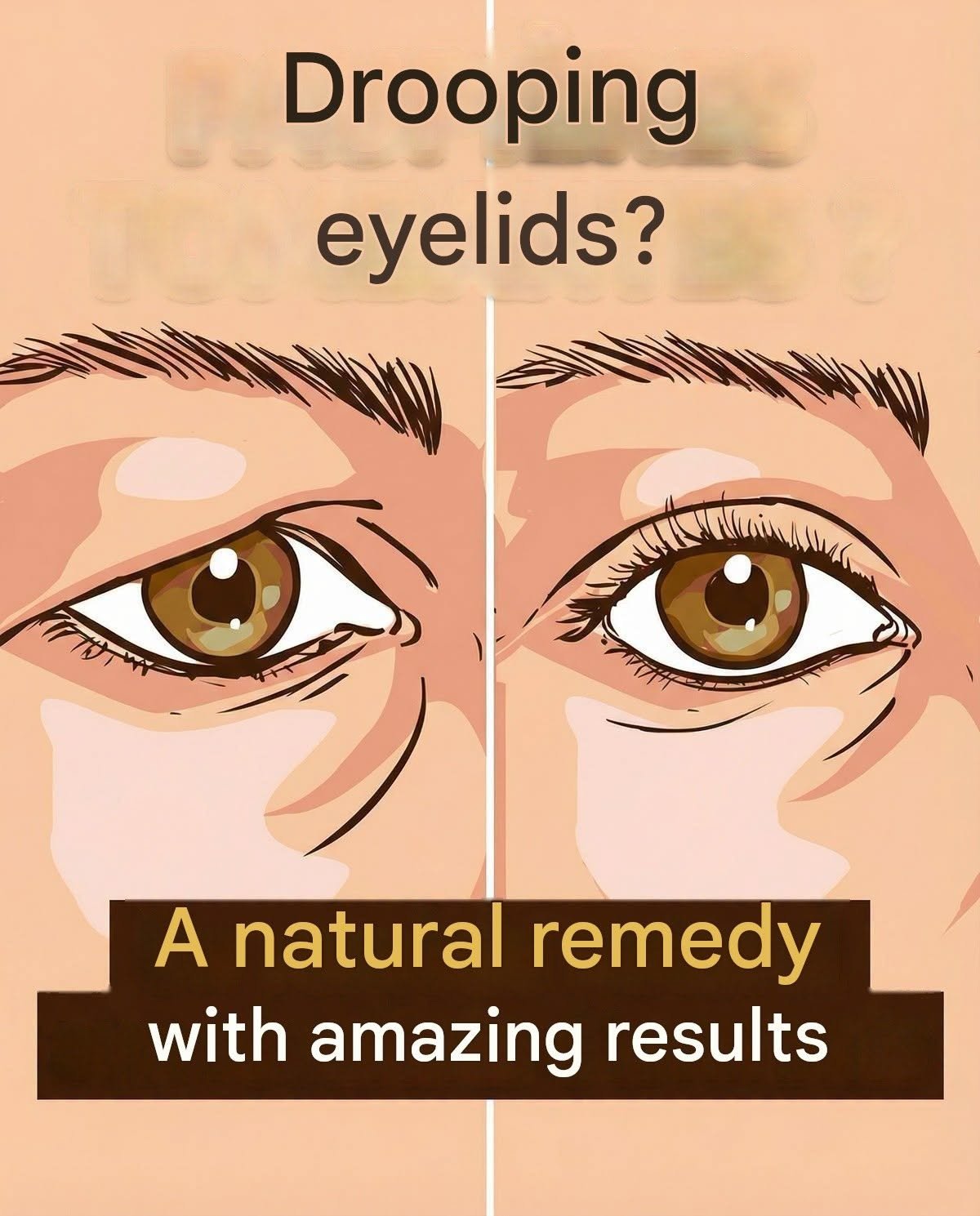
Droopy eyelids—medically known as ptosis—can make you look tired, aged, or even obstruct your upper field of vision. While some degree of natural laxity around the eyes happens as we age, drooping can range from a minor cosmetic concern to a sign of an underlying medical condition.
Here is a breakdown of what causes droopy eyelids, safe natural ways to support the skin and muscle tone around your eyes, and critical red flags that mean you need a doctor.
Why Do Eyelids Droop? (The Causes)
The upper eyelid is supported by a delicate balance of skin elasticity, orbital fat, and the levator palpebrae superioris muscle, which is responsible for lifting the lid. When this system fails, drooping occurs due to:
-
Natural Aging and Collagen Loss: Over time, the skin loses elasticity, and the tendons holding the eyelid muscle can stretch or detach.
-
Eye Strain and Fatigue: Chronic lack of sleep or heavy eye rubbing can weaken the delicate periorbital tissues.
-
Contact Lens Wear: Long-term use of rigid contact lenses can slightly stretch the eyelid muscle over decades.
-
Medical Conditions: Neurological issues, nerve damage, Horner’s syndrome, myasthenia gravis, or a sudden stroke can cause one eyelid to drop abruptly.
Natural Ways to Improve Appearance (For Mild, Age-Related Laxity)
If your droopy eyelids are purely cosmetic and mild, you can support skin firmness and muscle tone with targeted non-invasive habits:
-
Targeted Facial Exercises (Face Yoga): Strengthening the orbicularis oculi muscle around your eyes can help lift the area naturally.
-
How to do it: Place your index fingers under your brows, press upward to hold the brow bone in place, and try to close your eyes against the resistance. Hold for 5 seconds, relax, and repeat 10 times.
-
-
Cold Compresses or Green Tea Bags: Apply chilled green tea bags or cold spoons over closed eyes for 10 minutes in the morning. The cold temperature constricts blood vessels, temporarily reducing fluid retention and puffiness that weighs the eyelids down.
-
Hydration and Collagen Support: The skin around the eye is the thinnest on the body. Use a peptide-rich eye cream containing hyaluronic acid to hydrate, and incorporate collagen-supporting foods (like bone broth, citrus, and leafy greens) into your diet.
-
Protect from UV Damage: UV rays rapidly break down elastin and collagen in thin eyelid skin. Always wear UV-blocking sunglasses and broad-spectrum SPF.
When Droopy Eyelids Require Medical Attention
While natural remedies help with mild skin laxity, sudden or severe ptosis is a medical red flag. You should see a doctor or ophthalmologist immediately if:
-
The drooping comes on suddenly (over the course of hours or days).
-
It is accompanied by double vision, blurred vision, or loss of sight.
-
You experience severe headaches, a stiff neck, or pupil size differences (one pupil much larger than the other).
-
The eyelid drop is paired with weakness in your face, arm, or leg (which can be a sign of a stroke or neurological emergency).
