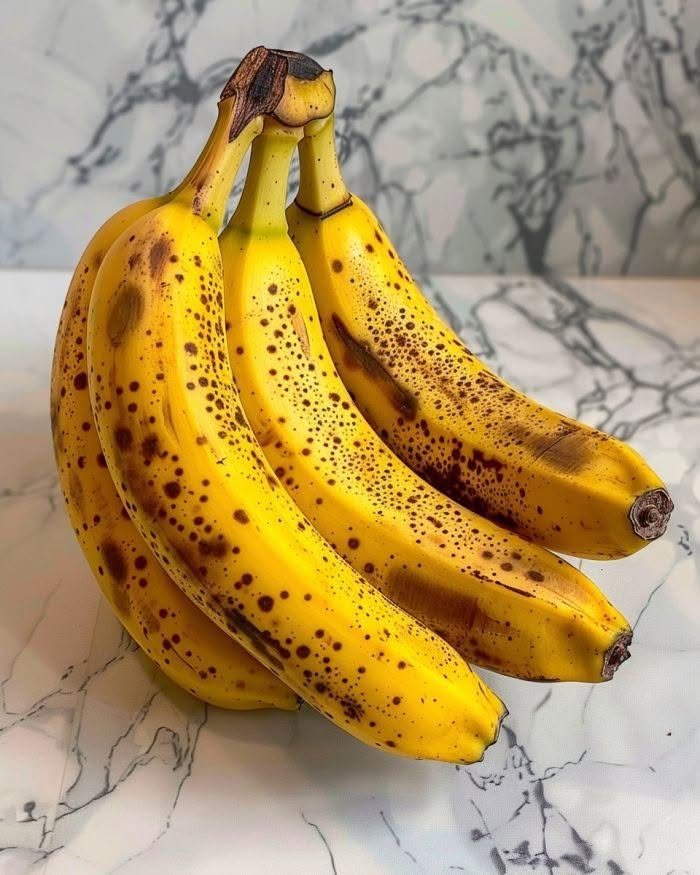
Viral food and wellness articles love running dramatic headlines like, “Here’s what eating bananas with spots means for your health.” They often pitch speckled, over-ripe bananas as either a miraculous healing elixir or something you should throw away immediately.
Nutritional science and biochemistry take a much more practical look: those brown spots (often called “sugar spots”) are simply a visual map of the banana’s natural ripening process, changing how your body processes its nutrients.
The Science of the “Sugar Spot”
As a banana sits on your counter, a natural plant hormone called ethylene triggers internal chemical shifts. The starches inside the fruit begin breaking down rapidly into simple sugars.
Here is what actually changes in your body when you eat a spotted banana versus a firm, green-tinged one:
1. Faster Digestion and Quick Energy
-
The Shift: In a green or yellow banana, most of the carbohydrates are in the form of complex starches. As those brown spots appear, enzymes convert those starches into simple sugars (glucose, fructose, and sucrose).
-
What It Means for You: Spotted bananas are much sweeter and significantly easier to digest. If you need a quick burst of energy right before a workout or an afternoon pick-me-up, a spotted banana enters the bloodstream faster because your digestive tract doesn’t have to work as hard to break down complex starches.
2. Higher Antioxidant Concentration
-
The Shift: As the peel breaks down and develops spots, the concentration of certain antioxidants and beneficial phenolic compounds increases.
-
What It Means for You: Laboratory studies show that highly ripe bananas have a higher total antioxidant capacity compared to green ones, helping neutralize free radicals and reduce oxidative stress at a cellular level.
3. Glycemic Impact (The Sugar Trade-Off)
-
The Shift: Because the complex starches have already converted into simple sugars, a spotted banana has a slightly higher glycemic index (GI).
-
What It Means for You: It will cause a quicker spike in blood sugar than a firm, green-tipped banana. For healthy individuals, this is completely fine. However, individuals managing diabetes or insulin resistance often prefer slightly under-ripe (less spotted) bananas because the resistant starch digests more slowly, keeping blood sugar levels steadier.
The Ultimate Banana Spectrum: Which One Should You Choose?
There is no “wrong” stage to eat a banana; it just depends on what your body needs:
-
Green or Yellow-with-Green-Tips: Higher in resistant starch (acting like a prebiotic fiber for your gut) and lower in sugar. Great for sustained energy and blood sugar control, though they can sometimes cause mild bloating for sensitive stomachs.
-
Bright Yellow: Balanced flavor, moderate fiber, and easily accessible vitamins (B6 and potassium).
-
Spotted / Brown (Over-Ripe): Highest in simple sugars and antioxidants, incredibly easy on the stomach, and ideal for baking banana bread or blending into smoothies.
The Takeaway: Those brown spots aren’t a sign that the fruit is “bad” or toxic—they are just nature’s way of pre-digesting the starches into sweet, easily absorbed fuel!
Are you a fan of eating bananas when they are bright yellow, or do you wait until they are heavily spotted (or saved for baking)?
