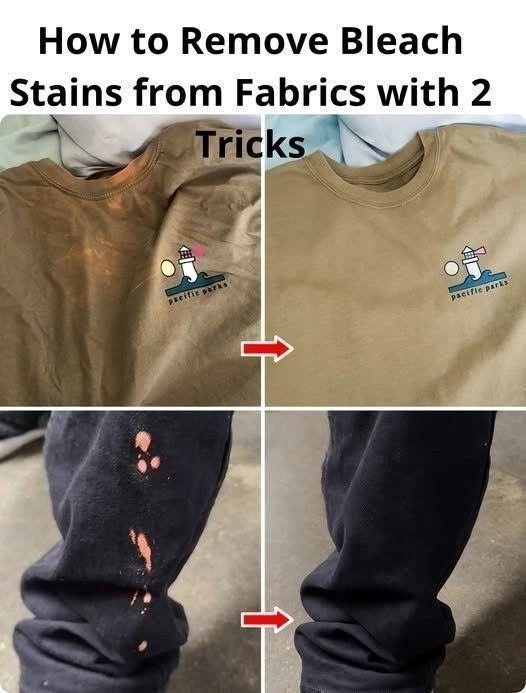
When viral laundry and cleaning videos flash headlines like “How to Fix Bleach Stains on Clothes: 2 Simple Tricks Worth Trying,” they promise a magical form of restoration that feels too good to be true. By framing a permanent chemical accident as something that can be instantly “erased” with a dab of a kitchen ingredient, these clips trade textile chemistry for internet theater.
What Clickbait “Bleach Hack” Videos Get Wrong
-
The “Magic Eraser” Fallacy: Content pieces frequently claim that scrubbing a bleach spot with lemon juice, vinegar, or dish soap will instantly wash the bleach away and restore the garment’s original color.
-
Treating Missing Color Like Surface Dirt: Sensationalized hacks ignore the fact that a bleach spot is not an external substance sitting on top of the fabric, meaning standard cleaning agents have nothing to lift or dissolve.
The Chemical Reality: Why Bleach Isn’t Actually a Stain
Textile scientists and laundry professionals look at bleach damage through the lens of molecular chemistry.
-
Oxidation and Chromophore Destruction: Household bleach (sodium hypochlorite) is a powerful oxidizing agent. When it touches colored fabric, it doesn’t leave a residue or a stain; instead, it chemically shatters the chromophores (the light-absorbing molecular structures that give a dye its color). It permanently destroys the pigment on a molecular level, leaving a blank, stripped void where color used to be. You cannot “clean” or wash a missing color back into existence.
-
Fiber Degradation: Beyond stripping color, unrinsed chlorine bleach can weaken the structural integrity of natural fibers like cotton or linen, making the affected area prone to thinning or tearing over time.
Realistic Ways to Address Bleach Damage
While you cannot “remove” a bleach spot with a magic household cleaner, you can repair or camouflage the area using practical, physical methods:
-
Precision Fabric Dye Pens or Markers: For small spots on dark clothing, matching the hue using a permanent fabric marker or a specialized dye pen can effectively camouflage the missing color.
-
Spot-Dyeing with Liquid Fabric Dye: Mixing a small amount of liquid dye (matching your garment’s color) and applying it carefully to the bleached void with a cotton swab can restore pigment.
-
Embracing Creative Upcycling: If spot-coloring doesn’t match seamlessly, many people choose to cover the spot with a small embroidered patch, or intentionally apply more bleach to create a deliberate “reverse tie-dye” pattern.
