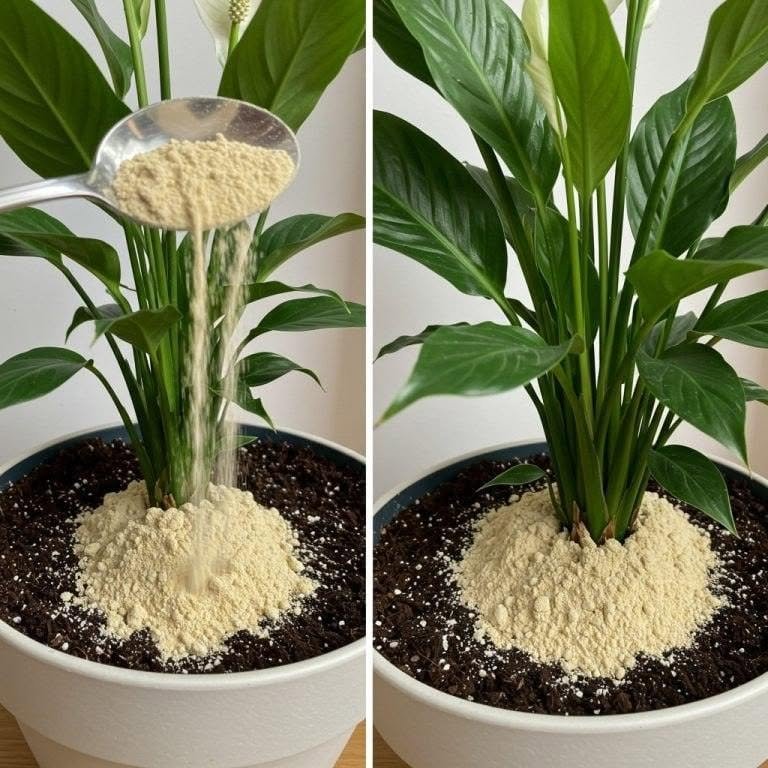
When viral gardening videos and clickbait articles flash headlines like “Peace lily: thanks to this one ingredient, it will bloom for up to 10 years in a row,” they lean on a classic engagement trap. By promising a magical kitchen secret that defies natural plant biology, these pieces prey on the common frustration of owning a lush, dark-green peace lily that stubbornly refuses to produce its iconic white flowers.
What Clickbait “Peace Lily” Claims Get Wrong
-
The “Magic Kitchen Tonic” Fallacy: Content pieces frequently claim that pouring leftover coffee, milk, or unmeasured organic concoctions into the soil will instantly shock a plant into endless flowering. In reality, dumping random kitchen waste into pots often attracts gnats, alters soil pH unpredictably, and risks rotting the roots.
-
Misunderstanding Flower Longevity: The claim that a peace lily will “bloom for 10 years in a row” displays a fundamental misunderstanding of plant anatomy. Individual peace lily flowers (technically a modified leaf called a spathe enclosing a spadix) naturally mature, turn green, and wither after a few weeks or months. While the plant itself is a perennial that can live and re-bloom for many years, individual blossoms do not last indefinitely.
The Horticultural Reality: What Actually Triggers Peace Lily Blooms
Horticulturists and botanists evaluate indoor flowering plants like Spathiphyllum through the lens of light energy, maturity, and seasonal cycles:
-
Light is the Engine of Photosynthesis: Peace lilies are famous for tolerating low-light office environments, which is why they are popular houseplants. However, survival is not the same as thriving. Because flowering requires a massive expenditure of metabolic energy, a peace lily kept in a dim, dark corner will happily produce dark green leaves but lack the solar energy required to initiate flower buds.
-
Plant Maturity: Young tissue-culture propagations or immature peace lilies will not bloom simply because they are given fertilizer. A plant must reach a specific stage of root and foliage maturity before its internal hormonal signals shift toward reproductive growth.
-
Natural Rest and Seasonal Cycles: While indoor environments insulate plants from the wild swings of outdoor weather, peace lilies still respond to subtle shifts in indoor temperature and ambient daylight as autumn and winter arrive, often slowing down their metabolic pace before pushing out new growth in the spring.
Evidence-Based Care for Reliable Blooming
Instead of chasing viral hacks or pouring random liquids into your plant pots, encouraging a peace lily to bloom reliably comes down to mastering fundamental environmental care:
-
Optimize Light Exposure: Move your peace lily to a spot that receives bright, indirect sunlight—such as a few feet away from an east- or north-facing window. Avoid direct, harsh afternoon sun, which can scorch the delicate leaves.
-
Water Consistently: Allow the top inch or two of soil to dry out between waterings, but never let the plant experience prolonged drought, which causes leaf drop and stunts bud development.
-
Provide Balanced Nutrition: During the active growing seasons of spring and summer, feed your plant with a balanced, water-soluble houseplant fertilizer diluted to half-strength every few weeks, supporting healthy tissue development without burning the roots.
